A new study has, for the first time, described the composition of microRNA in dolphin milk and revealed similarities between these molecules and the microRNA found in terrestrial mammals. This discovery will help deepen our understanding of the role milk plays in the development of offspring across different species.
A new study of ancient rocks in Northern Australia has revealed that even the earliest eukaryotes depended on oxygen. This evidence confirms the crucial role of oxygen in the evolution of complex life on Earth.
Scientists have developed a more accessible and cost-effective method for determining biologically active phosphorus in soil, which is linked to microbial activity. This new approach will help study soil fertility more efficiently and make better use of limited phosphorus resources in agriculture.
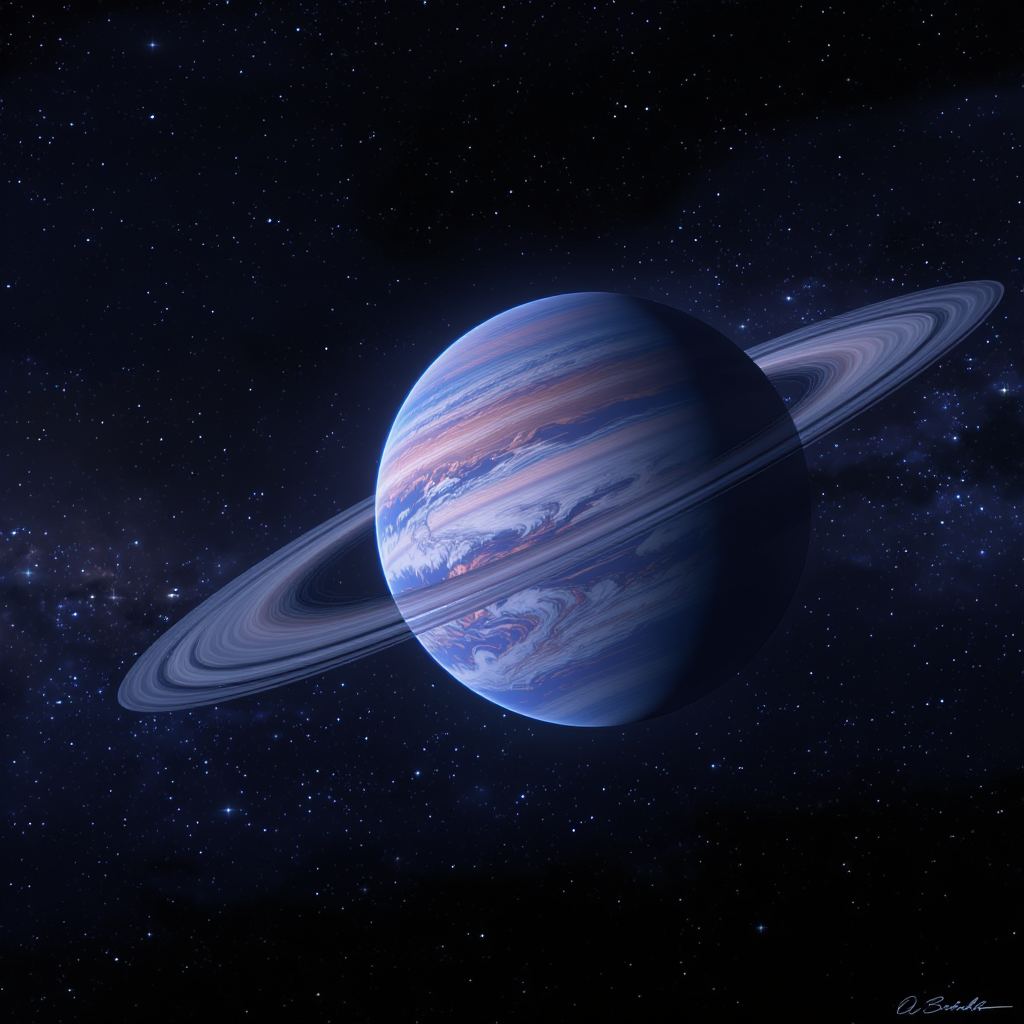
Astronomers have, for the first time, detected radio signals coming directly from the exoplanet β Pictoris b. These signals are of natural origin and are associated with auroras, allowing scientists to estimate the planet's powerful magnetic field.
At Southern Illinois University, researchers have developed a method to convert plastic and plant waste into a protein-rich food product using genetically modified yeast. The project is currently at the proof-of-concept stage and requires further research to assess its safety and practical applications.
A new study has found that in most songbird species, males tend to live longer than females, especially among migratory species. Researchers link these differences to physical exertion and social dominance.
A new study has shown that African elephants use certain plants and minerals not only as food, but also to maintain their health. This information is important for species conservation and for planning their habitats.
For the first time, researchers have used a quantum simulator to model string breaking and the creation of particle-antiparticle pairs, opening up new possibilities for studying the fundamental processes of matter. The experiment demonstrates the potential of quantum computers to solve problems that are beyond the reach of classical computation and brings science closer to understanding the conditions of the early Universe.
Scientists have developed nanoparticles that, when injected into the eye, can restore vision after retinal damage by replacing lost photoreceptors. This technology does not require surgery and is suitable for various causes of vision loss.
Astronomers have confirmed the discovery of the youngest known exoplanet, Elias 2-24 b, which is less than a million years old. This finding provides valuable insights into the early stages of planet formation.
A new study has shown that the front and back regions of the brain develop from different types of stem cells, challenging previous beliefs. This discovery has made it possible, for the first time, to grow brainstem neurons in the laboratory and opens up new opportunities for researching and treating serious diseases.
Astronomers have discovered a new large crater on the Moon, measuring 222 meters in diameter, which appeared in 2024. Studying this crater could provide valuable insights into collisions involving large objects and help in planning future lunar missions.
Scientists have discovered that bacteria from kimchi can bind to and remove nanoplastics from the body, opening up new possibilities for biological methods to combat plastic pollution.
Australian biologists have, for the first time, closely documented a female humpback whale staying near her stillborn calf, repeatedly returning to it. This is the first recorded case of post-mortem attention in humpback whales.
The compact CosmicWatch detector offers a simple and affordable way to detect cosmic particles—muons—opening up new opportunities for education, scientific research, and monitoring of cosmic phenomena. This device is widely used in universities and professional experiments around the world.


 Cursus