

Genetically modified yeast turns waste into food
At Southern Illinois University, researchers have developed a method to convert plastic and plant waste into a protein-rich food product using genetically modified yeast. The project is currently at the proof-of-concept stage and requires further research to assess its safety and practical applications.
Cursus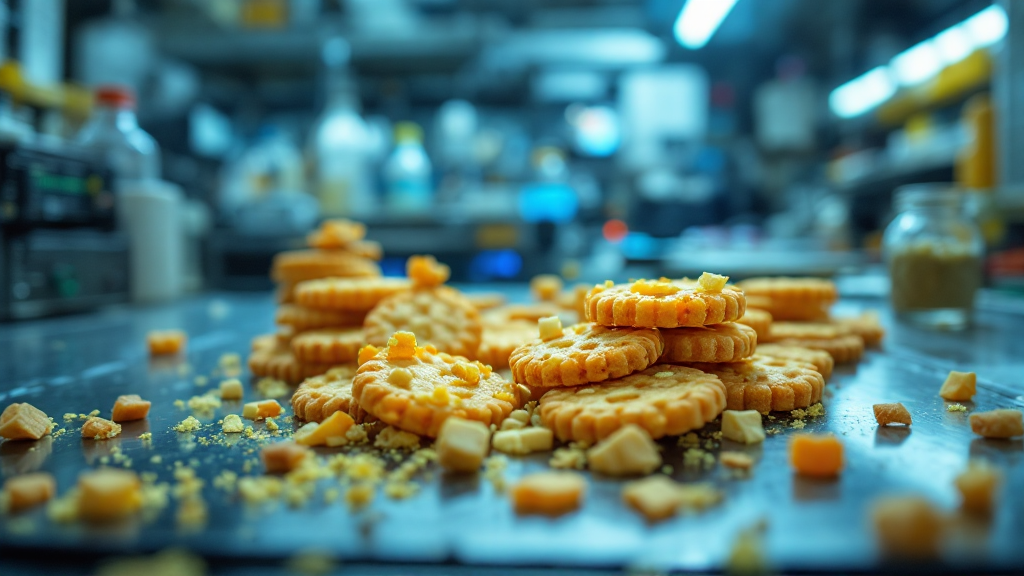
At Southern Illinois University in Carbondale, a research project has been implemented that uses genetically modified yeast to convert plastic and plant waste into a high-protein food product. This initiative was launched as part of the NASA Deep Space Food Challenge, which aims to develop food solutions for long-duration space missions.
Process Description
During the experiment, plastic waste such as PET from beverage bottles, as well as corn stalks and other plant residues, are broken down into simpler chemical components using oxidative hydrothermal dissolution (OHD) at high temperatures and pressures. The resulting substances serve as a carbon source for various strains of genetically modified yeast. These yeasts then synthesize proteins, fats, vitamins, and aromatic compounds. Using 3D printing, these components are formed into a protein-rich cookie known as “μBites.”
Current Status and Prospects
Currently, the project is at the proof-of-concept stage, with the main goal being to demonstrate the fundamental feasibility of this approach. So far, only smell tests have been conducted; official human taste testing has not yet taken place.
Challenges and Questions
For further development of the technology, several issues need to be addressed:
- Identifying methods to remove additives, such as plasticizers, from the raw materials.
- Assessing the risk of unwanted substances from mixed plastics entering the water used in the process or the final product.
- Verifying the safety of the resulting food for human consumption.
- Analyzing the energy requirements for all process stages (separation, PET shredding, OHD, microorganism cultivation, water and oxygen supply, pump operation, etc.) and evaluating economic efficiency.
- Developing methods for disposing of residual waste, including CO2, organic acids, PET fragments, and chemical additives.
- Studying possible byproducts, such as alcohols, acids, and other metabolites.
The project requires further research to resolve these issues and to assess the potential for practical application of the technology.