

African elephants use plants for self-medication.
A new study has shown that African elephants use certain plants and minerals not only as food, but also to maintain their health. This information is important for species conservation and for planning their habitats.
Cursus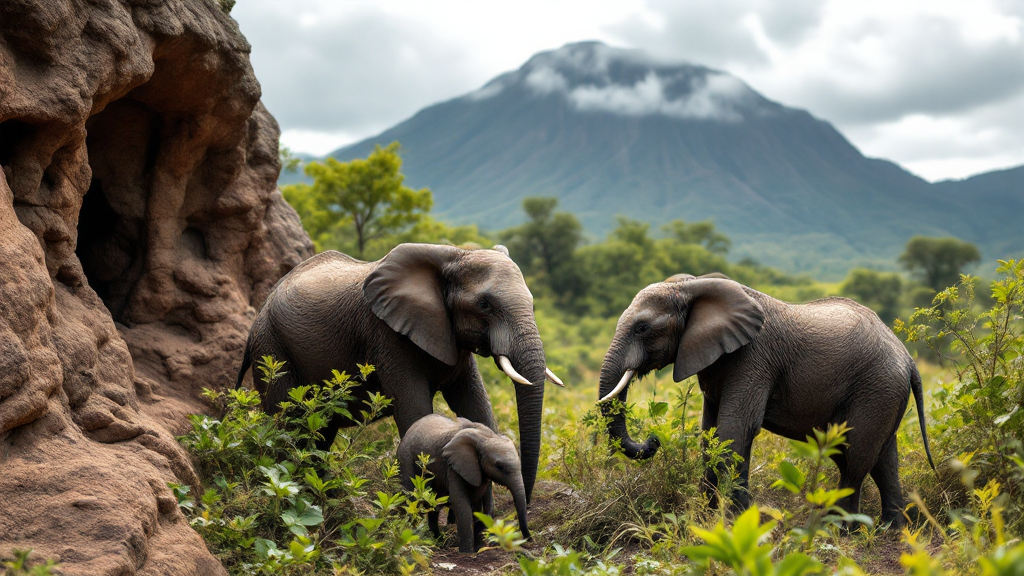
Zoologists have discovered that some animals use plants, soil, clay, and salt to maintain their health. This behavior has previously been observed in monkeys, birds, insects, Asian elephants, and now also in African elephants.
Study of African Elephant Behavior
The research was conducted on a population of elephants living near Mount Elgon in Kenya. This region is home to cave systems rich in minerals, as well as several national parks with high biodiversity. For the first time, information about the plants regularly consumed by elephants was systematically collected. Data was gathered through long-term observations by local residents and experts, as well as a specially designed questionnaire, which was completed by eight people.
Use of Plants with Medicinal Properties
The study showed that elephants often eat plants that local people consider to have medicinal properties. In total, 39 natural resources were identified: 35 plant species and four types of soil, minerals, and clay. Of these, 34 are used in traditional medicine, and 25 were classified as "elephant medicines." Previous research has found that some of these plants have anti-inflammatory, antibacterial, and antiparasitic properties.
Criteria for Identifying "Elephant Medicines"
Natural resources were divided into several categories. Only those that met several criteria at once were classified as "elephant medicines": elephants sought them out when showing signs of illness, deliberately approached specific plants, consumed exactly the part considered medicinal (often unpalatable, hard to eat, and low in calories), did so in small amounts, at unusual times, or in a special way.
As a result, eight plants were identified as "elephant medicines": tree aloe (Aloe arborescens), Natal fig (Ficus natalensis), barbatus coleus (Coleus barbatus), members of the Francoaceae family (Bersama abyssinica), the mallow family (Dombeya burgessiae, Dombeya rotundifolia, Dombeya torrida subsp. torrida), and the laurel family (Kuloa usambarensis).
Knowledge Transfer and Use of Mineral Resources
It is reported that female elephants sometimes deliberately feed their young with plants believed to have medicinal properties. However, such cases were not directly observed in this study, so video evidence is being collected to confirm this behavior.
In addition to plants, elephants use mineral resources from caves in the same region. All respondents confirmed this behavior. According to researchers, clay, earth, and minerals help protect the digestive tract and serve as a source of micronutrients. However, this behavior is not classified as self-medication, and the resources used are not considered "medicines."
Significance of the Study for Species Conservation
This is the first study to systematically organize information about the presumed self-medication of African elephants in this region. A detailed understanding of the animals' diet is important for conservation efforts. If elephants truly use plants not only as food but also as medicine, this factor must be considered when creating habitats for them and ensuring the appropriate environment.