Short but intense sprints trigger significant molecular changes associated with improved metabolic health and slower aging, surpassing the effects of moderate exercise. The study highlights the importance of exercise intensity in disease prevention.
New research shows that improper folding of the proinsulin protein in pancreatic beta cells contributes to the development of type 2 diabetes. Enhancing the mechanisms responsible for correct protein folding may become a promising direction for future therapies.
An international team of scientists has, for the first time, mapped in detail how the influenza A virus interacts with proteins inside living human cells. This discovery will help more accurately identify the virus’s vulnerable points and develop new strategies to combat infections.
A new study of ancient Homo erectus teeth has revealed a genetic link between this species, Denisovans, and modern humans, shedding light on the evolution and interactions of ancient populations.
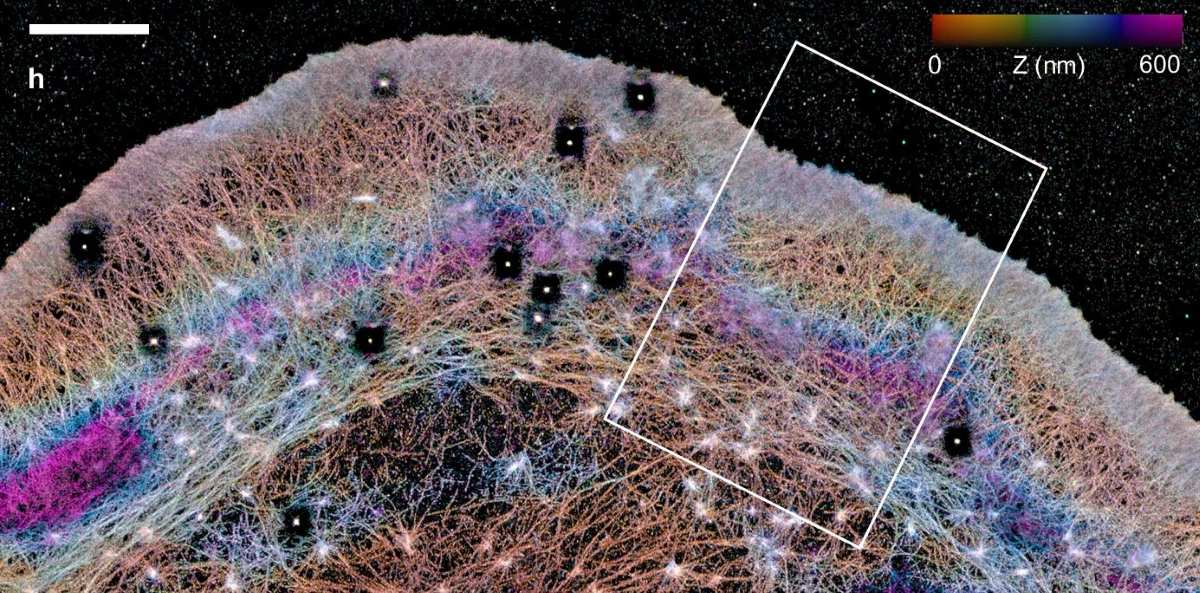
A new study has shown that soluble proteins inside migrating cells move thanks to directed fluid flows generated by contracting protein structures. This physical mechanism enables cells to rapidly deliver molecules to specific areas without relying on specialized chemical pathways.
Scientists have discovered a previously unknown intracellular system that speeds up the delivery of proteins to the leading edge of the cell. This finding changes our understanding of the mechanisms behind cell movement, cancer spread, and wound healing, and could also lead to new strategies for combating tumors.
Scientists have deciphered the genetic mechanism that enables soil fungi to produce proteins which trigger the crystallization of water at mild subzero temperatures. These proteins, acquired by fungi from bacteria, could offer a safe alternative for weather modification, industrial freezing, and cryopreservation.
Scientists are studying universal paralogs—ancient genes preserved in all living organisms—to learn more about the earliest stages of evolution and the origins of life on Earth. New analytical methods make it possible to reconstruct the functions of these genes and bring us closer to understanding how the first cells emerged.
Scientists have proposed a new method to combat locusts: applying nitrogen fertilizers reduces pest populations while simultaneously increasing crop yields. This approach does not require emergency use of insecticides and remains effective even in the absence of an outbreak.
Scientists have discovered a new mechanism for transmitting pain signals in the brain, linked to the VLK enzyme, which operates outside of cells. This breakthrough could lead to the development of safer painkillers without the typical side effects.


 Salus
Salus