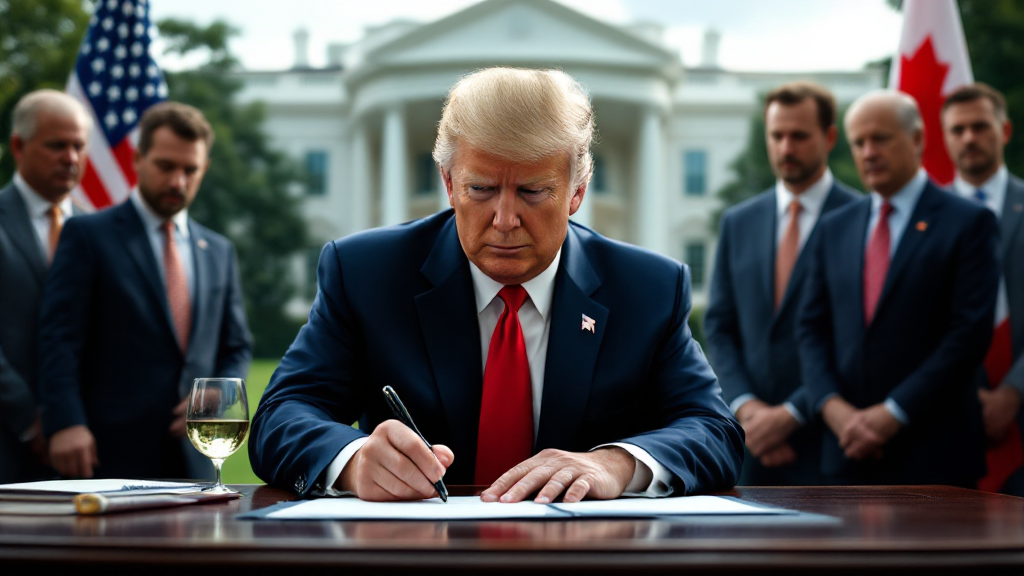
The trade conflict between the United States and Canada, along with new tariffs, is forcing Canadian importers to seek alternative suppliers, particularly in Europe. This is leading to a long-term restructuring of logistics chains and diversification of trade flows.
The United States is imposing new 50% tariffs on a range of Canadian goods, raising concerns about an escalation of the trade conflict and increased uncertainty in relations between the two countries. Canada is prepared for negotiations and potential retaliatory measures.
The United States plans to raise tariffs on car imports from the EU to 25%, accusing the European Union of violating a trade agreement. The European Commission rejects these accusations and is prepared to defend the interests of the EU.
In February, the EU's foreign trade surplus dropped by 60% due to a significant decline in exports to the United States, which was linked to changes in tariff policies. Exports to the US fell by more than a quarter, and there was also a decrease in shipments to China.
The yield on French government bonds increased across most maturities, while the CAC 40 index fell by 0.4% at the close of trading on Monday. Credit default swaps remained unchanged.
The United States is introducing new tariffs on patented medicines and their components, reaching up to 100% for major companies. Generics and biosimilars are currently exempt from these tariffs, and certain countries and agreements are granted special benefits. These measures are aimed at encouraging investment in the American pharmaceutical industry.
China has expressed its willingness to increase imports of goods from the EU and has called for the easing of export restrictions on high-tech products, as well as for constructive solutions to trade disputes.
EU companies are successfully managing external tariffs and adopting artificial intelligence, but they face significant internal barriers due to differences in national regulations. Removing these obstacles could greatly boost investment activity and growth within the bloc.
The United Kingdom expects to maintain its trade advantages with the United States following the U.S. Supreme Court's decision to lift the broad tariffs previously imposed by the Trump administration. British authorities continue to work with the U.S. to clarify the implications of the court's ruling and to support businesses.
The European Union is closely studying the decision of the US Supreme Court to lift tariffs and is maintaining dialogue with Washington to clarify the next steps. The EU emphasizes the importance of stable trade relations and continues to advocate for reducing barriers.
A new study has shown that international trade in live frogs from Brazil has contributed to the global spread of a deadly fungus that threatens hundreds of amphibian species.
A new study of ancient DNA has revealed that domestic cats appeared in Europe much later than previously thought, and spread across the continent thanks to trade and maritime routes in antiquity.


 Vector