Tesla has opened credit lines totaling $30 billion to finance major investments amid declining profits and rising capital expenditures. The new agreement expands the company's financial flexibility as it faces increasing pressure on its business.
The Central Bank of Turkey has revised its inflation forecasts due to geopolitical instability and rising prices, opting not to publish forecast ranges. The new target for the end of 2026 is 24%, while expectations for the end of the current year are approaching 26%.
Credit Agricole expects the South African Reserve Bank to raise its key interest rate to 7.25% due to accelerating inflation and rising energy prices. While the country's economy remains resilient, a decision not to increase the rate could put additional pressure on the rand.
European economic officials have, for the first time, publicly acknowledged the risk of stagflation due to rising energy prices and a slowdown in GDP growth. The full extent of the damage will become clear in the coming weeks.
ECB Governing Council member Joachim Nagel expressed support for the bank’s current strategy and noted readiness to raise rates if necessary. He emphasized that persistent inflation and ongoing geopolitical tensions require a cautious approach.
Representatives of the Federal Reserve note a high level of consensus on current policy and stability in the U.S. labor market. Long-term inflation expectations remain steady, and productivity growth could accelerate thanks to advances in artificial intelligence.
The Central Bank of Mexico has released updated forecasts: inflation by the end of 2026 is expected to be higher than previously estimated, while economic growth is projected to be slightly lower. However, the outlook for the peso exchange rate has improved.
Moody’s has upgraded its outlook for Vietnam to “positive,” citing the strengthening of the country’s credit profile and a reduction in external risks. The agency also anticipates an upgrade in market status and expects rapid economic growth.
The Bank of Thailand has kept its key interest rate at 1.00%, despite ongoing economic challenges and low inflationary pressure, in line with analysts' expectations.
Experts believe that the Federal Reserve may keep current interest rates unchanged until the end of the year, with a particular focus on inflation. The economy is showing resilience and no downturn is expected.
Mexico's economy shrank by 0.8% in the first quarter, performing worse than expected. The decline was observed across all sectors, with agriculture and industry being hit particularly hard.
Moody’s has affirmed China’s long-term ratings at A1 and revised its outlook from “negative” to “stable,” highlighting the resilience of the country’s economy despite internal and external challenges. The agency expects a gradual slowdown in GDP growth and an increase in government debt, but notes the strengths of China’s financial system and the competitiveness of its exports.
The Central Bank of Pakistan has raised its key interest rate by 1 percentage point to 11.5% as part of measures to adjust monetary policy and curb inflation.
Citi considers the possibility that the Bank of Korea may raise its key interest rate at the upcoming meeting, due to revised economic forecasts indicating higher GDP growth and inflation for 2026.
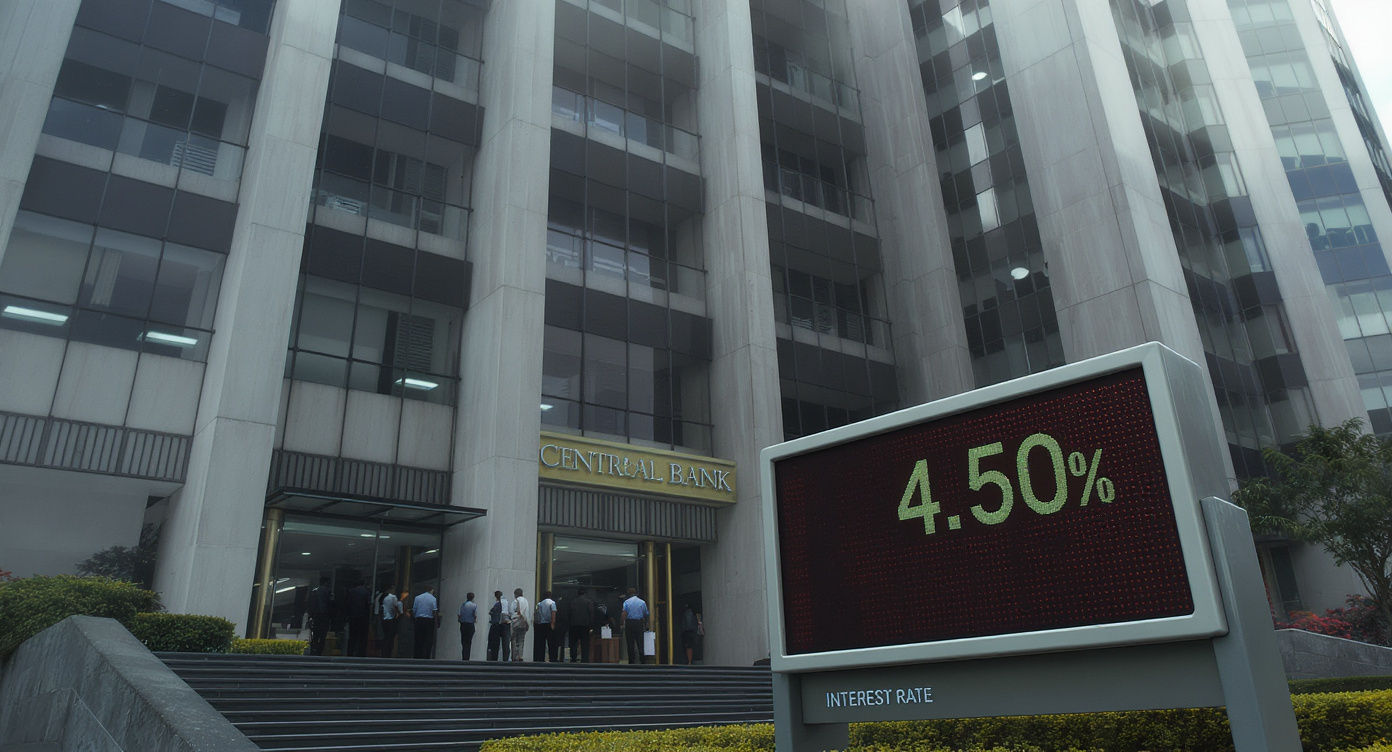
The Central Bank of the Philippines has raised its key interest rate by 0.25%, bringing it to 4.5%, in an effort to curb rising inflation despite concerns about slowing economic growth. The decision came as a surprise to some analysts.


 Ratio
Ratio