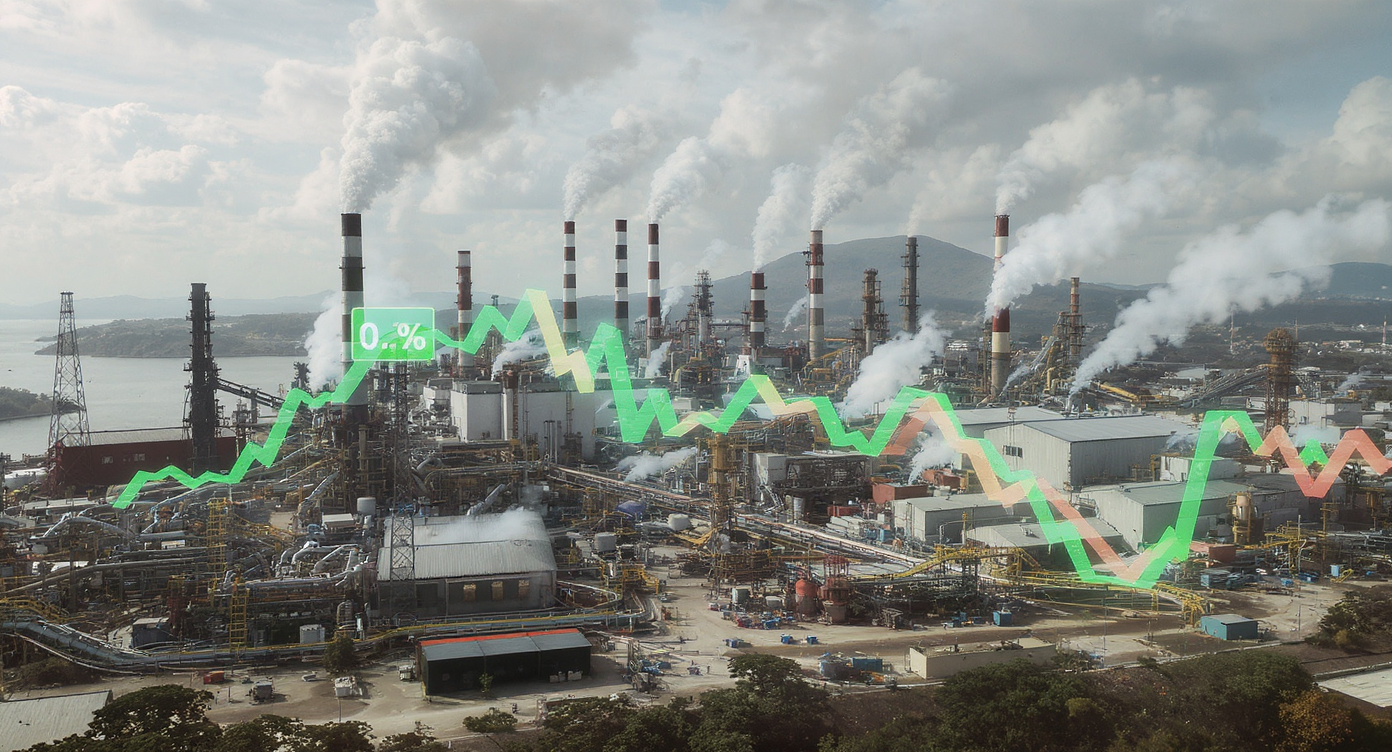
The European liquefied natural gas market is facing the risk of shortages and rising prices due to low reserves, supply disruptions, and infrastructure damage. Gas storage levels are significantly below normal, increasing uncertainty as the winter season approaches.
Despite a significant drop in profits due to the conflict in the Middle East, Saipem has maintained its revenue forecast for 2026 and continues to secure new major contracts.
In the second quarter, Noble Corporation reported a loss of $37 million due to the suspension of operations at two drilling rigs off the coast of Brazil. The company also lowered its revenue and EBITDA forecasts for 2026.
Oil prices dropped sharply following reports of a possible reopening of the Strait of Hormuz and the continuation of the truce between Israel and Iran. Experts predict that high prices will persist until full energy traffic is restored, which could take several months.
The Central Bank of Turkey has revised its inflation forecasts due to geopolitical instability and rising prices, opting not to publish forecast ranges. The new target for the end of 2026 is 24%, while expectations for the end of the current year are approaching 26%.
Senegal's economy is expected to grow by only 2.5% this year, but acceleration to 6.7% is projected for next year. However, the level of sovereign risk remains high in the medium term.
Industrial production in Brazil grew by 0.9% in February compared to January, surpassing analysts' expectations. On an annual basis, the decline was 0.7%, which was also better than forecasted.
Bank of America has lowered its GDP growth forecast for the Dominican Republic to 3% for this year, citing a sluggish recovery in sectors outside of tourism and ongoing vulnerability to external factors.
Argentina's economy grew by 4.4% in 2025, slightly below analysts' forecasts. The country's GDP also showed moderate growth compared to previous periods.
The Czech National Bank has kept its key interest rate at 3.50%, emphasizing the importance of a tight monetary policy and its intention to closely monitor the economic situation before making further decisions.
A member of the Bank of England's Monetary Policy Committee stated that the bank will likely soon stop facing a trade-off between slowing growth and inflation. Economic indicators are weakening, inflation and wage growth are below expectations, and unemployment is higher than forecasted.
The Bank of Ghana has lowered its key interest rate for the third consecutive time, this time by 350 basis points—exceeding analysts' expectations. The central bank also indicated that further significant rate cuts may be possible in the future.

 Petrus