

Domestic cats arrived in Europe with sailors.
A new study of ancient DNA has revealed that domestic cats appeared in Europe much later than previously thought, and spread across the continent thanks to trade and maritime routes in antiquity.
Cursus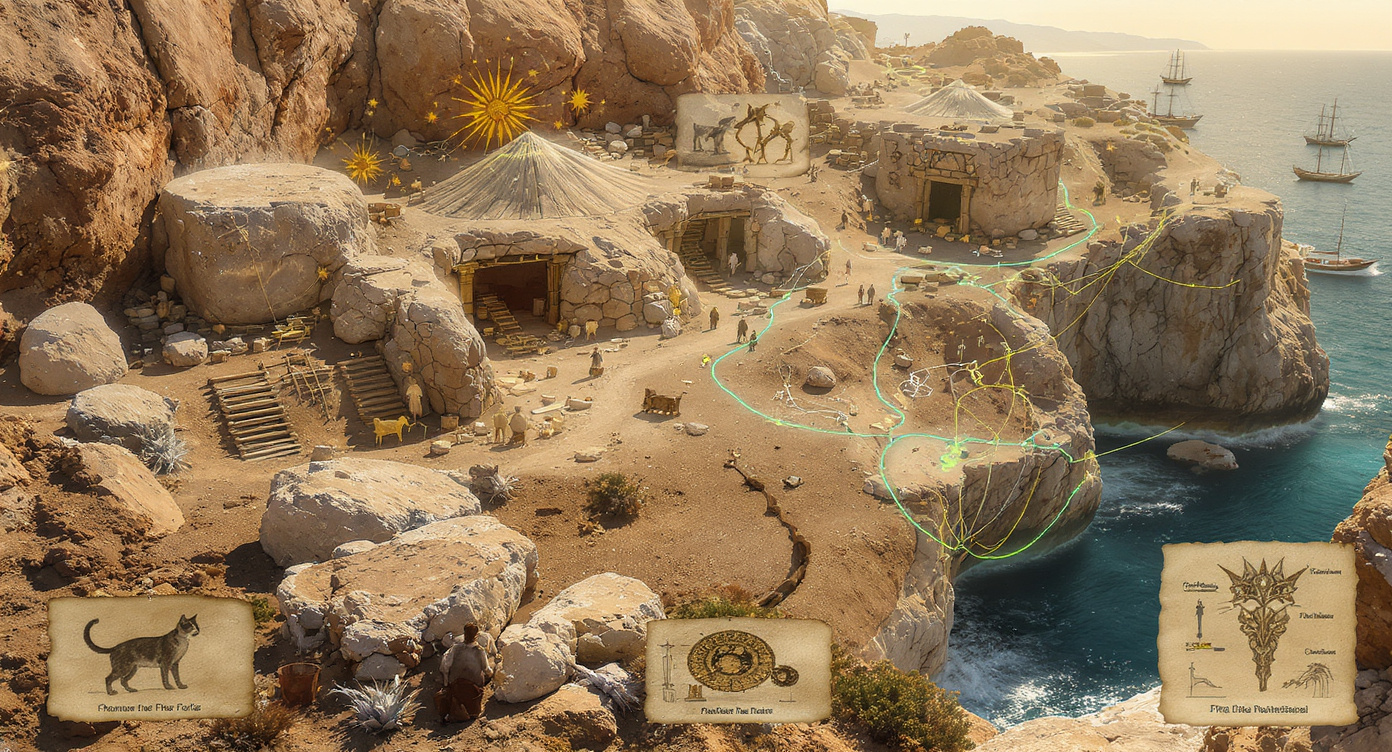
The ancestors of modern domestic cats appeared in Europe much later than previously thought. A new study of ancient DNA has shown that cats did not migrate to the European continent with the first Stone Age farmers. Instead, they spread across Europe thanks to trade connections and maritime routes that flourished in antiquity, especially along the coast of North Africa.
Ancient Discoveries and Hypotheses
Archaeologists have found images and remains of cats at sites in Europe, Asia, and Africa dating back more than 10,000 years. These discoveries indicate that humans and cats have had a long-standing relationship. Previously, scientists identified two main centers of cat domestication: the Levant and Ancient Egypt. However, it is difficult to determine from bones alone whether the animals were wild or already domesticated, since their skeletons are almost identical in structure and size. As a result, it remained unclear for a long time when exactly the cat became a domestic animal.
New Genetic Data
It was once believed that cats arrived in Europe from Turkey with the first Neolithic farmers about 6,000 years ago. These conclusions were based on the analysis of mitochondrial DNA, which is inherited only through the maternal line. However, new research based on the complete nuclear genome has provided a more accurate picture of the origins of domestic cats.
A team of paleogeneticists analyzed the genomes of 70 ancient cats up to 11,000 years old, found in Europe and the Near East, as well as 17 modern wild specimens. The results of the study were published in the journal Science.
Main Findings of the Study
Comparing genetic markers revealed that cats living in Europe during the Neolithic belonged to the local wild species Felis silvestris—the European wildcat. They were not part of the Felis lybica lineage, from which modern domestic cats descend. This means that the first farmers did not bring domesticated cats with them, as previously assumed. Local wildcats sometimes interacted with humans and even interbred with incoming species, but remained wild.
The genetic trace of true domestic cats in Europe appears only about 2,000 years ago, coinciding with the period of the Roman Empire. The analysis also confirmed that modern domestic cats are most closely related to North African wildcats living in Tunisia and Morocco, rather than to populations from the Levant. It is likely that sailors and traders transported them across the Mediterranean Sea.
The Unique Case of Sardinia
A separate discovery concerns the cat population on the island of Sardinia. The local wildcats turned out to be descendants of an isolated migration wave from North Africa that occurred about 2,200 years ago. These animals have preserved unique traits of their ancient ancestors and are genetically distinct from ordinary domestic cats, which spread across mainland Europe only several centuries later.
Stages of Cat Dispersal
The spread of cats occurred in several stages. The domestication and global distribution of the species turned out to be linked not to the early steps of agriculture, but to later historical processes and the development of maritime trade routes in antiquity. This sets cats apart from dogs, which humans transported with them everywhere since the earliest times.