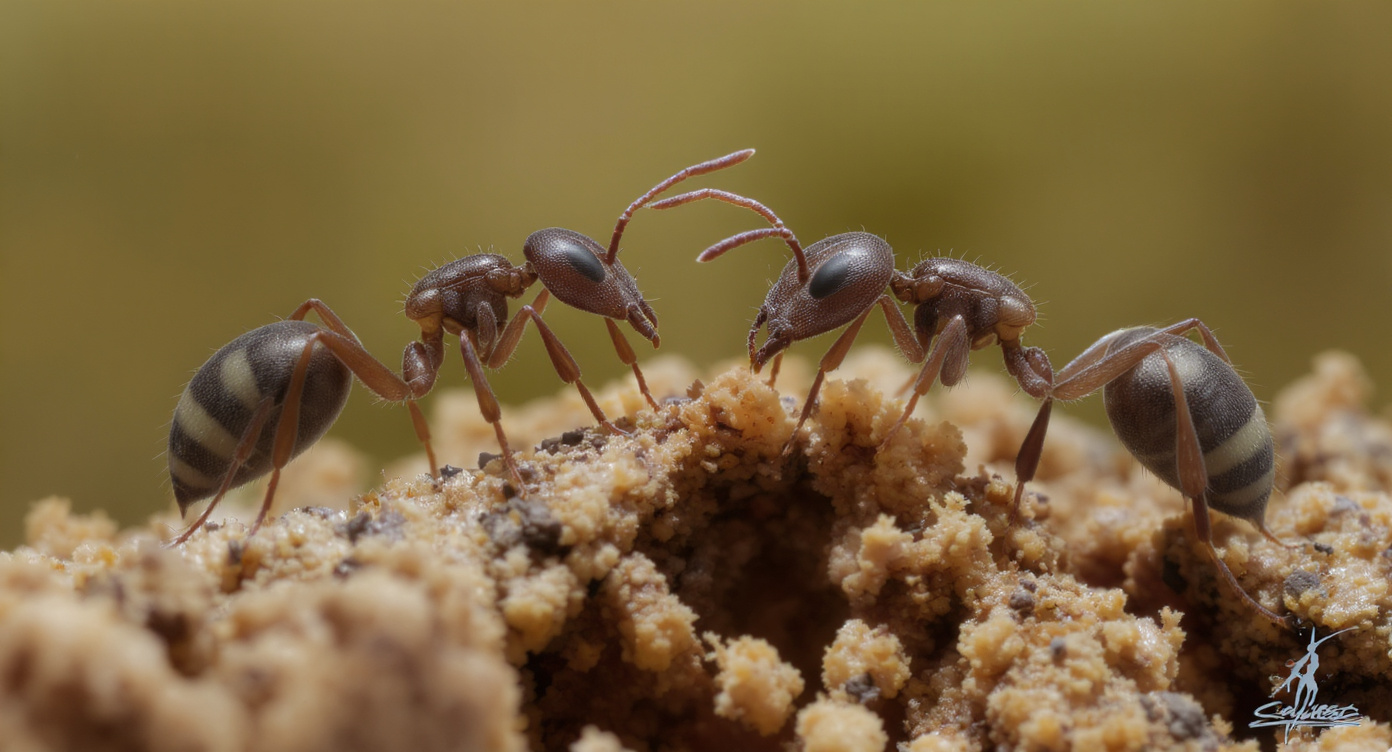
A new study has shown that parental care in animals is based on ancient neural mechanisms related to hunger control. Evolution has repurposed existing feeding regulation systems to shape parental behavior.
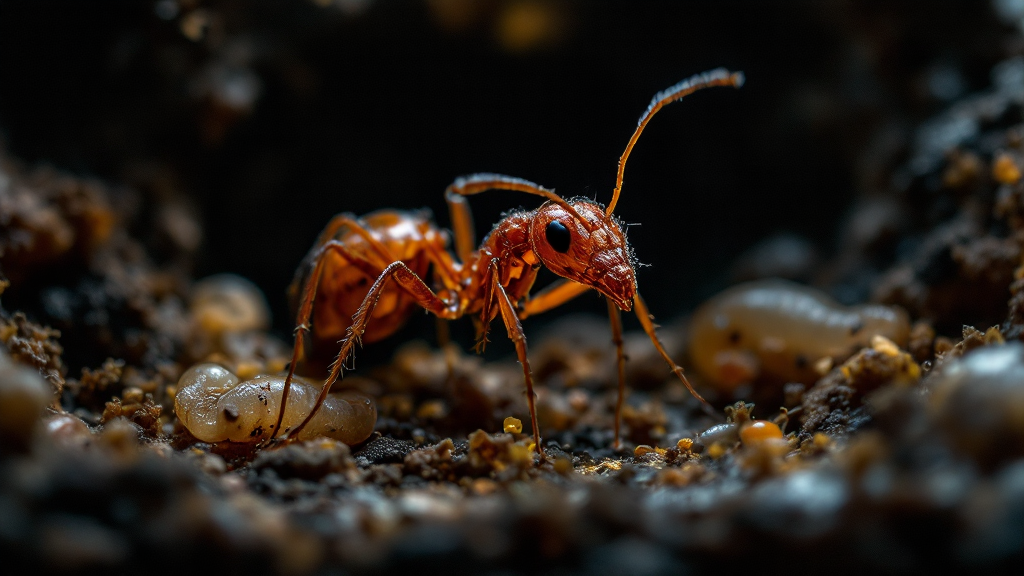
A study has shown that the parasitic worm Anomotaenia brevis alters gene activity in ants, affecting their behavior and lifespan. Instead of mimicking the host's hormones, the parasite manipulates existing genetic mechanisms that control aging and social activity.
Some species of ants have learned to transform carbon dioxide from their underground nests into a durable mineral layer that strengthens their exoskeleton and protects the colony. This process allows the insects to simultaneously get rid of excess CO2 and reinforce their outer shell.
Some butterfly caterpillars use not only chemical but also acoustic signals, mimicking the rhythms of ants to blend into their colonies and gain protection and food. This rhythm helps them be recognized as “one of their own” and survive inside the anthill.
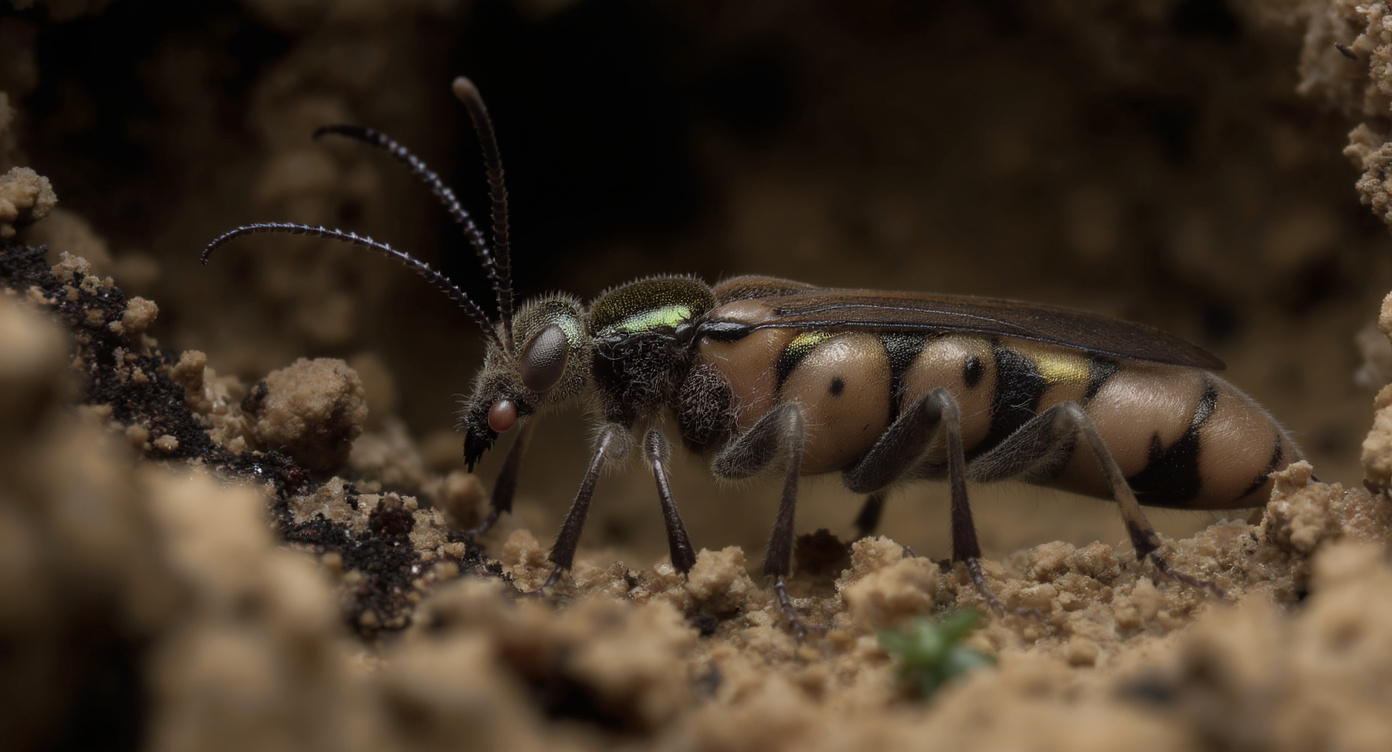
Research has shown that some rove beetles, in order to survive among ants, deactivate the genes responsible for their protective layer and are forced to steal it from their hosts. This specialization makes them completely dependent on the ant colony.
Iberian harvester ants have been found to possess a unique method of reproduction: queens are able to produce clones of males from another species, ensuring the survival of their colony. This unusual symbiosis reveals new aspects of insect evolution.

 Cursus