

Parasitic beetles lose genes to adapt to life in ant colonies
Research has shown that some rove beetles, in order to survive among ants, deactivate the genes responsible for their protective layer and are forced to steal it from their hosts. This specialization makes them completely dependent on the ant colony.
Cursus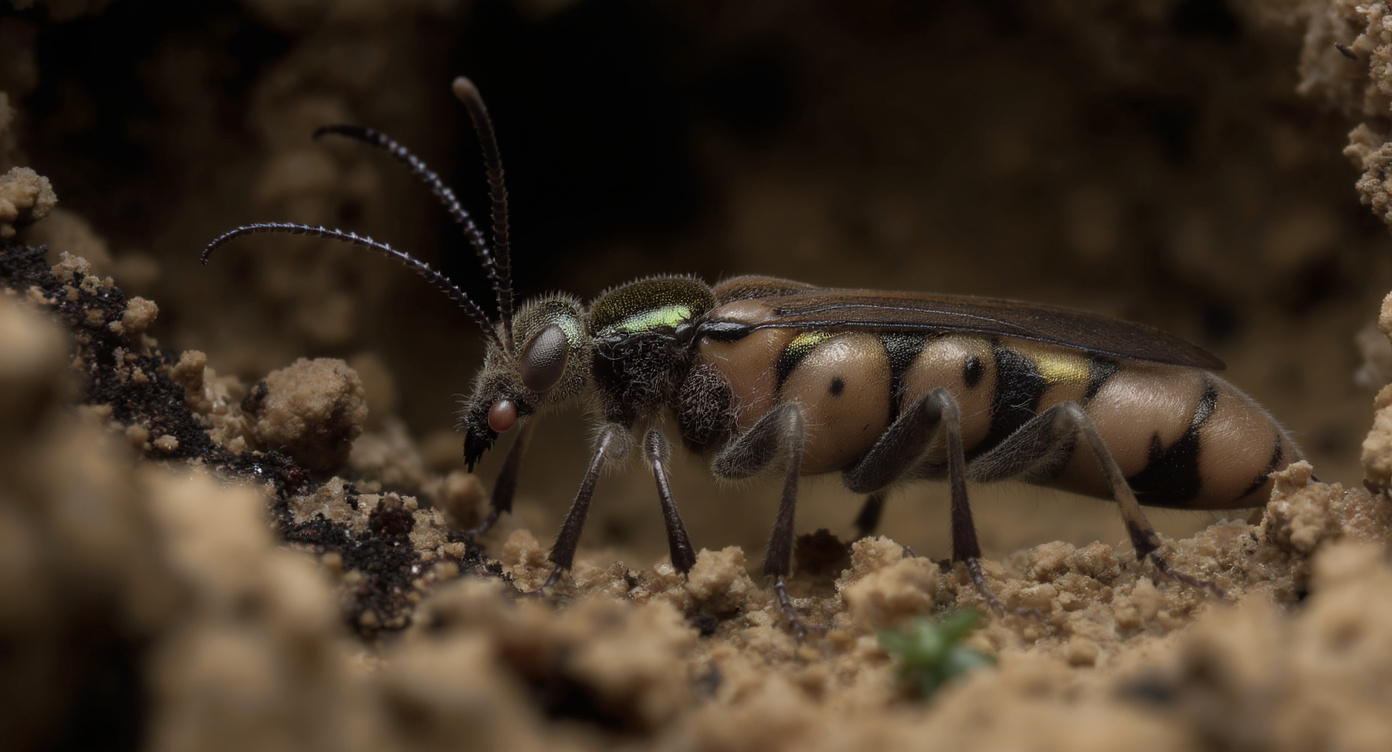
Research on rove beetles has shown that their drive to become "one of their own" within an ant colony forces these insects to deactivate vital genes. To deceive their hosts, the parasites stop producing their own protective layer and are compelled to constantly steal it from the ants. Without this layer, the beetles quickly die from dehydration.
How Ants Recognize Their Own
Ants identify members of their colony by scent—a unique profile of cuticular hydrocarbons on the body surface. These substances not only serve as a "passport" but also function as a protective coating that retains moisture within the insect's body. Researchers compare the beetle's situation to a "Catch-22": if it keeps its own scent, the ants will kill it; if it gets rid of it, it will die from dehydration. The study's results were published in the journal Cell.
The Evolution of Parasitism in Beetles
Scientists studied how different species of rove beetles that parasitize on the tree ant Liometopum occidentale solve this dilemma. To understand their evolutionary trajectory, they constructed a phylogenetic tree and determined when the species diverged, dividing the beetles into two conditional groups: "novices" and "experienced parasites."
- Novices (genus Platyusa) split from their free-living ancestors about 25 million years ago. They live on the periphery of the nest and avoid direct contact with ants.
- Experienced parasites (genus Sceptobius) have existed for over 30 million years and live in the very center of the colony, freely moving among the ants and feeding on their brood.
Chemical Analysis and Genetic Research
Using gas chromatography and mass spectrometry, scientists analyzed the chemical composition of the beetles' exoskeletons. Carbon isotope analysis helped determine whether the beetles synthesize protective substances themselves or acquire them from external sources. In parallel, RNA sequencing was conducted to identify which genes are active in "novices" and "professionals" within the ant nest. To test the dehydration hypothesis, researchers used RNA interference technology: in free-living beetles, they artificially deactivated genes responsible for hydrocarbon synthesis and observed their survival rates.
Two Strategies for Camouflage
Beetles solve the survival problem in fundamentally different ways:
- Platyusa tries to independently mimic the host's chemical signature. Its hydrocarbon synthesis genes are active, but it cannot create an exact copy of the complex ant scent. As a result, its mimicry is imperfect, and the beetle must hide and avoid inspections. However, it remains autonomous and can survive outside the ant nest.
- Sceptobius, upon entering the nest, completely shuts down the genes responsible for producing its own protective wax, becoming chemically sterile. The beetle then climbs onto an ant, grabs it with its jaws, and rubs against it with special bristles on its legs, physically transferring the ant's wax onto itself.
As a result, Sceptobius smells exactly like an ant and is not recognized as an outsider. However, the price of this success is total dependence: without the foreign wax, the beetle loses its protection against moisture loss. In experiments, Sceptobius isolated from ants died of dehydration within 12–24 hours, while Platyusa survived for weeks.
The Trap of Specialization
This study vividly demonstrates how specialization can become a trap. Professional parasites have replaced a physiological function (wax synthesis) with a behavioral one (wax theft). This transition proved effective but irreversible: the beetles can no longer leave the ant nest or return to a free-living lifestyle, as they have lost the ability to retain water in their bodies independently.