

A parasitic worm alters the genes and behavior of ants
A study has shown that the parasitic worm Anomotaenia brevis alters gene activity in ants, affecting their behavior and lifespan. Instead of mimicking the host's hormones, the parasite manipulates existing genetic mechanisms that control aging and social activity.
Cursus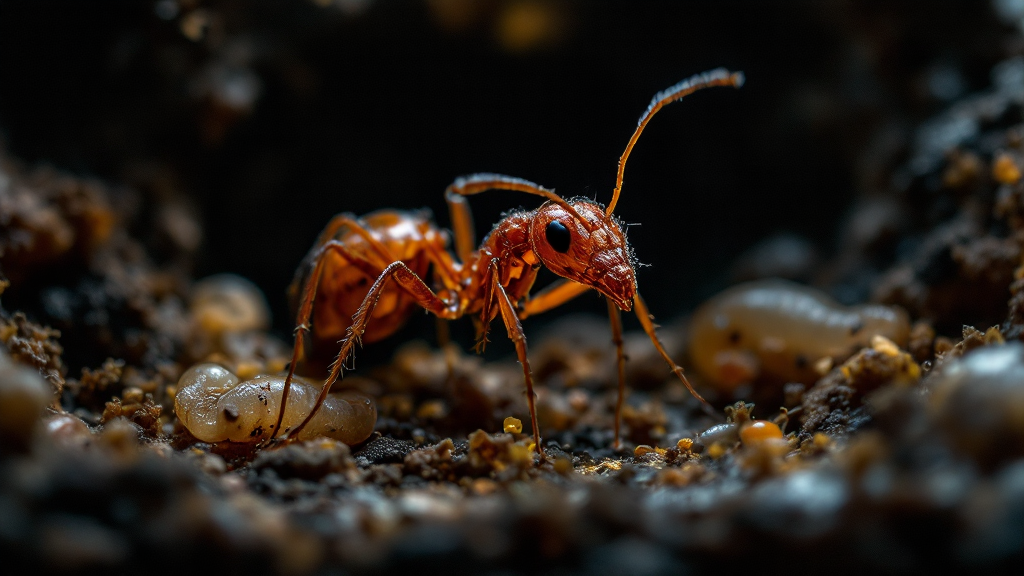
German and Chinese evolutionary biologists have discovered how a parasitic tapeworm influences the behavior and lifespan of worker ants. Their research revealed that the parasite alters the activity of certain host genes: in the fat body, genes associated with queen-like aging are activated, while in the brain, neuropeptides responsible for food-seeking and aggressive behavior are suppressed.
Mechanism of Infection and Behavioral Change
The flatworm Anomotaenia brevis uses acorn ants (Temnothorax nylanderi) as intermediate hosts to reach the digestive tract of woodpeckers—its final host. Infected worker ants stop performing their usual tasks, remain in the nest, and live significantly longer than typical workers, resembling queens in terms of lifespan.
Previously, it was assumed that the parasite affected its host through molecular mimicry, releasing substances that imitate ant hormones.
Study Design
In the study published in BMC Genomics, researchers analyzed brain and fat body tissue samples from ants in three groups: healthy queens, healthy workers, and infected workers. They also sequenced the transcriptome of the worm itself to search for possible analogs of ant signaling molecules. Special attention was given to the parasite’s impact on the expression of neuropeptides that regulate social behavior.
Analysis Results
The analysis showed that the parasite selectively affects ant tissues. In the fat body of infected workers, 111 genes were activated—similar to those active in healthy queens. In infertile individuals, genetic pathways related to longevity, metabolism, and stress resistance were triggered, including increased production of the protein transferrin.
In the brains of infected workers, there was a widespread suppression of key neuropeptides such as tachykinin (linked to aggression) and short neuropeptide F (sNPF), which motivates food-seeking. As a result, the ant becomes less active and stays in the nest, increasing its chances of being eaten by a woodpecker.
Conclusions and Limitations
The study showed that the worm does not produce proteins similar to ant neuropeptides, disproving the molecular mimicry hypothesis. Instead, the parasite indirectly switches the host’s genetic programs by mechanisms that remain unclear.
The authors note that tissue sequencing mixes signals from different brain cell types, and the increased lifespan of infected ants leads to age differences between groups, which may affect gene expression analysis. Nevertheless, the study demonstrates that to control host behavior, the parasite does not need to create new genes—it is sufficient to manipulate existing mechanisms that regulate caste identity and aging.