

The instinct to care for offspring is linked to the feeling of hunger.
A new study has shown that parental care in animals is based on ancient neural mechanisms related to hunger control. Evolution has repurposed existing feeding regulation systems to shape parental behavior.
Cursus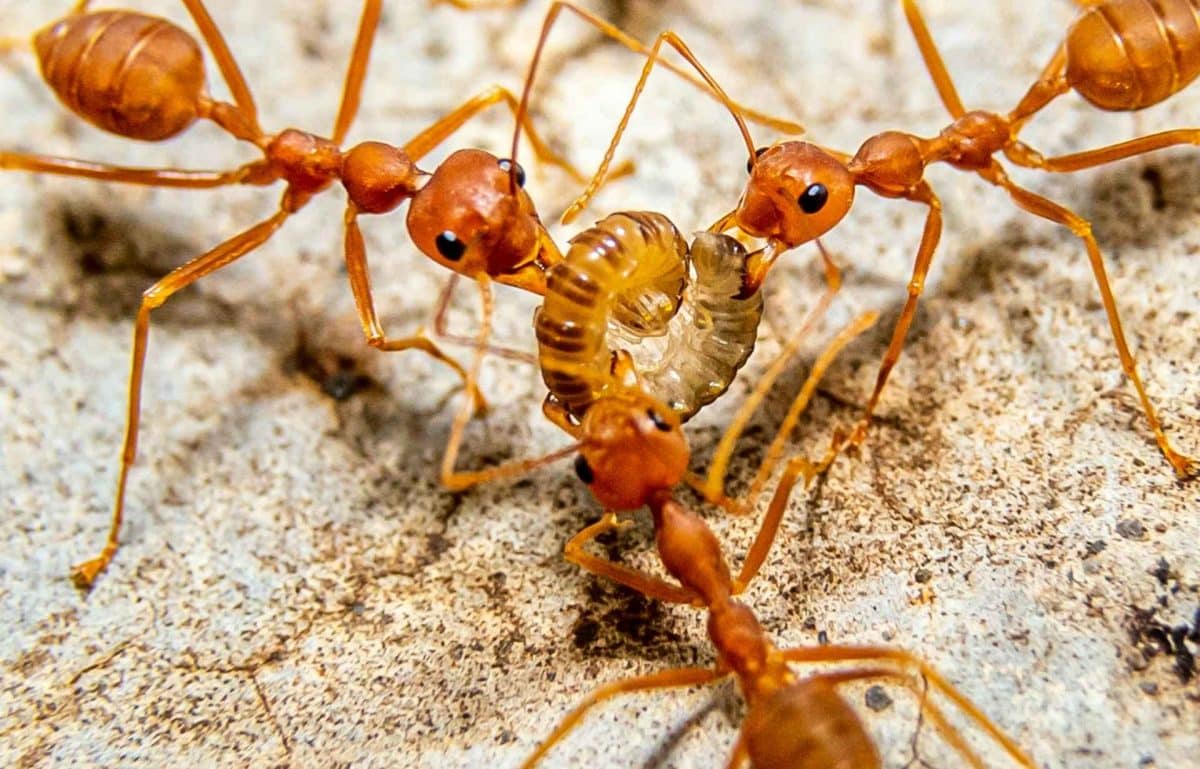
Parental care in animals developed based on ancient neural circuits that were originally responsible for the sensation of hunger and the search for food. This conclusion was reached by neurobiologists studying the brain biochemistry and social behavior of Cerapachys biroi ants. Their findings suggest that evolution did not create the parental instinct from scratch, but rather adapted existing systems that regulate feeding behavior.
Studying the Neurochemistry of Ant Behavior
For their experiments, researchers chose Cerapachys biroi ants as a model. The brains of these ants contain about 60,000 cells, which is significantly fewer than in the brains of mice. This allowed for a detailed study of the neurochemical processes associated with behavior.
The scientists developed an automated system to track and analyze interactions between adult ants and larvae. They examined 70 different neuropeptides—signaling molecules in the ant brain—and monitored changes in their concentrations at various stages of the insect’s life.
Key Substances Regulating Parental Care
It was found that two main substances, both linked to the hunger control system, are responsible for changes in social roles among ants and their attitude toward larvae:
- Neuropeptide F (NPF) directly stimulates parental care. Its concentration is highest in young ants that tend to the brood.
- Allatostatin A (AstA) acts in the opposite way, prompting ants to leave the larvae and go in search of food. The concentration of this substance increases with age, as the ant becomes a forager.
There is an age-based hierarchy in the ant colony: young ants care for the offspring inside the nest, while adults search for food outside.
The Influence of Physiological State on Behavior
The signaling molecules NPF and AstA are sensitive to the physiological state of the ant. During starvation, NPF levels rise sharply while AstA levels decrease, which stimulates a return to the larvae and increased care for them. After feeding, the balance of these substances shifts, and the adult ant leaves the nest to seek new resources.
The Universality of the Mechanism
Similar mechanisms linking hunger-related neuropeptides to parental behavior have previously been found in mice. The new study shows that this principle is characteristic of various animal groups. Evolution has repurposed existing feeding regulation systems to shape parental care, since feeding is at the core of both processes—only in the case of parental care, it is the offspring, not the adult animals themselves, who receive the food.