Scientists have developed a new molecular approach that enables solar cells to convert energy with an efficiency exceeding 100%. This technology paves the way for the creation of next-generation solar panels.
Chinese scientists have developed a new alloy capable of reaching ultra-low temperatures without the use of the rare helium-3 isotope. This breakthrough could simplify the creation of compact quantum and cryogenic systems, reducing infrastructure requirements and expanding opportunities for the advancement of cutting-edge technologies.
A new study has shown that even weak magnetic fields can significantly influence the growth and size of nanoparticles in dusty plasma. This discovery opens up possibilities for precise control over the synthesis of nanomaterials and helps to better understand the processes occurring in space.
Japanese researchers have experimentally demonstrated for the first time that the Kondo effect can not only suppress but also enhance the magnetic properties of a material, depending on the magnitude of the spin. This discovery opens up new possibilities for controlling quantum states and developing materials for quantum technologies.
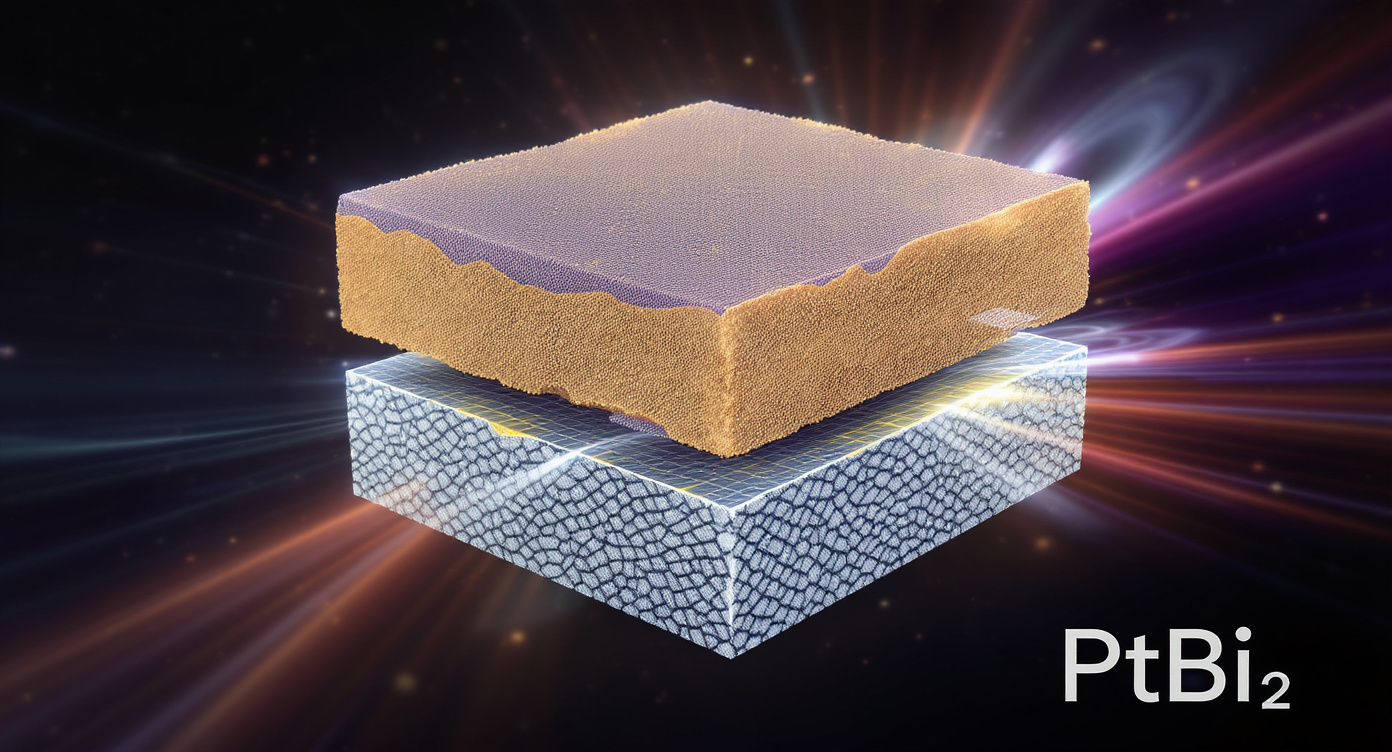
The material PtBi₂ exhibits unique superconductivity only on its surfaces and forms Majorana particles, which are promising for creating stable qubits in quantum computers. Researchers are exploring ways to control these properties for future quantum technologies.
Scientists from the University of California have, for the first time, created two-dimensional arrays of quantum defects in synthetic diamond. This breakthrough opens up new possibilities for developing highly sensitive quantum sensors. Such an approach could significantly improve the accuracy of measurements in biology and materials science.


 Vigor
Vigor