

China has developed an alloy for ultra-high temperatures without using helium-3.
Chinese scientists have developed a new alloy capable of reaching ultra-low temperatures without the use of the rare helium-3 isotope. This breakthrough could simplify the creation of compact quantum and cryogenic systems, reducing infrastructure requirements and expanding opportunities for the advancement of cutting-edge technologies.
Cursus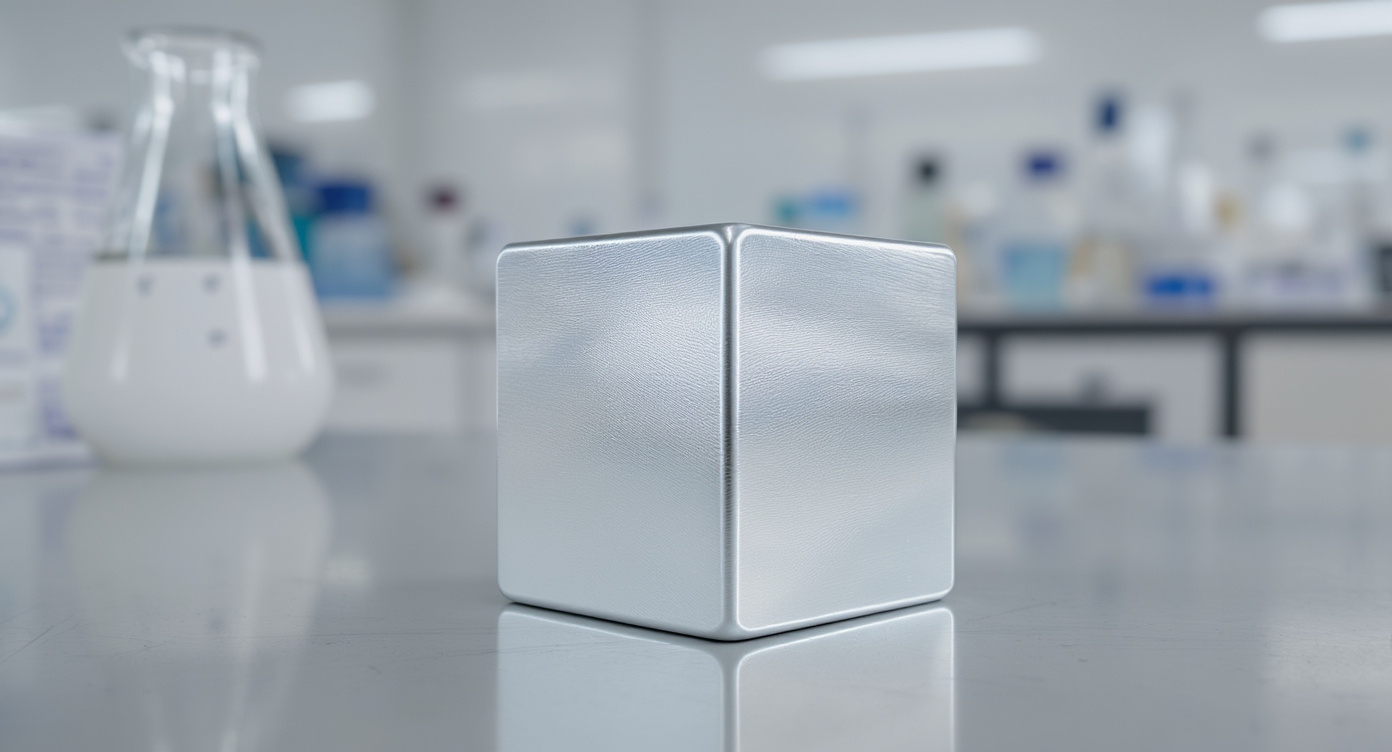
The race to achieve ultra-low temperatures essential for the advancement of quantum technologies may soon have a new leader, thanks to a breakthrough by Chinese scientists. Researchers in China have developed an alloy capable of reaching temperatures close to absolute zero without relying on the rare helium-3 isotope.
The Importance of Low Temperatures for Quantum Technologies
Quantum technologies harness the unique properties of particles at the microscopic level, opening up new possibilities across various industries. For example, quantum computers, unlike traditional ones, operate with qubits—units of information that can exist in multiple states simultaneously. This allows them to perform calculations that would be impossible for conventional computers within a reasonable timeframe.
Other applications include quantum sensors, which can detect the slightest changes in magnetic and gravitational fields with high precision, as well as quantum communication networks that are virtually immune to hacking.
The Need for Extreme Cooling
Quantum devices require atoms to be nearly motionless, which is only possible at temperatures below 1 Kelvin (−272.15 °C). Even minor thermal fluctuations can disrupt qubit states or reduce the effectiveness of quantum sensors. As a result, advanced cooling methods are used in laboratories to achieve these conditions.
Limitations of Traditional Methods
The primary tool for reaching such low temperatures is the dilution refrigerator, which uses a mixture of helium-3 and helium-4. This system can achieve temperatures in the millikelvin range, which is necessary for quantum computing and other technologies.
However, helium-3 is an extremely rare isotope, mainly produced as a byproduct of tritium decay in nuclear reactors. Global reserves of helium-3 are limited, and demand is high, making it difficult to scale quantum technologies. Additionally, these refrigerators are bulky, require significant infrastructure, and occupy a lot of laboratory space.
A New Approach: The EuCo₂Al₉ Alloy
To overcome these challenges, Chinese researchers have developed a solid material capable of reaching temperatures near absolute zero without helium-3. The new EuCo₂Al₉ alloy is composed of rare earth metals: europium, cobalt, and aluminum.
Cooling is achieved using the adiabatic demagnetization refrigeration (ADR) method. In this process, the material is first exposed to a strong magnetic field, aligning its magnetic moments and releasing heat. After isolating the material from its environment, the magnetic field is removed, and as the moments return to a random state, the material absorbs heat, lowering its temperature.
Advantages of the New Material
While ADR technology is well-known, the innovation of the Chinese development lies in the material itself. Many ADR materials struggle with thermal conductivity—they cool down but cannot efficiently transfer this effect outward. The new alloy combines strong low-temperature ADR potential with excellent thermal conductivity, enabling the creation of compact, solid-state cooling modules without moving parts or the need for helium-3.
In laboratory tests, the material reached temperatures around 106 millikelvin, comparable to traditional helium-3 systems and suitable for many cryogenic applications.
Application Prospects
This new alloy not only solves the problem of helium-3 dependency but also opens up additional opportunities. Compact solid-state refrigerators could enable portable cryogenic systems, make quantum equipment more compact and cost-effective, and reduce infrastructure requirements for research centers. This could accelerate the development of modular cooling systems for defense, space technology, and advanced electronics.
Compact quantum processors could be installed on spacecraft for deep space calculations, while secure quantum networks could be integrated into existing military infrastructure without the need for massive refrigeration units. The new systems may also find use in precision sensors and medical imaging.
Relevance of the Development
The publication of these research results in Nature coincided with the announcement of a U.S. competition to develop a modular cooling system without helium-3, highlighting the timeliness and significance of this new technology for the advancement of quantum and cryogenic systems.