

Diamonds pave the way for quantum sensors
Scientists from the University of California have, for the first time, created two-dimensional arrays of quantum defects in synthetic diamond. This breakthrough opens up new possibilities for developing highly sensitive quantum sensors. Such an approach could significantly improve the accuracy of measurements in biology and materials science.
Cursus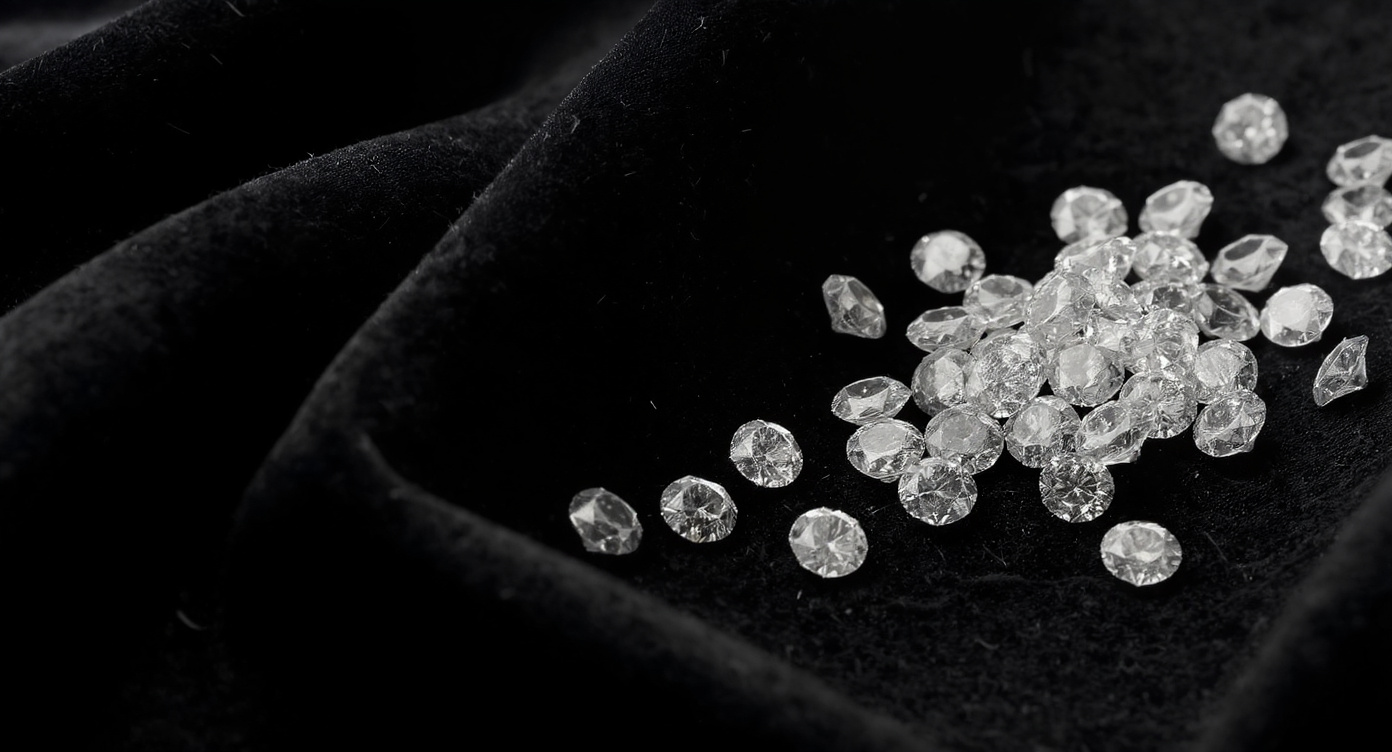
At the University of California, Santa Barbara, physicists are exploring the potential of creating quantum technologies using lab-grown diamond. Under the guidance of Ania Jayich, the laboratory is studying atomic defects in diamond, known as spin qubits, which can be used for quantum sensing applications.
Breakthrough in Organizing Quantum Defects
Researcher Lillian Hughes has, for the first time, demonstrated that not only individual qubits but also two-dimensional ensembles of quantum defects can be organized and entangled within diamond. This discovery paves the way for developing solid-state systems with quantum advantages in sensing. During experiments, the team managed to create a two-dimensional layer of NV centers (nitrogen-vacancy centers) with controlled density and size, enabling strong dipole interactions between defects.
Features of NV Centers
An NV center consists of a nitrogen atom replacing a carbon atom and a neighboring vacancy. The long-lived spin states of these centers make them ideal for quantum sensing, as the spin interacts with the measured magnetic field.
History and Novelty of the Approach
The use of spin as a sensor has been known since the 1970s, when magnetic resonance imaging (MRI) was developed. Previous quantum sensing experiments in solids used either single spins or non-interacting ensembles. The novelty of the current work lies in creating dense ensembles of strongly interacting spins, which allows for the use of collective quantum behavior and quantum entanglement to enhance measurement sensitivity.
Advantages of Solid-State Quantum Sensors
Previously, sensors utilizing quantum entanglement were only used in gas-phase atomic systems. Using solid materials like diamond makes it easier to integrate the sensor and bring it closer to the system under study. Diamond quantum sensors allow materials being studied to be placed just nanometers from the diamond surface, which is convenient for investigating various objects.
Such sensors can be valuable for research in biological systems and new materials, including electronic, superconducting, and magnetic environments.
Overcoming Quantum Noise
One of the main challenges for researchers remains overcoming quantum noise, which limits measurement accuracy. There is a fundamental limit imposed by quantum projection noise. To surpass this, methods of quantum correlation, such as spin squeezing, are used to reduce measurement uncertainty.
Signal Enhancement and Future Plans
The team's second paper describes a strategy for amplifying the signal, where the measured signal is enhanced without increasing noise. This allows for more precise detection of small quantities.
In the future, these methods are planned to be applied in real systems, either by amplifying the signal or increasing the degree of quantum squeezing. Achieving this requires controlling the arrangement of spins in a two-dimensional plane, forming a regular lattice. Solving this challenge will bring the practical realization of quantum advantage in sensing closer to reality.