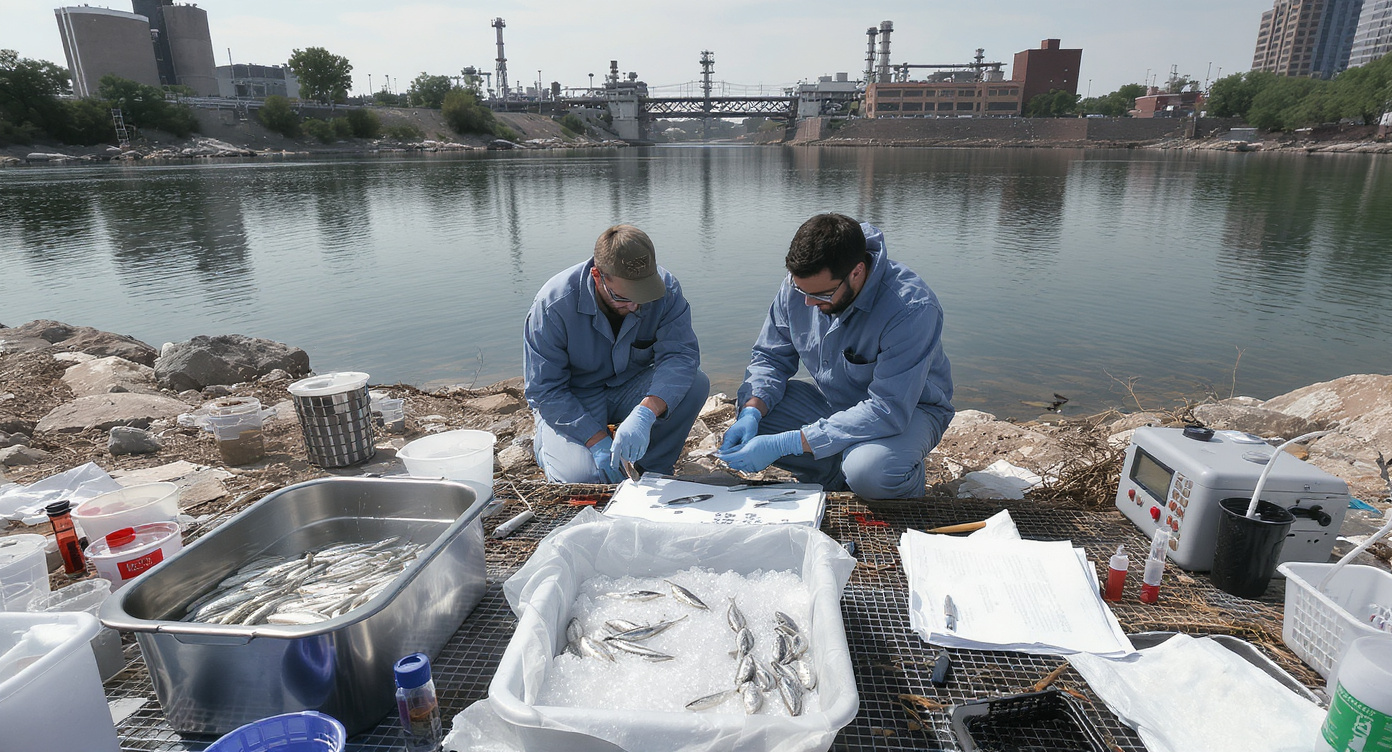
Cover generated by AI
 Natura
Ecology and environment · Water ConservationResearch and development · BiotechnologyEcology and environment · Biodiversity
Antidepressants and opioids accumulate in river fish
Canadian ecologists have discovered that antidepressants and opioids accumulate in the tissues of small river fish living downstream from wastewater treatment plants. The study revealed gender differences in toxin accumulation and proposed a new analytical method to assess the impact of pharmaceutical pollution on aquatic ecosystems.
0 —