

Beavers turn small rivers into carbon traps
A study has shown that beaver dams enable bodies of water to store nearly 200 times more carbon than ordinary streams, thereby reducing carbon emissions into the atmosphere and oceans. Beavers alter the biogeochemistry of rivers, transforming them into highly effective carbon reservoirs.
Natura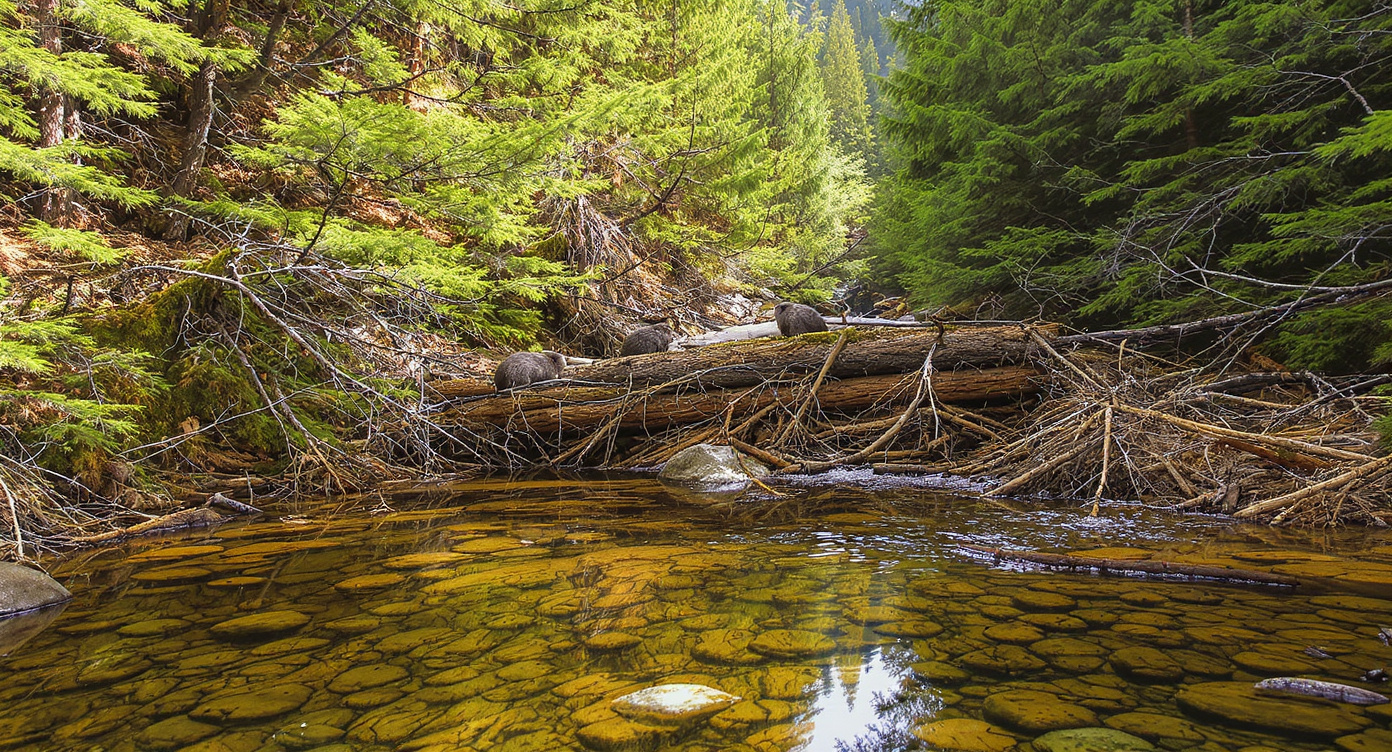
The construction of beaver dams has led to reservoirs accumulating nearly 200 times more carbon compared to regular streams. The flooding of the area changed the direction of dissolved inorganic carbon in the water, causing it to move into groundwater and bottom sediments, which prevents it from entering the atmosphere and oceans.
The Role of Rivers and Streams in the Carbon Cycle
Rivers and streams play a significant part in the global carbon cycle, transporting organic matter from land to larger bodies of water and releasing greenhouse gases into the atmosphere. With the return of the European beaver (Castor fiber) to Europe, river landscapes began to change, but the impact of these changes on the climate remained unclear for a long time.
Studying the Impact of Beaver Dams
Previously, it was assumed that beaver dams could intensify global warming due to methane emissions from decaying submerged wood. However, such calculations often overlooked underground flows of dissolved inorganic carbon (DIC).
In a study published in the journal Communications Earth & Environment, researchers examined an 800-meter section of a stream in northern Switzerland, where beavers built a dam in 2010. All carbon flows on the surface and underground were measured, drones were used to map vegetation, and gas chambers were installed to record carbon dioxide and methane emissions from water, soil, and wood.
Subsurface water leaks were tracked using salt tracers, and the composition of bottom sediments and soils was analyzed by drilling. Samples were divided into layers from before and after the arrival of beavers, and the carbon content was determined using pyrolysis. Based on the collected data, a mathematical model of the stream’s hydrology without beaver intervention was created.
Analysis Results
The study showed that the section with the beaver dam retained 98.3 tons of carbon per year, while the model of the stream without the dam retained only 0.5 tons—almost 200 times less. The main portion of the accumulated carbon was dissolved inorganic carbon carried by the flow. The dam raised the water level and created hydraulic pressure, pushing carbon-rich water into underground gravel layers. The high pH level of the water helped retain carbon in the form of bicarbonate, preventing its evaporation as carbon dioxide, while the oxygen-poor environment at the bottom promoted the deposition of carbon as solid minerals.
Impact on Methane Emissions
Concerns about methane emissions were not confirmed: methane accounted for less than 0.1% of the system’s total carbon balance. This is attributed to the absence of peat and the presence of sulfates and iron, which suppress methanogenesis in temperate climates. In summer, dried-out sections of the reservoir emitted carbon dioxide, but winter and spring accumulation fully compensated for these losses. Calculations showed that over 33 years of existence (until fully silted up), a single dam could accumulate up to 1,194 tons of stable carbon.
Conclusion
By reshaping the landscape to suit their needs, beavers turn small rivers into effective carbon sinks. These animals redirect chemical flows from rapid surface runoff deep into the soil, altering the biogeochemistry and nutrient cycles in river ecosystems.