

Antidepressants and opioids accumulate in river fish
Canadian ecologists have discovered that antidepressants and opioids accumulate in the tissues of small river fish living downstream from wastewater treatment plants. The study revealed gender differences in toxin accumulation and proposed a new analytical method to assess the impact of pharmaceutical pollution on aquatic ecosystems.
Natura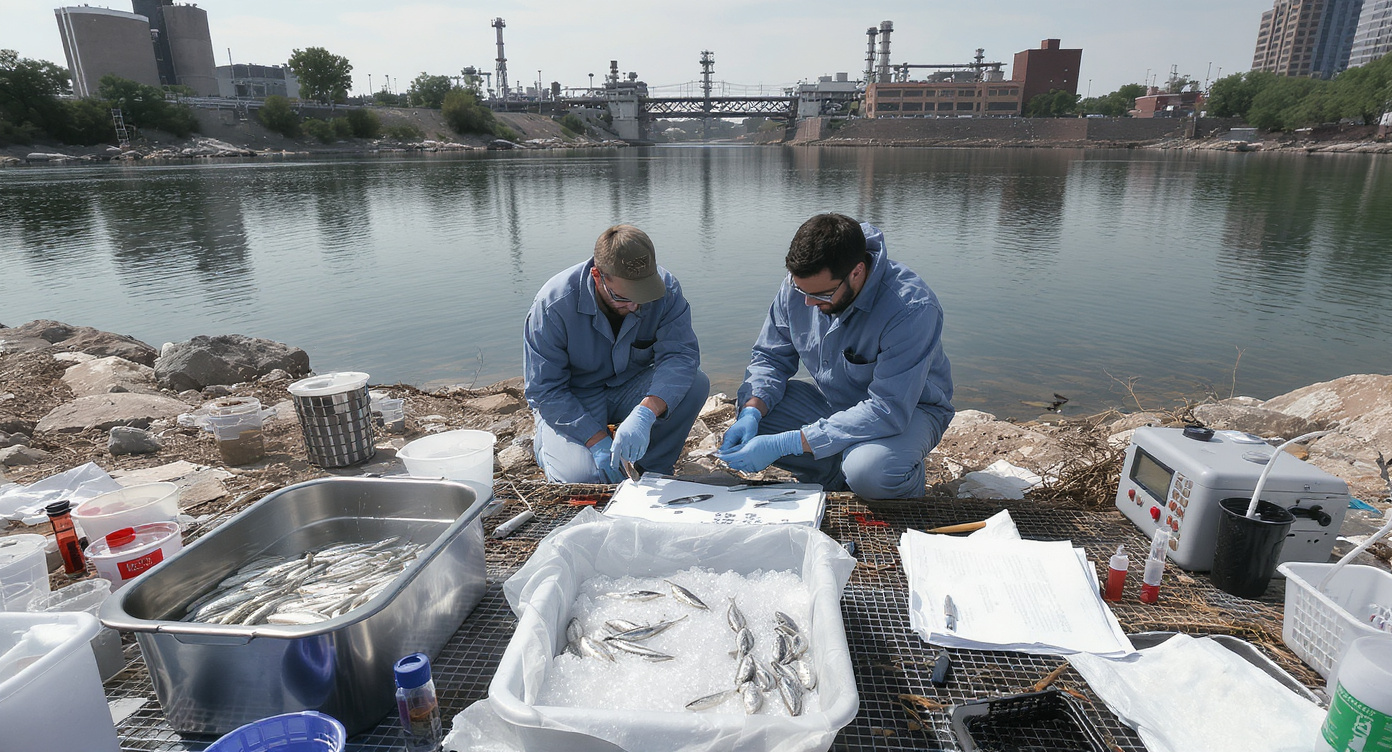
Canadian ecologists have discovered traces of antidepressants and opioids in the tissues of small river fish living downstream from urban wastewater treatment plants. The study showed that male fish accumulate significantly more neuroactive substances than females. This is linked to the fact that during spawning, females expel fat-soluble toxins along with their eggs.
Sources of Pollution and Analytical Challenges
Residues of pharmaceuticals and narcotic substances enter the sewage system daily. Urban wastewater treatment facilities are unable to completely remove these compounds, so they end up in rivers. Previously, biologists were aware of the presence of neuroactive substances in water, but technical limitations made it difficult to accurately determine their accumulation in the tissues of wild fish. The small size of the fish and their high content of complex lipids distorted the results of mass spectrometry, so dozens of specimens had to be combined for analysis, leading to the loss of data on sex and individual differences.
A New Research Method
To address this problem, a new extraction protocol was developed. Three species of darter fish (Etheostoma), each less than ten centimeters long, were chosen as model organisms. These fish are sedentary, do not migrate, and feed in the silt, making them ideal indicators of local pollution.
Ecologists collected 15 males and 15 females of each species both upstream and downstream from a sewage outfall on the Grand River. Each fish was frozen in liquid nitrogen, ground into powder, and placed in an ultrasonic bath at –30°C. At this low temperature, fats solidified and were filtered out, after which the purified extract was analyzed using liquid chromatography. This approach allowed the detection of molecules at extremely low concentrations—as little as 0.02 nanograms per gram of tissue.
Analysis Results
Nineteen out of twenty-six monitored neuroactive substances were found in the water. However, only four compounds consistently accumulated in fish tissues: the antidepressant venlafaxine (and its metabolite), as well as the opioids fentanyl and methadone. Fish caught downstream from treatment plants contained several times more of these substances than those from clean sections of the river.
Gender Differences in Substance Accumulation
Tissue comparisons revealed a pronounced gender imbalance: males living downstream from treatment plants accumulated significantly more fentanyl and venlafaxine than females. This is because sampling was conducted in the spring, immediately after spawning. Since antidepressants and opioids are lipophilic, females transfer toxins from their bodies into their eggs, which are rich in fats, during egg formation. As a result, the toxin content in the female's body decreases, but the developing fry are exposed to chemical substances at early stages of development.
Significance of the Study
The study confirms that neuroactive substances from urban wastewater freely enter aquatic food chains and accumulate in the tissues of vertebrates. The developed microanalysis method provides ecologists with a precise tool for assessing the impact of pharmaceutical pollution on the biochemistry of wild populations at the individual level.