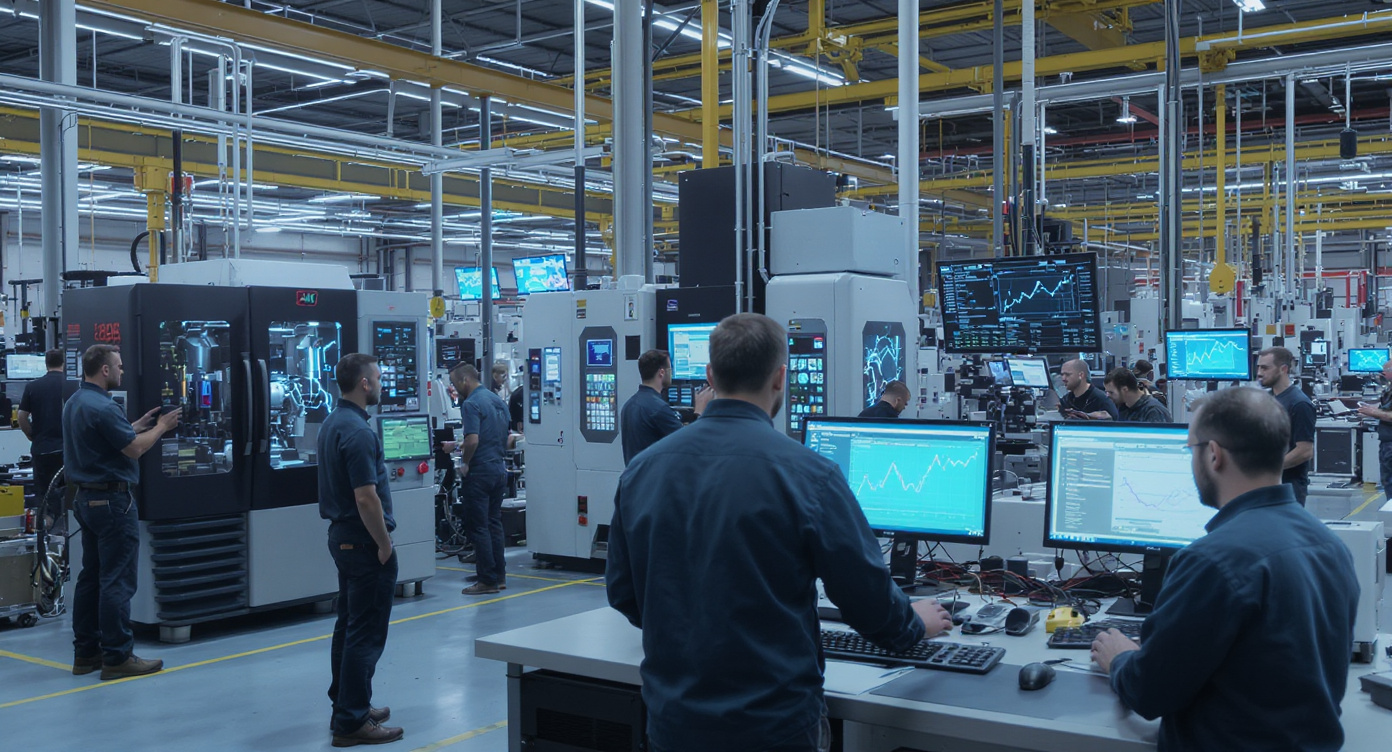
The implementation of artificial intelligence in industry requires flexibility and rapid adaptation to fast-paced technological changes, while maintaining the stability and security of key processes. Companies that can quickly identify and scale effective solutions, while discarding inefficient ones, gain a competitive advantage.
Industrial artificial intelligence systems can significantly boost manufacturing efficiency, but their success depends on engineers’ trust in AI recommendations and the transparency of its decisions. Only when AI’s conclusions are clear, well-founded, and linked to operational data do these technologies become a true source of value for enterprises.
The article explores the key aspects of implementing computer vision in industrial automation, including the integration of 2D and 3D data, calibration, error handling, and adaptation to the physical properties of objects to ensure reliable operation in manufacturing environments.
AlgaeBarn has implemented an automated lid labeling system that processes up to 450 lids per hour and allows the company to save up to $50,000 annually. This solution has reduced labor costs, improved product quality, and eliminated the need for manual operations.
Siemens has introduced the Eigen AI agent system, which can automatically reprogram industrial robots and control systems for new tasks. This technology has the potential to simplify automation, reduce costs, and make the adoption of robotics more accessible for small and medium-sized businesses.
The implementation of virtual technologies in production management requires both equipment modernization and skilled professionals. Virtualization is particularly effective for scalable and repetitive operations, but it is recommended that critical tasks remain handled by physical systems.

 Opus
Opus