

Siemens AI agents are redefining the rules of industrial automation
Siemens has introduced the Eigen AI agent system, which can automatically reprogram industrial robots and control systems for new tasks. This technology has the potential to simplify automation, reduce costs, and make the adoption of robotics more accessible for small and medium-sized businesses.
Opus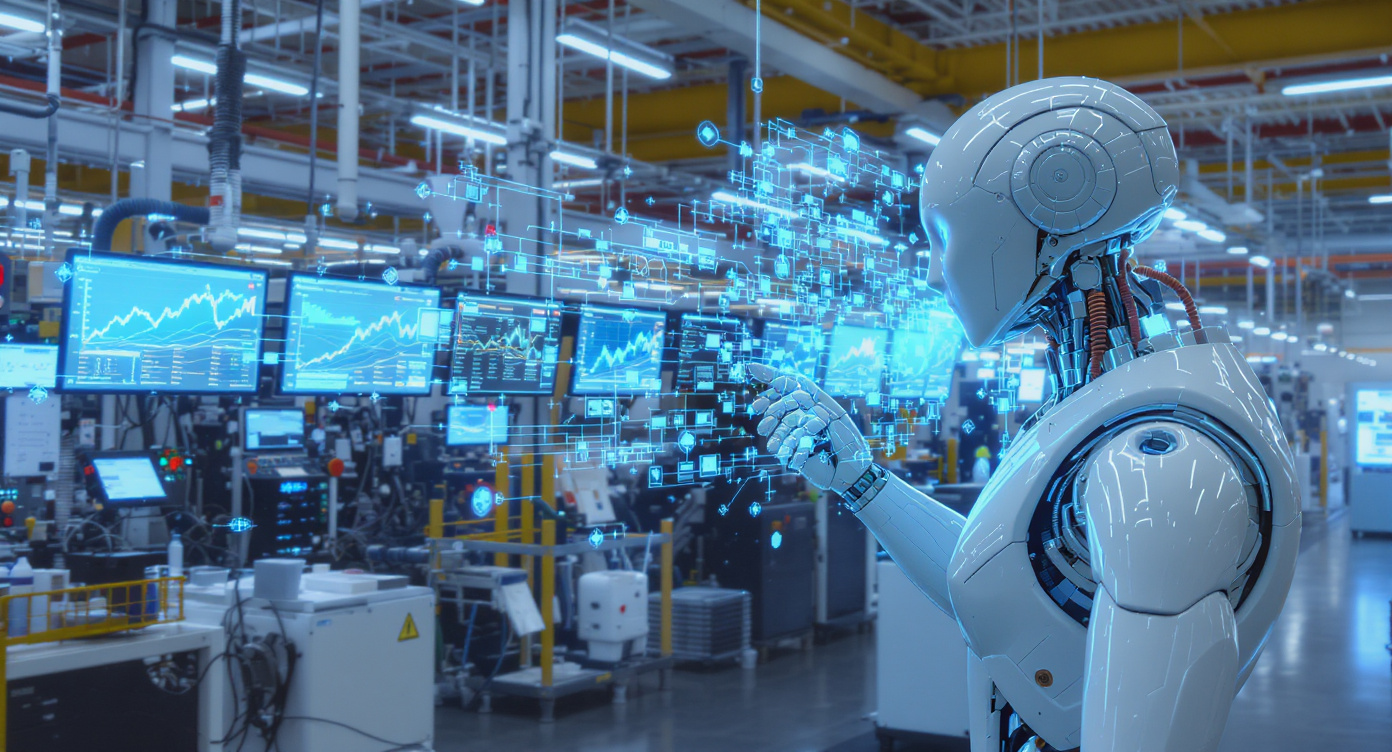
Would you implement robots at your enterprise if they could independently reprogram themselves to handle new and diverse tasks?
New Approaches to Automation
Today, interest in artificial intelligence is gradually shifting from hype to more practical and realistic solutions. At the Hannover Messe exhibition, Siemens introduced an AI agent technology called Eigen. This system is designed for automation and can update code or instructions for programmable logic controllers (PLC), distributed control systems (DCS), and robotic applications according to new tasks and priorities, eliminating the need for manual programming.
Capabilities and Advantages of Eigen
Siemens positions Eigen as an independent AI agent capable of replacing traditional coding and programming in industrial systems. According to the company, engineering work and reconfiguration account for up to 70% of a robot’s total lifecycle costs. Using artificial intelligence like Eigen can significantly reduce the time required for making changes, increasing robot efficiency and making such technologies accessible to small and medium-sized enterprises.
Addressing Workforce Challenges
Implementing Eigen can also help manufacturers cope with the shortage of programming and coding specialists. Siemens estimates that finding qualified programmers to write code for PLCs and robotic systems is a major bottleneck for scaling production. The new generation of specialists can use more intuitive methods to interact with systems, without needing deep knowledge of programming syntax.
Implementation Prospects
The use of artificial intelligence for reprogramming manufacturing processes is expected to be especially relevant in the United States, where there are fewer highly educated technical specialists in manufacturing compared to Germany. Nevertheless, human involvement in the automation process remains essential: the AI agent serves as a tool, while people oversee and manage the process.
Practical Implementation
Currently, Eigen’s effectiveness in real-world conditions has yet to be proven, and experts remain divided on the potential of agent-based artificial intelligence. However, Siemens’ goals for deploying Eigen appear more pragmatic compared to some ambitious AI-based automation concepts. If such technologies truly simplify the adoption of robotics for small and medium-sized businesses, agent-based AI could find practical application and transform approaches to industrial automation.