

Deep-dwelling archaea in the crater: a key to life on Mars?
A study of microbial life deep within a meteorite crater in Sweden has revealed that archaea and bacteria can survive and produce methane without access to light or external hydrogen. These findings support the hypothesis that life could potentially exist beneath the surface of Mars.
Cursus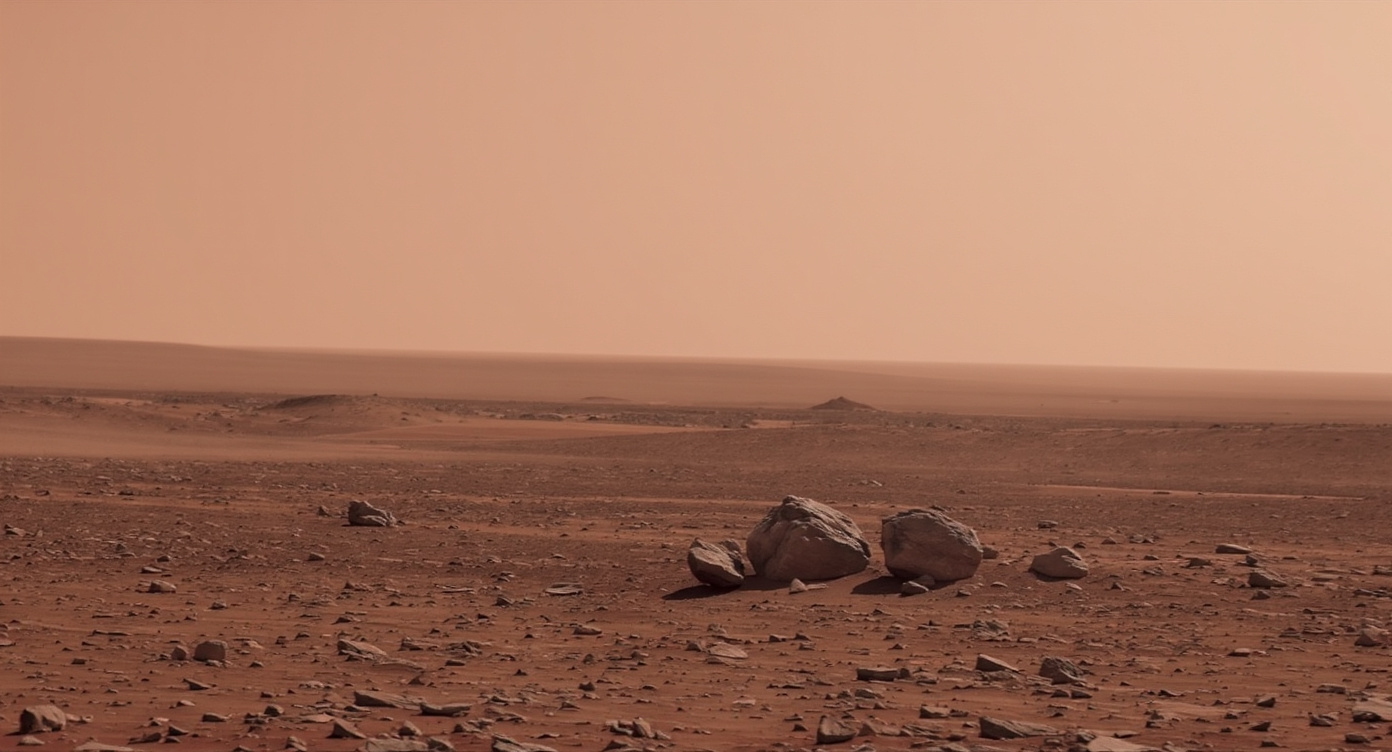
At a depth of 380 meters beneath the floor of a meteorite crater in Sweden, in total darkness, live archaea capable of producing methane. Remarkably, these organisms do not require hydrogen from the external environment for their survival—other microorganisms generate it for them. This entire microscopic ecosystem is built on mutual support, and according to scientists, similar processes could very well occur on Mars.
The Mystery of Martian Methane
After the Curiosity rover landed in Gale Crater in 2012, its instruments began detecting suspicious methane emissions, which continue to this day. The reasons for this phenomenon remain unclear: the emissions occur mainly at night and intensify during the summer. There is ongoing debate about the origin of this methane—it’s possible the rover is detecting leaks from its own reservoir intended for soil analysis.
Where to Search for Life on Mars?
This raises the question: could hypothetical methane-producing organisms exist on Mars? The planet’s surface is considered inhospitable to life due to extreme cold, low atmospheric pressure, and high radiation levels—Mars’s core generates almost no magnetic field. Therefore, astrobiologists believe that the search for signs of life should focus on the planet’s subsurface, where the regolith shields against radiation and both temperature and pressure are higher. Light is not essential for life: on Earth, there are organisms that derive energy not from photosynthesis, but from chemical reactions between inorganic substances (chemosynthesis).
Traces of iron-oxidizing organisms are suspected in Martian soil. Some terrestrial bacteria feed on iron, survive in harsh conditions, and leave behind distinctive microscopic structures that can persist in rocks for billions of years. Astrobiologists believe that similar markers could be sought on Mars as well.
Exploring the Siljan Crater
Recently, a new argument in favor of the possibility of life on Mars emerged thanks to the study of the Siljan meteorite crater in Sweden, which is about 52 kilometers in diameter. The crater formed roughly 380 million years ago after a large asteroid impact. Over time, its edges have smoothed out, and lakes have formed around its perimeter, creating a ring-like structure.
In these areas, traces of oil and gas seepage have been observed, so in the 1970s and 1980s, geological surveys were conducted here, including drilling a 380-meter-deep well. The well passes through sedimentary rocks formed after the asteroid impact and reaches ancient granite bedrock. No deposits were found, but the well remained and became the subject of research by scientists from Sweden, Finland, and the USA.
Experiments and Discoveries
Researchers collected water and oil samples from the well and then recreated the conditions of a 380-meter depth in the laboratory. Various nutrient substrates were added to the samples in turn to "awaken" living organisms. The experiment was successful: the introduction of methanol and oil activated the microbes.
Genetic analysis allowed scientists to identify the specific species present. Special attention was given to the methanogenic archaea Candidatus Methanogranum gryphiswaldense and the bacteria Acetobacterium sp. KB-1. Both organisms are strictly anaerobic—oxygen is not only unnecessary for them, but also harmful. The archaea obtain energy from inorganic substances, while the bacteria feed on hydrocarbons from local oil.
Syntrophy: Mutually Beneficial Cooperation
One question remained: where do the archaea get the hydrogen they need if it’s absent from the samples? The answer lies in the metabolism of Acetobacterium: these bacteria produce hydrogen, which is a harmful byproduct for them. If the hydrogen were not removed, the bacteria’s survival would quickly become difficult. Thus, a form of mutually beneficial cooperation—syntrophy—develops between the two organisms: one feeds on the waste of the other.
Significance for Astrobiology
According to researchers, such findings are important both for studying life on Earth and for astrobiology. An asteroid impact heats the crust and creates fractures through which water can circulate. Therefore, craters could serve as refuges for extraterrestrial microorganisms, if such life exists.