

The iron from icebergs turned out to be useless for algae.
A new study has found that the iron delivered to the Southern Ocean by icebergs is often not easily accessible to algae and does not stimulate their growth as previously believed. This could reduce the ocean's ability to absorb carbon dioxide as climate warming continues.
Natura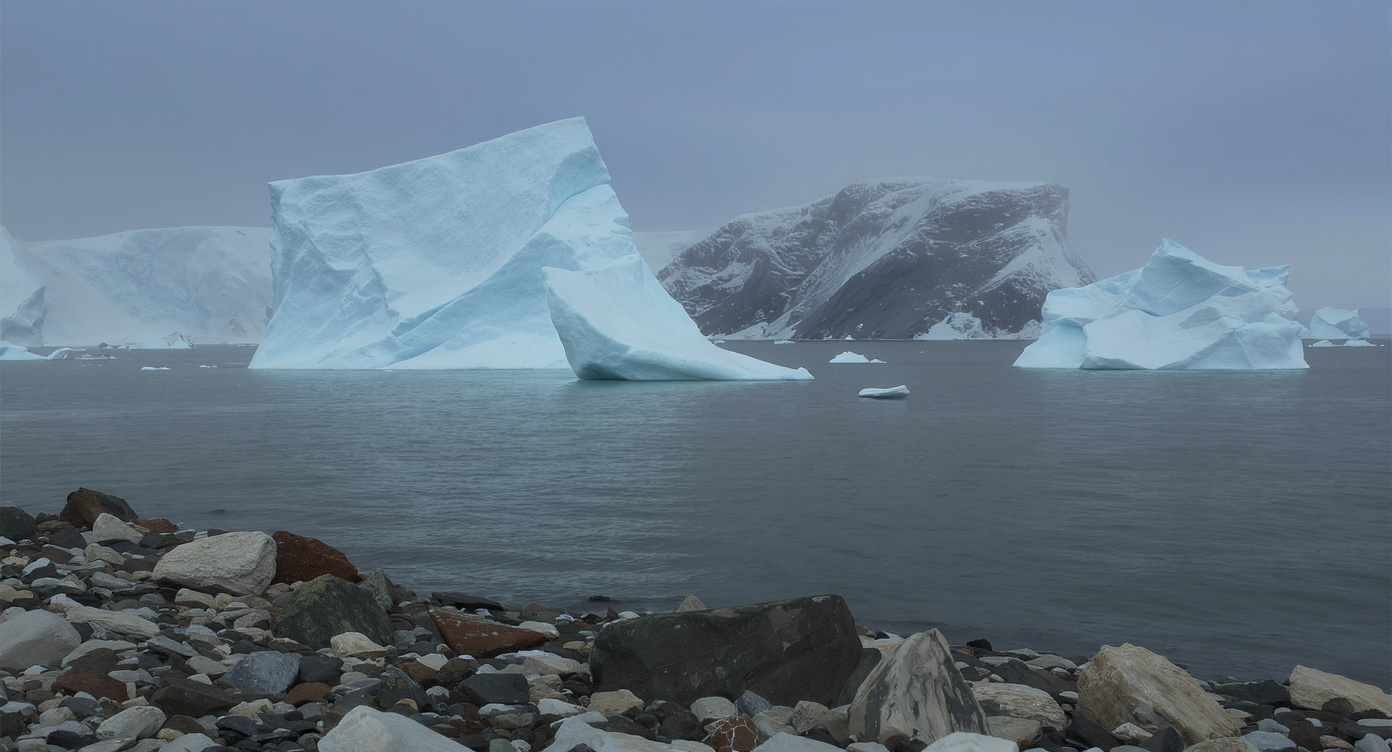
A new study published in Nature Geoscience has uncovered an unexpected link between changes in the West Antarctic Ice Sheet (WAIS) and fluctuations in the growth of marine algae in the Southern Ocean over past glacial cycles. These findings challenge established views about the role of iron in stimulating oceanic biological productivity.
Iron and Icebergs: Surprising Conclusions
The research focused on iron-rich sediments that entered the ocean along with icebergs calving from West Antarctica. Iron is typically considered a crucial nutrient that promotes algae growth. However, analysis of sediment cores retrieved in 2001 from depths of over five kilometers in the Pacific sector of the Southern Ocean showed that even with high iron concentrations, there was no observed increase in algae growth.
As lead author Torben Struve from the University of Oldenburg notes, increased iron input to the Southern Ocean usually stimulates algae growth, which in turn enhances the ocean’s absorption of carbon dioxide. Yet, in this case, that mechanism did not operate as expected.
Why Isn’t Iron Always Effective?
The research team explains this paradox through the chemical properties of the sediments delivered by icebergs. Most of the iron was found to be highly weathered, meaning it had undergone significant chemical changes over time. During warmer periods, when more ice calved from West Antarctica and drifted northward, the iron entered the ocean in a poorly soluble form, making it less accessible to algae. As a result, even with increased iron input, biological growth remained limited.
Based on these findings, scientists concluded that further loss of the West Antarctic Ice Sheet could reduce the Southern Ocean’s ability to absorb carbon dioxide as the climate continues to warm.
The Role of Iron in the Carbon Cycle
In the waters surrounding Antarctica, iron often limits algae growth. It was previously believed that during glacial periods, strong winds carried iron-rich dust from continents into the ocean, fertilizing algae and increasing carbon dioxide uptake, which contributed to global cooling.
However, the new study focused on waters south of the Antarctic Polar Front. Here, core data showed that iron input peaked during warm intervals, not during glacial periods. The main source of iron was not dust storms, but icebergs calving from West Antarctica.
The Importance of Iron’s Form
As Professor Gisela Winckler of Columbia Climate School emphasizes, it’s not just the amount of iron entering the ocean that matters, but also its chemical form. Iron delivered by icebergs may be far less bioavailable than previously thought, fundamentally changing our understanding of carbon uptake in the Southern Ocean.
Researchers suggest that beneath the West Antarctic Ice Sheet lies a layer of ancient, heavily weathered rocks. During past interglacial periods, as the ice sheet retreated, icebergs transported large amounts of these minerals into the southern Pacific Ocean. Despite increased iron input, algae growth remained limited.
Implications for the Future Climate
As global warming continues, further thinning of the West Antarctic Ice Sheet could create conditions similar to those seen in the last interglacial period. While complete collapse of the ice sheet in the near future is unlikely, its thinning is already being observed. If retreat continues, glaciers and icebergs will more rapidly erode weathered rock layers, potentially reducing carbon uptake in the Pacific sector of the Southern Ocean compared to current levels. This creates a feedback loop that could amplify climate change.