

Adult sea lions retain their juvenile habits
Long-term observations in the Galapagos have revealed that adult sea lions continue to nurse from their mothers, defying typical biological norms. This unusual behavior raises new questions for scientists.
Cursus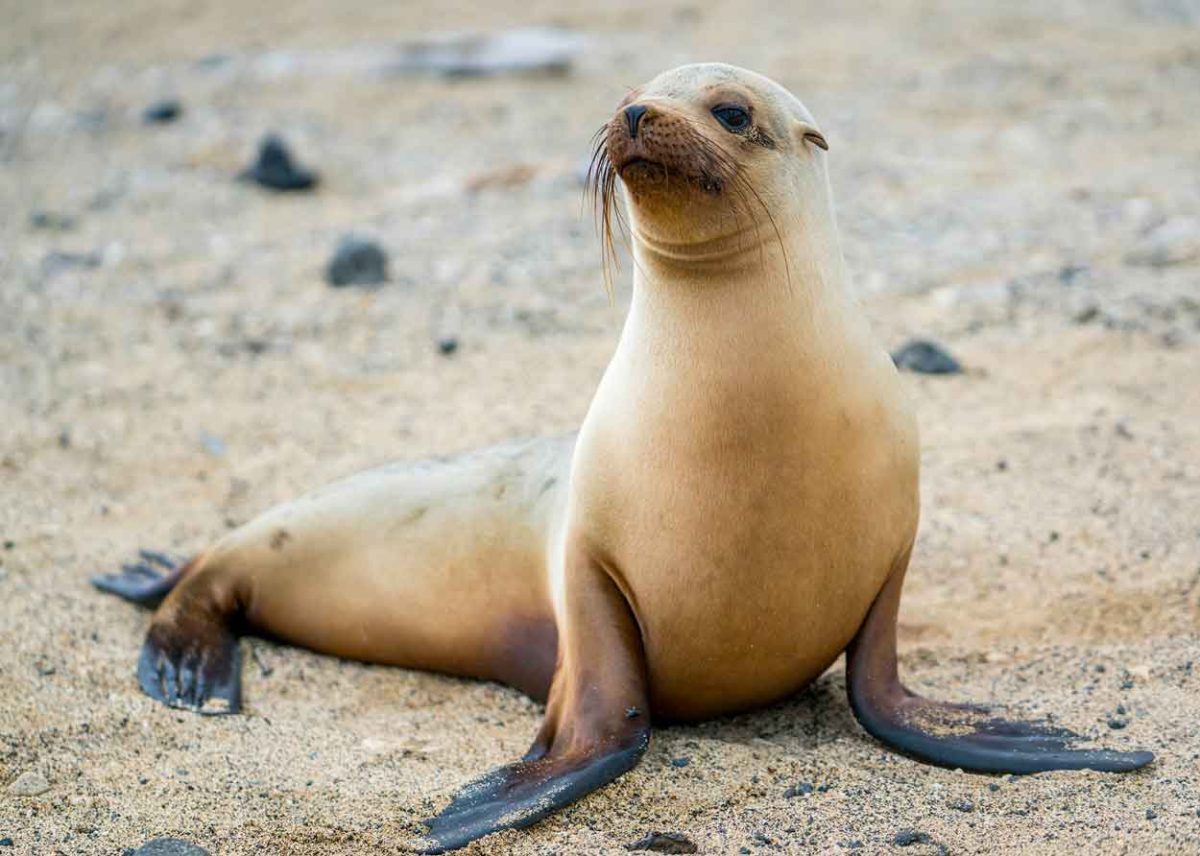
On the remote Galápagos Islands, scientists have observed unusual behavior among sea lions that challenges conventional ideas about the laws of nature. Here, adult males with established harems and females who have already become mothers continue to perform juvenile rituals—returning to their mothers to nurse, a behavior that, according to evolutionary textbooks, should have disappeared long ago. Only after twenty years of observation were researchers able to fully appreciate the scale of this phenomenon.
A Unique Species and Long-Term Observations
The Galápagos sea lion (Zalophus wollebaeki) is an endemic species found exclusively on the Galápagos Islands and is currently threatened with extinction. Since 2003, an international team of scientists led by behavioral ecologist Oliver Krüger from Bielefeld University (Germany) has been conducting detailed studies of one colony on the small island of Caamaño. As part of the "Galápagos Sea Lion" project, researchers collect comprehensive data on the lives, reproduction, survival, and social connections of each tagged animal.
Breaking the Usual Biological Rules
Until recently, it was believed that the life cycle of these pinnipeds followed the general rules for mammals: a mother nurses her offspring until it becomes independent and learns to find food on its own. Typically, by the third year of life, weaning is complete, as milk production requires significant energy from the mother. Once the young can survive and reproduce independently, continued nursing becomes biologically disadvantageous—the energy is better spent on new offspring or maintaining the mother's own health. This aligns with the principle of natural selection, first described in detail by Charles Darwin.
Unexpected Discoveries
For a long time, it was thought that adult Galápagos sea lions almost never return to their mothers for milk, and such cases were considered rare exceptions. However, analysis of data collected over twenty years revealed that this behavior is much more common. For Galápagos sea lions, it is quite normal to be an adult, capable of hunting and reproducing, yet still nurse from their mothers. Maturity does not necessarily mean the end of this bond.
Observations showed that 11% of all tagged individuals who had reached sexual maturity periodically returned to their mothers to nurse. One in five of them continued this behavior even after starting to reproduce themselves. Scientists dubbed these animals "super-sucklers." The oldest recorded "super-suckler" was a 16-year-old male, even though the average lifespan of these sea lions is about 24 years. Such behavior has not been observed in any other animal species.
The situation is further complicated by the fact that Galápagos sea lion milk is extremely rich and nutritious, meaning its production demands even more energy from the mother.
Unanswered Questions
This discovery has raised many questions. Why has natural selection allowed the development of such an energetically costly behavior? Who benefits from it—the adult offspring, the mother, or both? Scientists admit that they do not yet have clear answers.
Research on Caamaño has also revealed even more unusual scenes: for example, multi-level "nursing chains," where a pup nurses from its mother, who at the same time is nursing from her own mother. In other cases, males quickly switched social roles—a male calmly nursing one moment could suddenly rush off to defend his territory and harem.
The only consistent pattern found was not related to the sex of the offspring, but to environmental conditions. "Super-suckling" was more common in years when food was abundant in the ocean. This suggests that mothers are willing to expend extra energy only when they can afford it without harming their own health. In lean years, such generosity likely disappears.
Possible Consequences and Social Bonds
Data analysis showed that the presence of an adult "super-suckler" in the family may increase the risk of early death for its younger siblings, who are still entirely dependent on their mother's milk.
Scientists emphasize that they still do not know exactly how much milk adult individuals receive or what proportion of their caloric intake it represents. It is possible that these visits to the mother are more symbolic acts that strengthen social bonds, which are remarkably strong among Galápagos sea lions.
This theory fits well with other unique behavioral traits of these animals. For example, unlike many marine mammals, Galápagos sea lions display elements of cooperative hunting, working together to herd schools of fish into shallow waters.
The scientific article with the results of this research was published in the journal The American Naturalist.