

Fast-growing trees are displacing resilient forest species
A global study has shown that in the world’s forests, fast-growing tree species are displacing slower-growing ones that are crucial for maintaining ecosystem stability. This shift could lead to a decline in biodiversity and forest resilience, as well as reduce their ability to withstand climate change.
Natura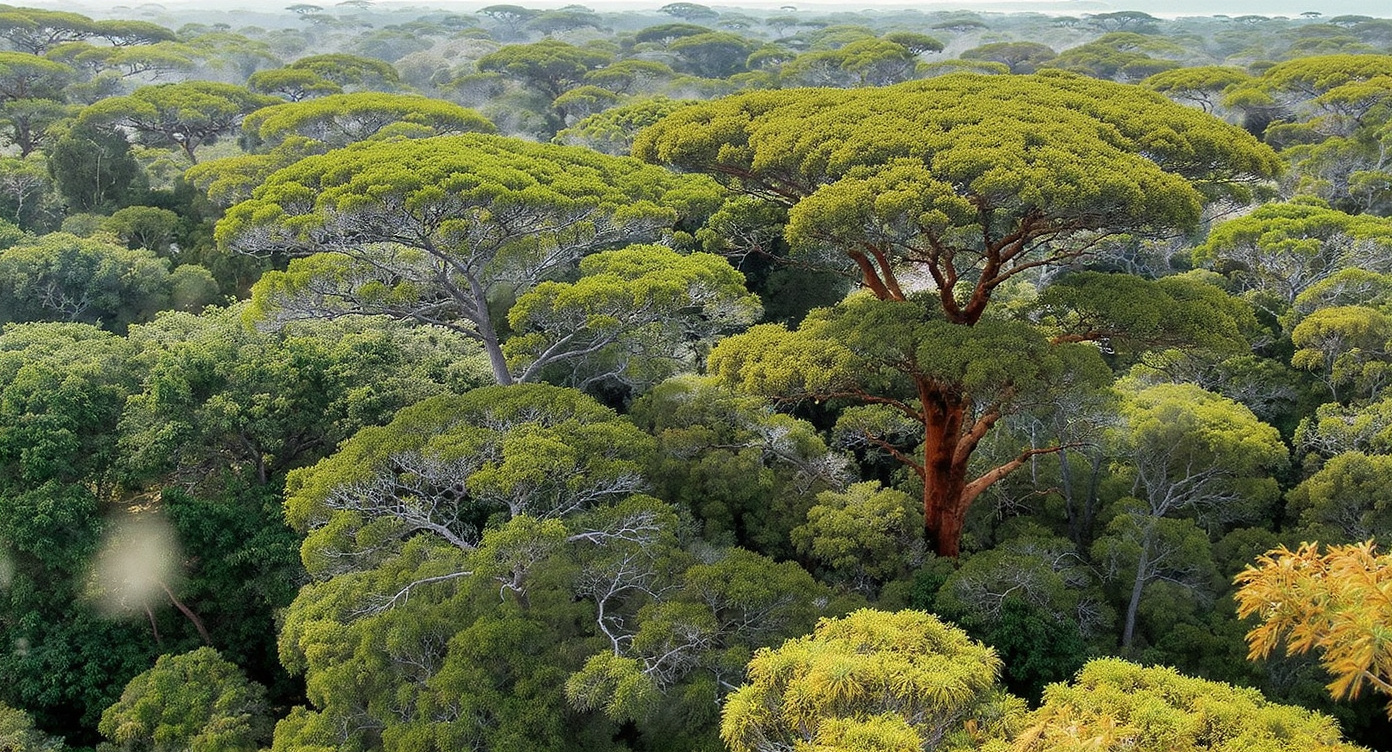
A global study warns that fast-growing tree species are increasingly dominating the world’s forests, while slow-growing species that provide ecosystem stability are disappearing. This shift could reduce biodiversity, forest resilience, and the ability of forests to protect the planet from climate change.
The Role of Trees in Ecosystems
Trees play a vital role in sustaining life on Earth. They absorb and store carbon dioxide, provide habitats for animals, fungi, and insects, prevent soil erosion, regulate water cycles, and supply people with essential resources—such as timber, food, and shade during hot weather.
Changes in Forest Ecosystems
Despite their importance, forests worldwide are undergoing significant changes. A new international study covering more than 31,000 tree species has shown that forest ecosystems are becoming more uniform, losing both biodiversity and resilience. Scientists have projected how forests will change in the coming decades, focusing on shifts in species composition, long-term stability, and the functioning of forests as ecosystems.
The Rise of Fast-Growing Species
The study’s findings indicate that fast-growing tree species are becoming increasingly dominant. Meanwhile, slow-growing trees with unique adaptations are facing a growing risk of population decline or even extinction, especially in isolated regions. When specialized local species disappear, they leave gaps in ecosystems that are rarely filled by non-native species, even if those species grow quickly and spread easily.
Vulnerability of Slow-Growing Trees
Slow-growing trees adapted to stable conditions are at the greatest risk. These species typically have thick leaves, dense wood, and long lifespans, and are especially common in moist tropical and subtropical forests. They form the backbone of forest ecosystems, supporting stability, carbon storage, and resilience to change.
Consequences for Forest Stability
If climate change and forest exploitation continue at current levels, forests are likely to favor fast-growing species with lighter leaves and less dense wood. Trees like acacia, eucalyptus, poplar, and pine grow quickly and adapt well, but are more vulnerable to drought, storms, pests, and climate shocks. This makes forests less stable and reduces their capacity for long-term carbon storage.
The Role of Naturalized Species
The study also highlights the growing influence of naturalized tree species—those originally from other regions but now growing wild in new territories. About 41% of these species possess traits that help them survive in disturbed ecosystems, such as rapid growth and small leaves. However, they rarely replace the ecological functions of native species and can increase competition for resources, making it harder for indigenous trees to survive.
The Most Vulnerable Regions
Tropical and subtropical regions are expected to be most affected by forest homogenization. These areas are home to many slow-growing species with limited ranges, making them especially vulnerable and at risk of complete extinction if their habitats are destroyed or overtaken by fast-growing species.
The Impact of Human Activity
Scientists identify human activity as the main driver of these changes: climate change, deforestation for infrastructure, intensive forestry, timber harvesting, and global trade in tree species. Fast-growing trees are often planted for rapid timber or biomass production, but from an ecological perspective, they are more fragile and susceptible to disease.
The Need for New Strategies
Using predictive models, researchers found that naturalized species already present in forests will become even more dominant in the coming decades. This makes the protection of slow-growing species especially urgent. To maintain forest resilience, management strategies must prioritize these species and focus on ecosystem restoration. When creating new forests, it is important to favor slow-growing and rare species, which will enhance diversity and stability. These species should also be actively supported in conservation and restoration programs, as they help build rich communities of large animals essential for the future functioning of ecosystems.