

Space helps create viruses to fight superbugs
American scientists have discovered that the microgravity conditions on the ISS help bacteriophage viruses acquire mutations that allow them to effectively destroy bacteria resistant to antibiotics. These experiments open up new possibilities for developing drugs against superbugs.
Cursus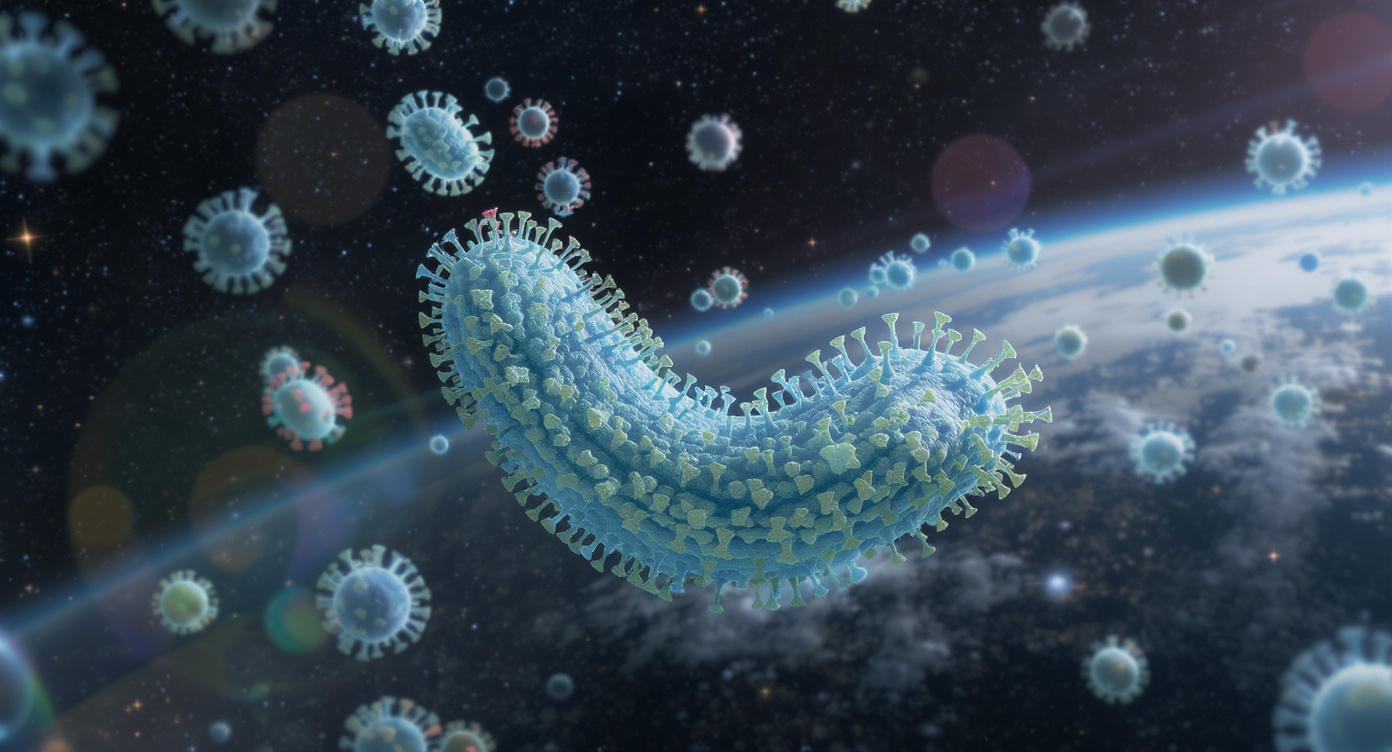
American microbiologists have discovered that the microgravity conditions aboard the International Space Station (ISS) cause bacteriophage viruses to develop a unique "death grip." In an environment where encounters with bacteria are rare and random, viruses acquire mutations that allow them to instantly latch onto their targets. Using these genetic changes, scientists have created new phage strains capable of destroying antibiotic-resistant bacteria on Earth.
Bacteriophages: An Alternative to Antibiotics
Bacteriophages are viruses that infect bacteria. They are considered a promising alternative to antibiotics, but bacteria quickly learn to defend themselves against them. Researchers hypothesized that in the unique environment of space, where gravity and convection (the mixing of fluids) are absent, the "rules of engagement" between viruses and bacteria change. In such extreme conditions, evolution can take an unusual path that is impossible on Earth.
The ISS Experiment
For the experiment on the ISS, test tubes containing E. coli bacteria and the T7 bacteriophage were sent into orbit. Instead of a standard virus, a special "library" was used—a mixture of 1,660 phage variants, each with a single amino acid change in the "tail" protein responsible for attaching to bacteria.
Adapting to Microgravity
At the start of the experiment, infection of bacteria in space occurred slowly: without gravity, viruses could not settle onto bacteria and only encountered them by chance, delaying the onset of an epidemic by several hours. Over time, the viruses adapted: bacteria altered their cell wall structure for protection, while phages responded with mutations in the genes responsible for attachment.
Return to Earth and Mutation Analysis
The test tubes spent 23 days in orbit. After returning to Earth, scientists analyzed the DNA and identified mutations that enabled the viruses to survive and reproduce more effectively in microgravity conditions.
Creating New Strains and Testing
The researchers combined the 13 most successful space-induced mutations to create new phage strains, each containing five or six changes. These synthetic viruses were tested against dangerous terrestrial strains of E. coli that cause urinary tract infections and are resistant to conventional phages.
Results and Future Prospects
The artificially engineered phages, assembled from space-induced mutations, were able to overcome the defenses of resistant bacteria and destroy them. In comparison, similar phages developed from Earth-based mutations failed to do so. The extreme conditions of space allowed the viruses to find vulnerabilities in bacterial defenses that remained hidden on Earth.
This research demonstrates that the ISS can serve not only as a laboratory for fundamental science but also as an incubator for biotechnology. The harsh environment of space enables scientists to direct viral evolution in beneficial ways, opening new possibilities for developing treatments against resistant infections.