

The fruitless gene controls the social behavior of drones.
Scientists have discovered that the fruitless gene in honeybees is responsible for the cooperative behavior of drones, influencing their participation in food exchange and navigation within the hive. This finding helps to explain how evolution has adapted genes to support the complex social structure of bee colonies.
Cursus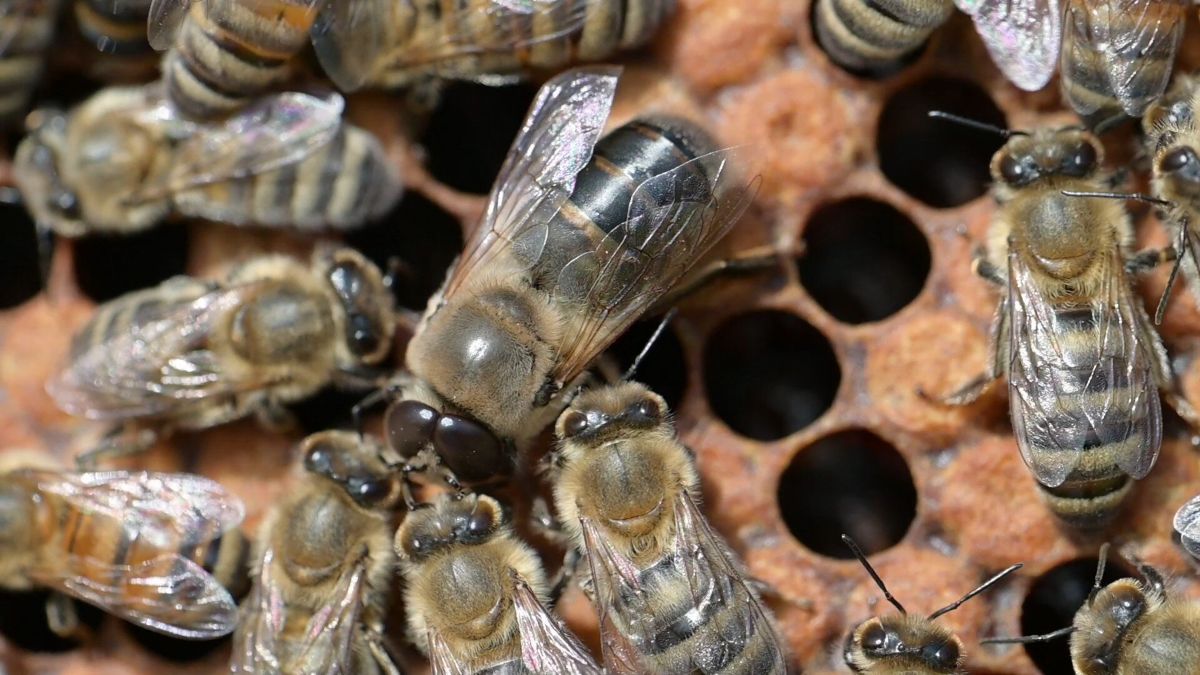
Scientists have discovered that a specific variant of the fruitless (fru) gene plays a crucial role in shaping the social behavior of male honeybees. This gene prompts drones to actively participate in communal food sharing and helps them choose the right place within the colony.
Genetic Foundations of Cooperation in Bees
Biologists studied how genes influence cooperation in honeybees (Apis mellifera). In research published in Nature Communications, they found that the fruitless gene, which in insects typically governs mating behavior, has evolved a new function in social species. Now, it supports the survival of the bee family as a single superorganism.
Behavioral Traits of Drones
Inside the hive, drones display pronounced cooperative behavior: they do not compete with each other for food or space, but instead receive nutrients from worker bees through trophallaxis—the transfer of liquid food from mouth to mouth. This process requires complex coordination: the male approaches a worker bee, touches her head with his antennae, and requests food, maintaining contact throughout the feeding.
The Role of the FruM Protein
Researchers found that the FruM protein—a male-specific variant of the Fruitless protein—regulates this system. Using CRISPR/Cas9 genome editing, scientists created a line of bees in which the fru gene was "switched off" in males. Observations with the automated BBAS (Bee Behavioral Annotation System), which tracks each bee's movements via QR codes, revealed dramatic changes in the behavior of these mutant drones.
Behavioral Changes in Mutants
Drones with the fru gene deactivated showed a marked decrease in social behavior: their attempts to solicit food were halved, and feeding sessions became much shorter. Additionally, the mutants struggled with navigation inside the hive. Unlike normal drones, who spend time in the honey zone or on the hive's periphery and avoid pollen cells (which they cannot digest), the mutants frequently entered pollen cells—a behavior not typical for healthy bees. Importantly, their overall motor skills and responses to light and queen pheromones remained unchanged, indicating that the gene specifically affects "social tuning" rather than the insect's physical abilities.
Neural Networks and the Evolution of Cooperation
Brain analysis showed that the FruM protein is expressed in about 1,800 neurons, forming a network that links sensory organs (vision, smell) with higher-order centers—the mushroom bodies, which are involved in decision-making. In drones, this network has distinct "male" features in the structure of the antennal lobes and visual pathways.
The Significance of the Discovery
The study's authors believe that the emergence of such a rigid genetic program enabled bees to efficiently distribute resources within the colony. Instead of chaotic behavior, drones are "programmed" for a specific frequency and duration of social interactions, which reduces the burden on worker bees and increases the survival of the entire family. Thus, the evolution of cooperation in bees occurred through the adaptation of old genes, previously responsible for reproduction, to meet the needs of a complex social structure.