

Genes of Peacefulness: How Humans Changed Bears
Centuries of living alongside humans have led Apennine brown bears to become less aggressive on a genetic level. Research has identified genes associated with peaceful behavior, which has helped the population survive in close proximity to people.
Cursus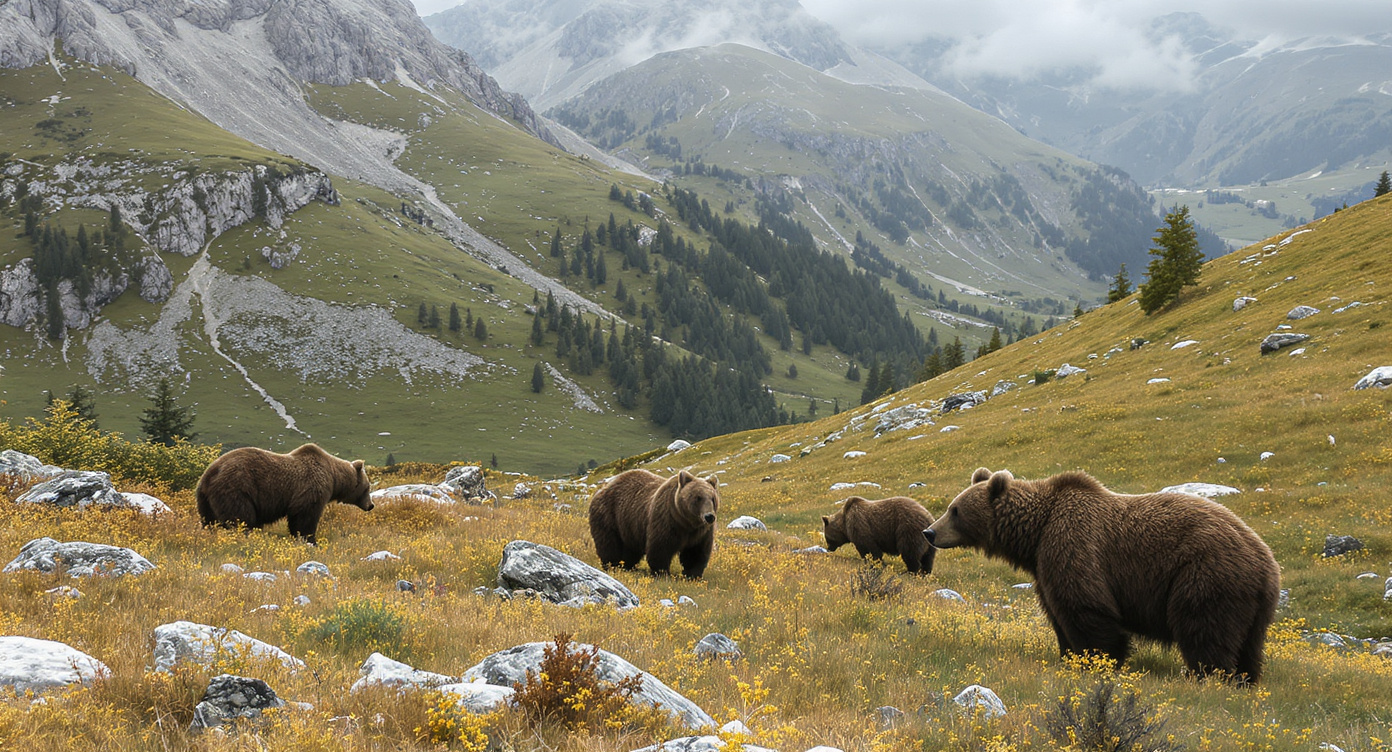
For centuries, humans have hunted the most dangerous bears, viewing them as a threat. However, research on Apennine brown bears has shown that prolonged coexistence with people has led to a decrease in their aggression at the genetic level.
A Unique Population of Apennine Bears
The Apennine brown bear is a rare population found exclusively in Central Italy. For nearly three thousand years, these animals have lived in close contact with humans. During this time, they became isolated from other brown bears, and their numbers repeatedly declined due to persecution and being pushed into mountainous areas. Despite these challenges, the population has managed to survive to this day.
Changes in Behavior and Genetics
Today, Apennine bears are noticeably calmer and less aggressive compared to other brown bears. For a long time, it was unclear whether this was due to learned behavior or actual evolutionary changes influenced by humans.
Recently, a study by scientists from the University of Ferrara, published in the journal Molecular Biology and Evolution, provided an answer. For the first time, researchers assembled a reference chromosome-level genome of the Apennine bear and analyzed the complete genomes of 20 bears from the Apennines and Slovakia, as well as data from bears in Canada and Alaska.
Genetic Diversity and the Consequences of Isolation
The analysis revealed that Apennine bears have extremely low genetic diversity. This is linked to a recent "bottleneck"—a period when most of the population died out, and only a few individuals contributed to future generations. This decline coincided with widespread deforestation and the expansion of agriculture, which further isolated the population.
Genes Linked to Behavior
Scientists paid special attention to genes that underwent strong selection and are associated with the development and functioning of the nervous system, and thus with behavior. Among them:
- DCC gene — regulates the growth of nerve endings and is linked to the domestication of foxes and cats.
- SLC13A5 gene — influences the temperament of domestic animals.
- GRM7 and GRIK3 genes — responsible for glutamate receptors, which are important for signal transmission in the brain, and also play a role in domestication processes.
Thus, researchers discovered an entire genetic ensemble that contributes to reduced aggression.
The Role of Humans in Bear Evolution
The authors of the study believe that the most likely explanation for these changes is centuries of unintentional human influence. More aggressive and conflict-prone bears were more often killed by people, while cautious and less aggressive individuals survived and passed on their genes. Over time, this anthropogenic selection increased the proportion of "peaceful" genetic variants in the population.
An Evolutionary Survival Strategy
Reduced aggression became an evolutionary survival strategy for Apennine bears. This adaptation lessened direct conflicts with humans and decreased mortality caused by people. Genetically ingrained calm behavior has proven to be the key to the long-term, albeit fragile, existence of this unique population.