

The pandemic is devastating sea urchin populations worldwide
In 2022–2023, a mass die-off of sea urchins in the Canary Islands led to the near-total disappearance of their population and disrupted their life cycle. Research links this catastrophe to a global pathogen pandemic, posing a serious threat to the species' recovery.
Natura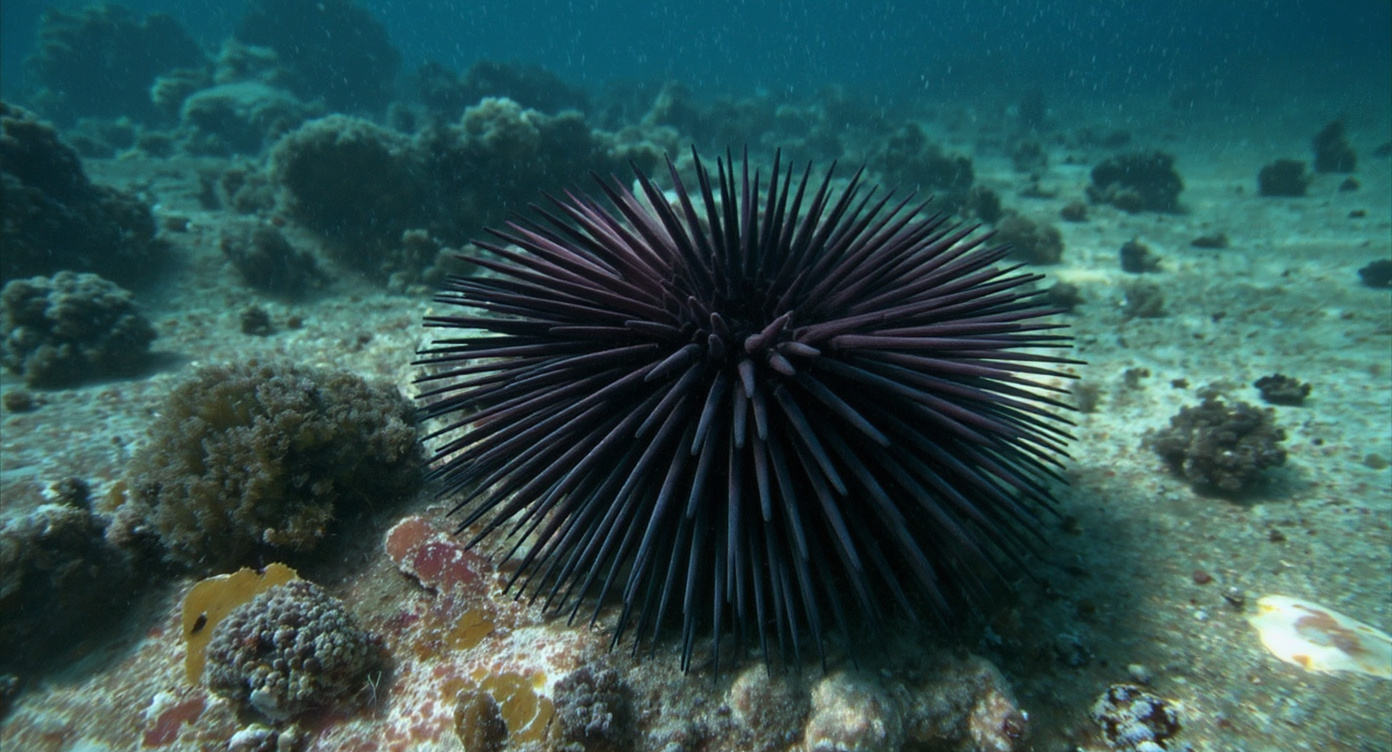
In 2022, the world’s oceans witnessed a large-scale die-off of sea urchins. A new study has examined in detail the causes and consequences of this environmental catastrophe.
Mass Mortality in the Canary Islands
Between February and March 2022, a new wave of mass mortality struck the Diadema africanum sea urchin population in the Canary Islands (Spain). These animals play a crucial role in regulating algae growth in the rocky coastal ecosystems of the archipelago, at depths ranging from 5 to 40 meters. Sea urchins help maintain the balance between different underwater zones—from barren to densely populated—by controlling the spread of macroalgae.
Previous mass die-offs of sea urchins had already been recorded in the Canaries in 2010 and 2018, leading to population declines of 60–93%. However, in those cases, the urchin numbers partially recovered over time.
The Global Scale of the Problem
The most recent outbreak coincided with mass die-offs of related Diadematidae species in other parts of the world. In January 2022, Diadema antillarum began dying off in the Caribbean Sea; in the summer of the same year, D. setosum was affected in the Mediterranean, and by the end of the year, other species were impacted in the Red Sea. The extinction continued in 2023–2024 in the Gulf of Oman and off the coast of Réunion in the Indian Ocean. This has led to the hypothesis of a possible pandemic affecting sea urchins worldwide.
Investigating Causes and Consequences
The authors of the study, published in the journal Frontiers in Marine Science, analyzed the consequences of the mass die-off in the Canary Islands, assessed the reproductive success of sea urchins, and examined data on ocean currents, surface water temperature, and wave activity during the outbreak to determine how the pathogen spread.
It was found that the extinction affected nearly all the Canary Islands, spreading from west to east. Population densities dropped by 73.8% on La Palma and by 99.66% on Tenerife compared to 2021. In many locations, sea urchins were completely wiped out, reaching record low levels in the history of observations.
For the first time in nearly 20 years of monitoring, zero larval settlement was recorded in September 2023. In January 2024, not a single juvenile was found in the wild. This indicates a breakdown in the species’ life cycle: the surviving adults were unable to ensure successful fertilization. When population numbers fall to critically low levels and individuals struggle to find mates, the so-called Allee effect occurs.
Causes of the Pandemic
Researchers concluded that the mass die-off in the Canary Islands, which coincided with similar events in other regions, is evidence of a pandemic affecting the Diadematidae family. The main factor behind the mortality was identified as the ciliate Philaster apodigitiformis, previously recognized as the primary cause of sea urchin deaths in the Caribbean Sea.
Analysis of oceanographic data showed that each wave of mortality began with two factors: prolonged eastern currents, which could have brought the pathogenic ciliate from the west, and unusually strong southern storms, which stirred up bottom sediments and facilitated the activation and spread of the pathogen.
Uniqueness and Consequences of the Catastrophe
The mass die-off of Diadema africanum in the Canary Islands in 2022–2023 is unique both in scale and in its consequences. Unlike previous events, the current catastrophe has led not only to the disappearance of the adult population but also to a complete collapse of reproductive function. This threatens the possibility of natural recovery of the species in the region.