

Cosmic dust has revealed the history of Arctic ice
Scientists have reconstructed the history of Arctic sea ice over the past 30,000 years by analyzing cosmic dust found in marine sediments. This data helps to understand how the reduction of sea ice affects the region's ecosystems and food chains.
Natura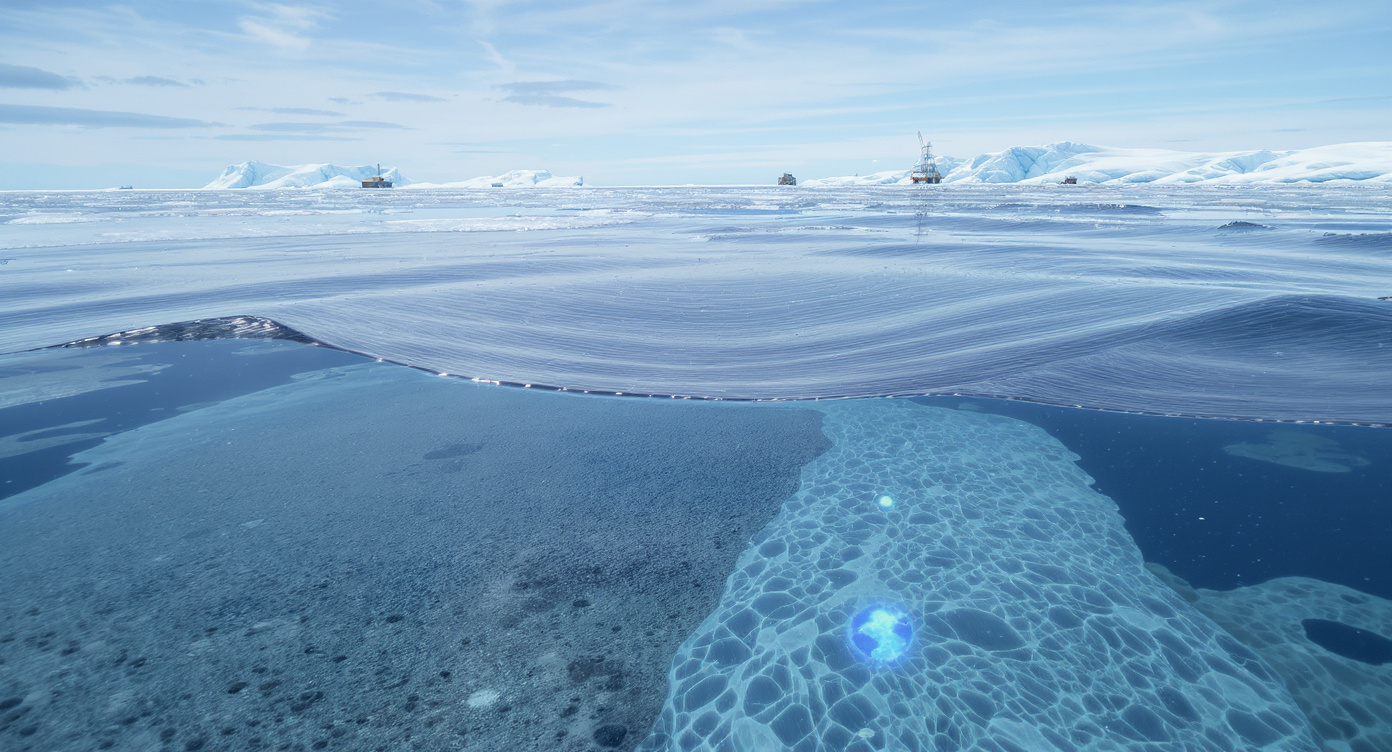
The ice cover in the Arctic Ocean is rapidly shrinking, accelerating the melting of the remaining ice and affecting the availability of nutrients. A recent study led by scientists from the University of Washington has shown how particles from space help reconstruct the history of ice conditions over the past 30,000 years.
Decline of Arctic Ice and Its Consequences
Since 1979, when satellites began regularly monitoring ice conditions, the area of Arctic sea ice has decreased by more than 42%. As the ice becomes thinner and retreats, more of the ocean’s surface is exposed to sunlight. Ice reflects the sun’s rays and cools the planet, while dark ocean water, in contrast, absorbs heat, which speeds up warming and further ice melt. Climate models suggest that in the coming decades, the Arctic may experience ice-free summers, and scientists continue to study how these changes will impact ecosystems and human society.
Cosmic Dust as a Key to the Past
It has long been known that tiny particles from space constantly settle on Earth and accumulate in marine sediments. Recent research has shown that identifying where cosmic dust appears or is absent helps us understand how the ice cover has changed over millennia. If we can predict the timing and patterns of future ice loss, it will help us better understand warming, forecast changes in food chains and fisheries, and prepare for possible geopolitical shifts.
Cosmic dust forms during star explosions or the breakup of comets, and much of it contains a rare helium isotope—helium-3—which appears after particles pass near the Sun. Scientists measure the amount of helium-3 to distinguish cosmic dust from terrestrial materials. Special attention was paid to places where dust was not found: during the last glacial period, almost no cosmic dust was present in Arctic sediments.
Reconstructing the History of Ice
Researchers suggested that cosmic dust could serve as an analogue to satellite data on ice. When the sea surface is covered with ice, dust cannot settle on the seafloor, but open water allows it to reach the sediments. By measuring the amount of cosmic dust in cores collected from three Arctic sites, scientists reconstructed the history of sea ice over the past 30,000 years. These sites reflect the current gradient of ice cover: one is near the North Pole and remains ice-covered year-round, the second is at the seasonal ice edge in September, and the third was once permanently ice-covered but now is periodically ice-free.
The Impact of Ice on Nutrients
Scientists found that periods of stable ice cover coincided with very low levels of cosmic dust in the sediments, which is characteristic of the last glacial period about 20,000 years ago. As the planet warmed, cosmic dust began to reappear in sediment samples.
The researchers also compared the reconstructed ice history with data on nutrient availability. They found that nutrient consumption was highest when sea ice levels were low and decreased as ice cover increased. These data were obtained from microscopic shells of foraminifera—organisms that process nitrogen. The chemical signatures preserved in their shells indicate how much available nutrients they used during their lifetimes.
Outlook for the Arctic
In the future, as ice continues to decline, it is expected that phytoplankton in the Arctic will consume more nutrients, which will affect the food chain. Further research is needed to understand the reasons for changes in nutrient use. One hypothesis suggests that less ice increases photosynthesis at the surface, boosting nutrient consumption. Another idea is that melting ice dilutes nutrient concentrations in the water. Both hypotheses could lead to increased nutrient use, but only the first points to higher marine productivity.