

Scientists have proposed a plan to create an oxygen-rich atmosphere on Mars.
Scientists have developed a step-by-step plan to create an oxygen-rich, breathable atmosphere on Mars by utilizing local resources and photosynthesis. Implementing this plan on a planetary scale could take thousands of years.
Cursus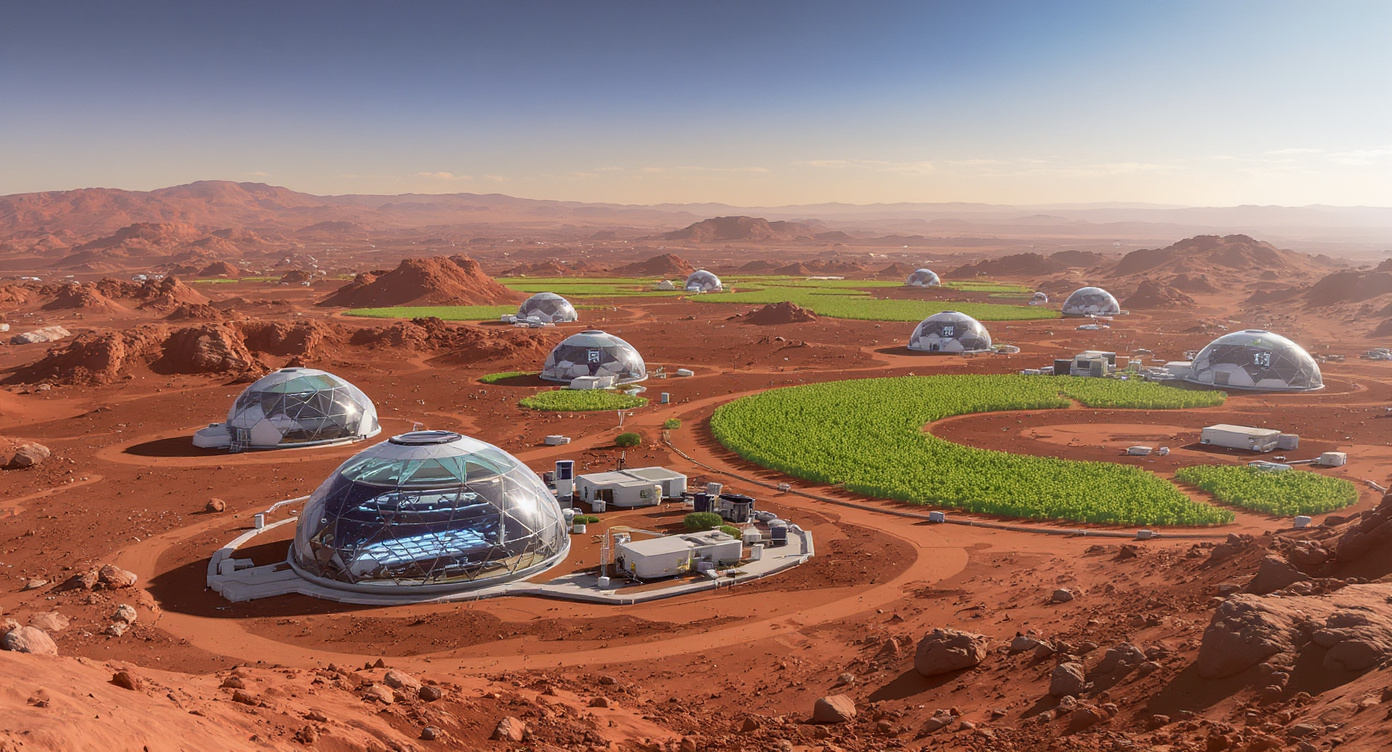
Terraforming experts have introduced a new approach to creating a breathable atmosphere on the Red Planet. The project envisions enriching the Martian atmosphere with oxygen up to 99% at a pressure of about 150 millibars.
Currently, atmospheric pressure on Mars is only 6 millibars, which is comparable to conditions in Earth’s stratosphere at an altitude of 35 kilometers. The planet’s atmosphere is made up of 95% carbon dioxide, with small amounts of nitrogen, argon, oxygen, carbon monoxide, and water vapor.
The plan was developed during the Green Mars Workshop in Panama, organized by Pioneer Labs, a company specializing in space biotechnology. The research findings have been published on the preprint server arXiv.org.
For the researchers, it is crucial to use local Martian resources rather than transporting necessary materials from Earth. Scientists around the world view terraforming as a way to ensure the development and potential survival of human civilization in the event of a global catastrophe on our planet.
According to calculations, the proposed atmospheric parameters would allow humans to breathe without special equipment. A pressure of 150 millibars is about 15% of Earth’s atmospheric pressure and is twice as low as at the summit of Everest—similar to conditions at an altitude of 13–14 kilometers above sea level.
For human survival, two physical thresholds must be met: pressure above 62 millibars to prevent bodily fluids from boiling, and a partial oxygen pressure of at least 100–120 millibars. Bioengineers consider the optimal solution to be an atmosphere composed of 99% oxygen at 150 millibars. At this level, the oxygen concentration does not exceed the flammability threshold for most materials.
The project is divided into three stages: building airtight bases, creating a habitable environment under domes, and global terraforming of the planet. The main method for producing oxygen will be photosynthesis using plants and microorganisms that convert Martian carbon dioxide and water into biomass, releasing oxygen in the process.
Researchers have found that melting the Martian polar ice caps would only slightly increase atmospheric pressure. There are concerns about a shortage of carbon on Mars for full-scale photosynthesis, as well as issues with the released hydrogen. Some suggest that iron oxides or sulfates could bind the hydrogen, but there is no complete certainty about this yet.
The timeline for the project varies significantly: under a 20-meter dome, a suitable atmosphere could be created in 2–3 years, while terraforming the entire planet would take thousands of years. If successful, such an atmosphere could persist for hundreds of millions of years.