

Warming has led to a mass migration of whales to Greenland.
Due to warming and the reduction of ice cover, large groups of baleen whales have begun to migrate en masse to the coast of East Greenland, where they now spend the summer and consume up to a million tons of fish and krill. The study notes that these changes are creating new food chains and transforming the Arctic ecosystem.
Natura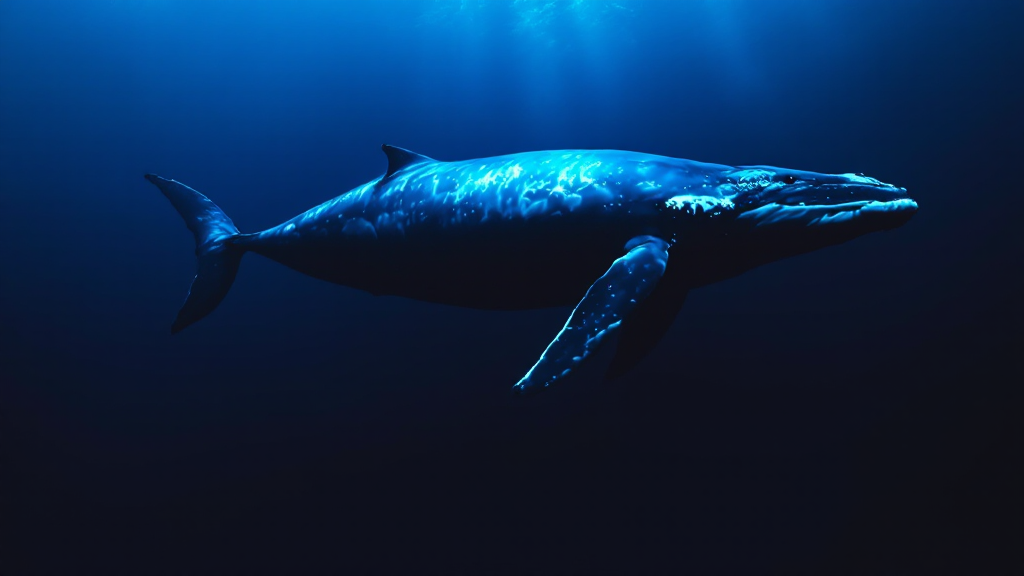
Rising water temperatures and the reduction of ice cover have shifted the range of forage fish northward and toward the coast of East Greenland. Following these fish, large groups of humpback, fin, and minke whales have moved into the region. Currently, these whales spend the summer months here, consuming around a million tons of fish and krill.
Until the early 2000s, warm-water baleen whale species were rarely seen in the coastal waters of East Greenland, as access to shallow areas was blocked by dense, multi-year pack ice. With climate change and the retreat of the ice, whales began migrating into northern waters. Researchers analyzed whale populations along the Greenland coast and estimated their food consumption.
Research Methods
The analysis used data from aerial and ship-based surveys of marine mammals collected from 1987 to 2024. Whale migration routes and the duration of their stay in the region were determined using satellite tags attached to the animals’ backs. Water temperature and ice cover area were assessed using satellite imagery.
Since whaling is prohibited, the whales’ diet was determined indirectly by analyzing the stomach contents of salmon and seabirds living in the same area. Models were then developed to estimate the amount of food consumed by whales, taking into account their body mass and the length of the feeding season.
Changes in the Ecosystem
Satellite data showed that around 1999–2000, there were dramatic changes: the area of summer ice shrank significantly, and the average summer water temperature rose by about 1 °C. The region’s main forage fish—capelin—shifted from the shores of Iceland toward Greenland, and the whales followed. In the summer of 2024, about 4,000 humpbacks, 5,000 fin whales, and over 6,000 minke whales were counted in Greenlandic waters. These groups typically remain in the region for an average of 120 days each year.
During expeditions, large groups of up to 50 whales were observed hunting together in areas where whales had not previously been seen. Estimates suggest that in a single season, whales consume up to 1.3 million tons of capelin and krill.
Study Limitations
The study has several limitations. The actual number of minke whales may be higher, as not all individuals were detected from the air. Additionally, the real amount of food consumed could be twice as high, since the calculations used minimum values.
Changes in the Arctic
The studied region of the Arctic is experiencing a process known as “Atlantification”—a shift toward a more southern type of marine ecosystem. The retreat of the ice is fostering the formation of new food chains, in which baleen whales have become the top predators.