

Traces of unknown species found in human DNA
Geneticists have discovered traces of two ancient species in the DNA of modern humans—species that existed before the emergence of Homo sapiens. These findings broaden our understanding of the complex history of interbreeding between human ancestors and other hominids.
Cursus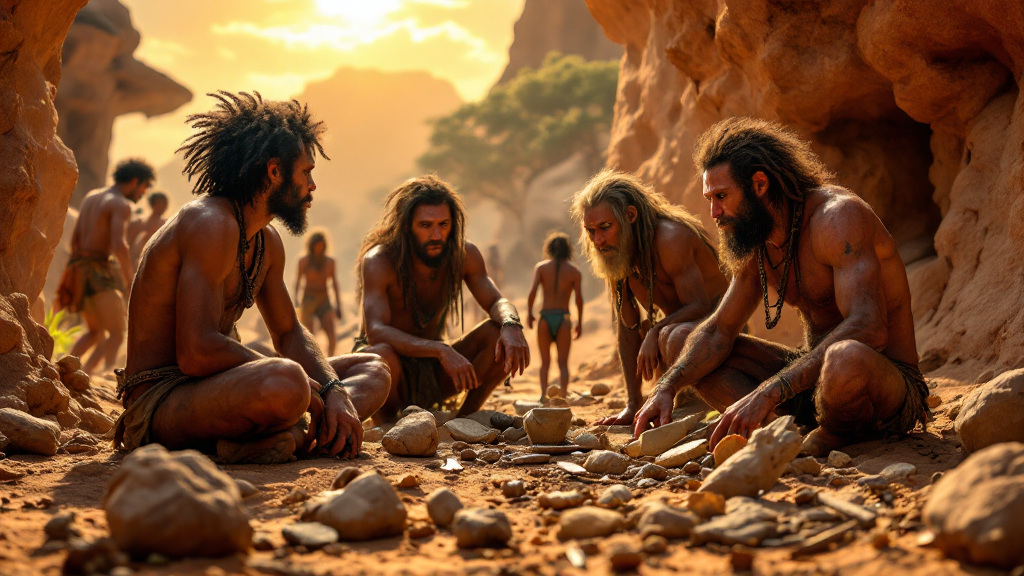
A new approach to analyzing the genomes of modern humans has made it possible to identify traces of two ancient species in their DNA—species that existed before the emergence of Homo sapiens. One of these species interbred with human ancestors in Africa, while the genes of the second have been found only among the indigenous peoples of Oceania.
It was previously established that all people of non-African descent carry 1–2% Neanderthal genes, and that Asian populations also have Denisovan genes. The mixing with Neanderthals occurred after Homo sapiens left Africa, while interbreeding with Denisovans happened during migration into Asia. These events were discovered by comparing the genomes of ancient Neanderthals and Denisovans with the DNA of modern humans.
However, for most other ancient species, such as Homo erectus, complete genomes are not yet available. This is due not only to the age of the remains but also to the climatic conditions in which they lived: high temperatures accelerate DNA degradation.
In the new study, researchers analyzed the genomes of 503 modern humans to search for unusual segments of DNA. This method allowed them to detect the already known Neanderthal and Denisovan admixtures, as well as to identify two additional genetic lineages.
The first lineage is present in all modern humans, indicating interbreeding that occurred before Homo sapiens left Africa around 70,000 years ago. If this was a single event, it may have happened about 300,000 years ago, but other dates are possible if there were multiple episodes of hybridization. The proportion of genes from this unknown species is comparable to the share of Neanderthal genes in non-Africans. This species split from the common ancestor of humanity about 800,000 years ago, but its genes do not match those of Neanderthals, ruling out a connection to Homo heidelbergensis. Chronologically, possible candidates include Homo antecessor or another ancient species. A link to Homo naledi cannot be completely excluded, though it is considered less likely.
The second lineage has been found only among the indigenous peoples of Oceania and makes up just a tiny fraction of their genome. Genetic data suggest that these genes entered their DNA through mixing with Denisovans, who already carried admixture from another species. This species diverged from the common ancestor with Homo sapiens about 1.8 million years ago, which theoretically corresponds to Homo erectus. Archaeological finds of Homo erectus remains in Asia, including on the island of Java, support this possibility. Denisovans may have interbred with isolated Homo erectus populations in this region, and later with modern humans.
Until complete genomes of other ancient species are obtained, it is impossible to determine exactly which species contributed these lineages to modern humans. It is known that the inherited genes have proven beneficial, especially for immunity and metabolism, as they code for proteins related to these functions. Otherwise, such DNA segments would have been eliminated by natural selection.