

Goldfish are destroying freshwater lake ecosystems
The introduction of goldfish into freshwater lakes leads to ecosystem destruction: water quality deteriorates, algae disappear, and the populations of native animals decline. Scientists urge that aquarium owners be informed about the harm caused by releasing these fish into the wild.
Natura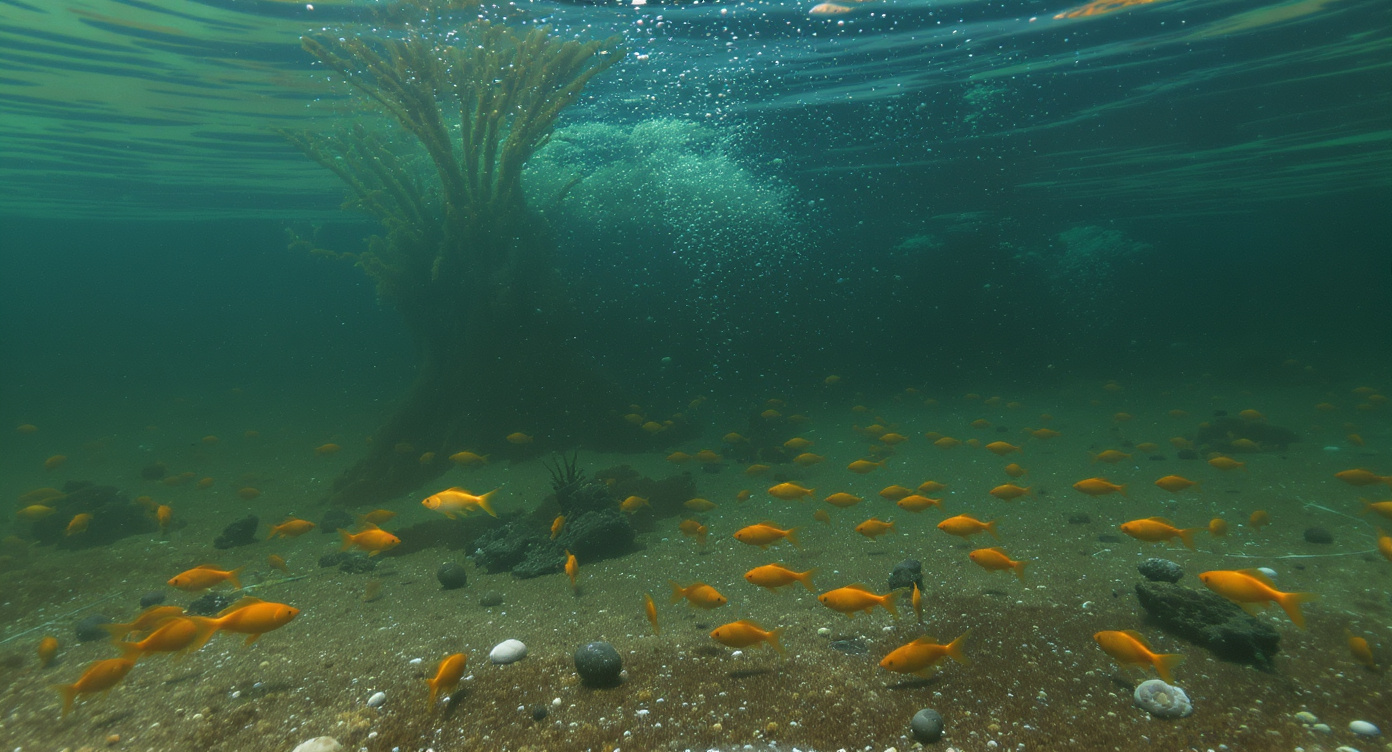
The introduction of goldfish into freshwater lakes leads to significant changes in the ecosystem and a decline in water quality. Studies have shown that this invasive species destroys bottom-dwelling algae, reduces the food base for native animals, and promotes rapid growth of microorganisms. These effects are especially pronounced in bodies of water already polluted by agricultural or domestic runoff.
Goldfish (Carassius auratus) are often released into the wild by aquarium and ornamental pond owners. In natural conditions, these carp relatives can live for decades and grow up to 45 centimeters in length. Biologists have long classified them as invasive, but the mechanisms of their impact on water bodies had not been thoroughly studied before. Previous experiments were mainly conducted in artificial ponds without other fish species, making it difficult to assess competition with native fauna and the effects on the ecosystem depending on the initial nutrient concentration in the water.
In a recent study, researchers simulated a lake environment using 32 tanks, each holding 1,210 liters. The tanks were filled with sand and fallen oak leaves, and the water was seeded with phytoplankton, microscopic crustaceans, snails, and bivalve mollusks collected from real lakes. Half of the tanks remained clean (oligotrophic), while the other half received weekly additions of nitrogen and phosphorus to mimic nutrient-rich (eutrophic) conditions.
The experiment included four groups: only native fish species (golden shiner) in small and large numbers, only goldfish, and a mixed group. The experiment lasted 61 days, after which water parameters were measured and the number of surviving organisms at all levels of the food chain was counted.
In eutrophic tanks with goldfish, the water became cloudy: the amount of inorganic suspended matter increased by 81%, and light penetration dropped by 65%. This is because goldfish constantly stir up the sediment at the bottom, raising silt into the water. Such changes were not observed in tanks with only native fish species.
Goldfish almost completely destroyed filamentous algae, reducing their biomass by 90%. The loss of bottom vegetation triggered a chain reaction: the fish digested the algae and released dissolved organic matter back into the water, which was quickly absorbed by phytoplankton, leading to intense "algal blooms."
The native fauna also suffered: in tanks with mixed fish populations, the number of copepod crustaceans dropped by 89–94%, and the number of bottom-dwelling organisms (snails and amphipods) decreased by nearly 70%. Because goldfish lack a stomach, they eat and excrete waste almost continuously, depriving native inhabitants of resources. As a result of food shortages and competition, native golden shiners lost weight, and their body condition index fell by 12%.
Although artificial tanks cannot fully replicate the complex dynamics of large, deep lakes, the experiment clearly demonstrates the mechanism of ecological disruption. Releasing goldfish into the wild leads to ecosystem destruction. Researchers emphasize the need to inform pet store customers about the potential threat posed by releasing these fish into natural water bodies.