

How water levels affect emissions in the Arctic
A new study has shown that raising groundwater levels in Arctic peatlands significantly reduces CO2 emissions without increasing methane or nitrous oxide emissions. Effective emissions management requires a comprehensive approach that takes into account local conditions and agricultural practices.
Natura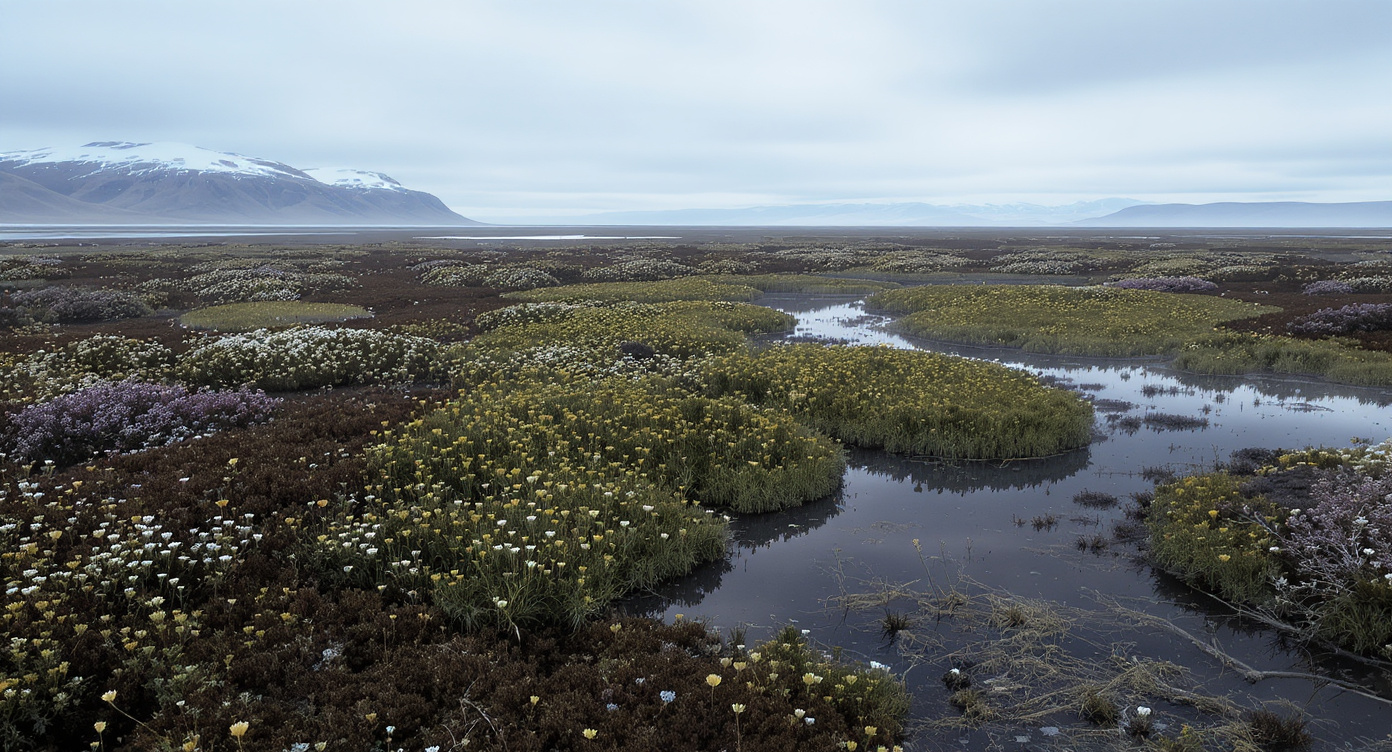
Impact of Groundwater Levels on Greenhouse Gas Emissions in Arctic Peatlands
The Role of Peatlands in the Carbon Balance
Under natural conditions, peatlands are among the largest carbon reservoirs on the planet. Their soils are waterlogged and low in oxygen, which slows the decomposition of plant remains. As a result, organic material accumulates in layers over thousands of years, forming deep peat deposits that store carbon for long periods.
Changes Due to Peatland Drainage
When peatlands are drained for agricultural use, the groundwater level drops, allowing oxygen to penetrate the soil and accelerating microbial activity. In these conditions, previously stored plant material begins to decompose, releasing carbon that has been locked away for centuries into the atmosphere as carbon dioxide (CO2).
Since the 17th century, large areas of peatlands in Europe and northern regions have been drained. The effects of drainage and changes in water levels on greenhouse gas emissions have been studied in many regions, but data on the most northern agricultural peatlands remain limited. These areas are characterized by cold climates, short growing seasons, and long daylight hours during the summer.
Features of Greenhouse Gas Emissions
Raising the groundwater level in drained and agriculturally used peatlands typically reduces CO2 emissions, as peat decomposition slows down. However, wetter and more oxygen-poor conditions can increase methane emissions, since methane-producing microorganisms thrive in almost completely oxygen-free environments. At certain moisture levels, nitrous oxide emissions may also rise if nitrogen decomposition in the soil stops at an intermediate stage.
Because different greenhouse gases respond differently to changes in water level, it is important to assess the overall effect by measuring the combined gas balance—CO2, methane, and nitrous oxide emissions—simultaneously and throughout the entire season.
Research in the Arctic
In 2022–2023, a two-year field study was conducted at a research station in the Pasvik Valley in northern Norway. Automated chambers measured CO2, methane, and nitrous oxide emissions several times a day throughout the growing season. The experiment included five plots with varying groundwater levels, fertilizer amounts, and numbers of harvests per season.
The study aimed to determine:
- Can raising the groundwater level make an Arctic peatland climate-neutral?
- Does the water level affect soil CO2 emissions more than plant CO2 uptake?
- How do fertilization and harvesting practices influence the overall climate balance?
Main Findings
Impact of Water Level on CO2 Emissions
When the peatland was heavily drained, it emitted significant amounts of CO2, comparable to southern peatlands. Raising the groundwater level to 25–50 cm below the surface sharply reduced CO2 emissions. Methane and nitrous oxide emissions also remained low, resulting in a better overall gas balance. In some cases, the field even absorbed more CO2 than it emitted.
Influence of Climate and Temperature
Raising the water level makes the soil wetter and reduces oxygen around plant roots, which decreases their activity and CO2 uptake. However, total CO2 emissions from the field decrease, as less light is needed to start net carbon uptake, and there are more hours with net carbon absorption—especially during the long, bright summer nights in the north.
Temperature also proved to be an important factor: when soil temperatures rose above about 12°C, microbial activity increased, leading to higher CO2 and methane emissions. Thus, the effect of a high water level is greatest in cool climates, and warming may reduce this effect in the future.
Impact of Agricultural Practices
Adding fertilizer promoted grass growth but did not noticeably change CO2 or methane emissions. Harvesting had a greater impact: with frequent harvesting, more carbon was removed from the system than accumulated, which could lead to gradual carbon loss even at high water levels. Therefore, water management, fertilizer use, and harvest schedules should be considered together to avoid long-term soil degradation.
One solution may be to grow plant species that tolerate wet conditions, allowing for biomass production without the need to drain the soil.
The Importance of Local Differences
The study revealed significant differences even within a single field: some plots absorbed CO2, while neighboring plots emitted it in large amounts. Such local variability can greatly affect national climate accounting and policy development, as standard emission factors do not always reflect the real situation.
The results highlight the need for more detailed measurements and precise water level management, especially in regions with diverse soils and agricultural practices.