

A rare triplet superconductor promises a quantum breakthrough
Studies of the niobium-rhenium (NbRe) alloy have revealed signs of rare triplet superconductivity, which enables the transmission of both electrical and spin signals without energy loss. This discovery could bring us closer to creating energy-efficient quantum computers that operate at higher temperatures.
Cursus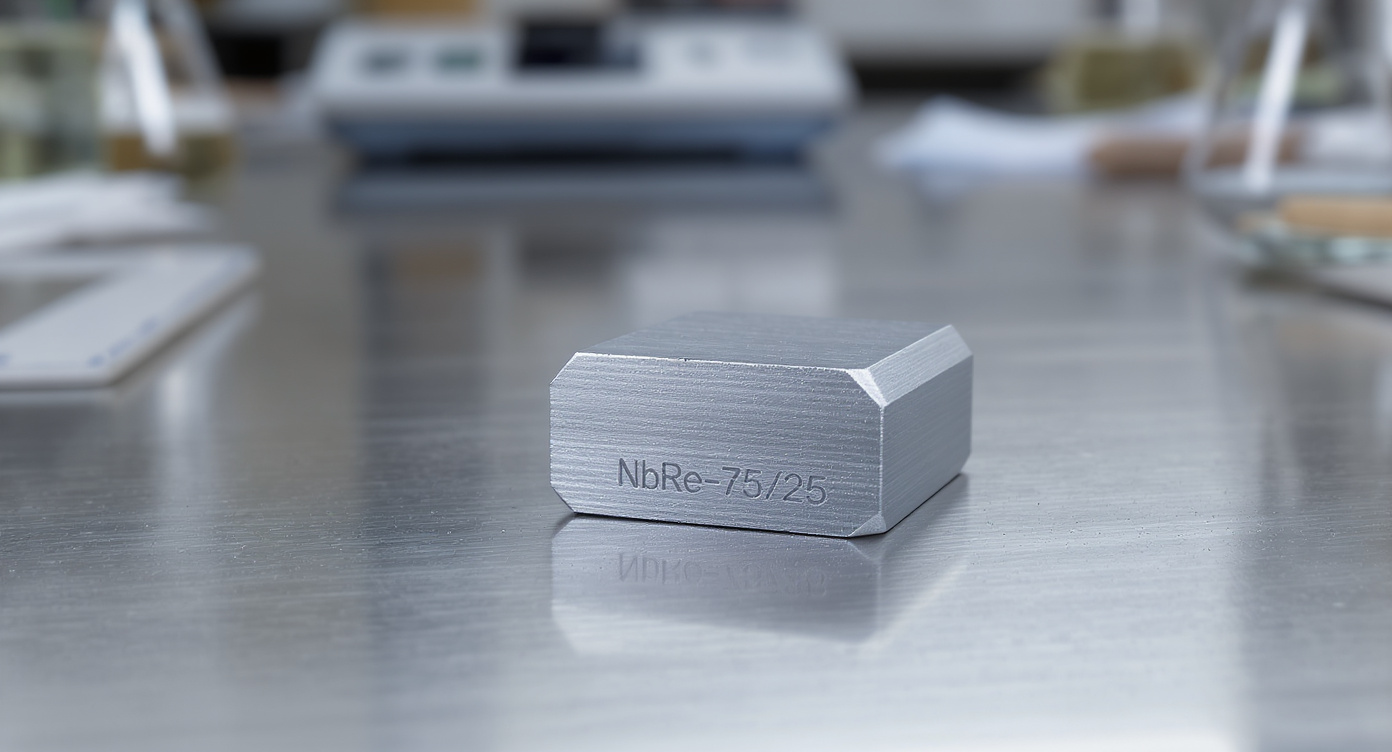
Research in the field of quantum materials has revealed signs of a rare triplet superconductor—a substance capable of transmitting both electrical and spin signals without energy loss. Such a material could become the foundation for creating high-speed quantum computers that operate with virtually no energy consumption.
The Potential of Triplet Superconductors
Triplet superconductors are considered promising materials for the development of energy-efficient technologies. Unlike traditional superconductors, which conduct electric current without resistance, triplet superconductors can also transmit spin currents without energy loss. This opens up possibilities for information transfer using spin, which is crucial for quantum computing and spintronics.
Differences Between Conventional and Triplet Superconductors
Conventional superconductors, known as singlet superconductors, do not possess spin; their superconducting particles lack this property. In triplet superconductors, the particles have spin, allowing them to carry not only electrical but also spin currents with zero resistance. This feature can significantly improve the efficiency of information transfer and reduce the energy consumption of computing devices.
Research on NbRe Material
In collaboration with Italian colleagues, researchers studied an alloy of niobium and rhenium (NbRe), both of which are rare metals. Experimental data showed that NbRe exhibits properties characteristic of triplet superconductivity. However, further studies and independent verification by other scientific groups are needed for definitive confirmation. Nevertheless, the experimental results indicate that the material behaves differently from conventional singlet superconductors.
Temperature Characteristics
One of the advantages of NbRe is its ability to become superconducting at a temperature of 7 Kelvin, which is considered relatively high for such materials. For comparison, other potential triplet superconductors require cooling to temperatures close to 1 Kelvin. Thus, NbRe may be more practical for use in technology applications.
Development Prospects
The discovered properties of NbRe suggest that creating a triplet superconductor capable of operating at higher temperatures is becoming a reality. This could be an important step in the advancement of quantum technologies and energy-efficient computing systems.