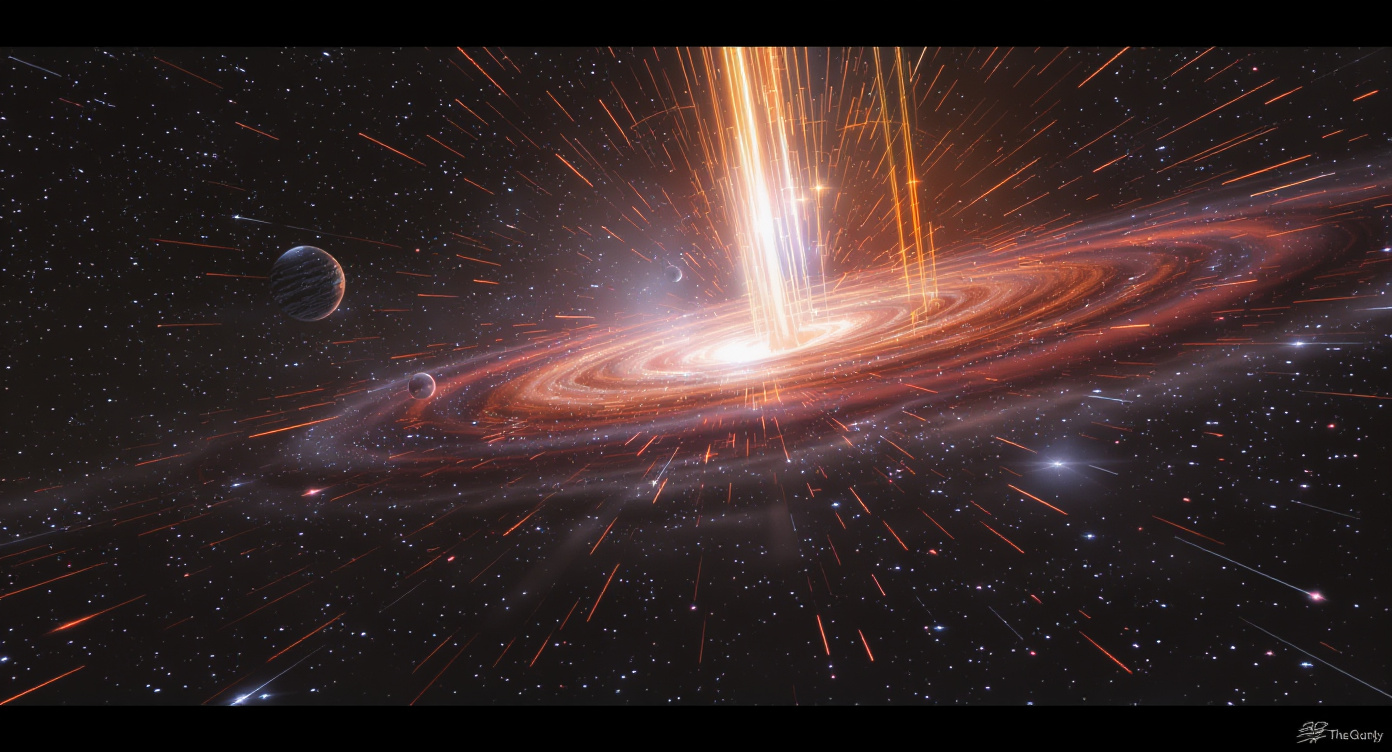
In 2022, a photon with record-breaking energy from a gamma-ray burst was detected on Earth—something that, according to current physical models, should not have been possible. To explain this phenomenon, astrophysicists proposed a new model that takes into account unusual effects at extreme energy levels.
The article discusses a new hypothesis about the early stages of the Universe and the nature of dark matter, which contradicts established scientific data and lacks sufficient justification. Experts point out that this hypothesis does not align with current understanding in physics.
New research indicates that the expansion of the Universe is slowing down, rather than accelerating as previously believed. This finding is linked to a reassessment of the properties of type Ia supernovae and could change our understanding of dark energy and the evolution of the cosmos.

 Cursus