

Elephant whiskers have inspired new sensory technologies
The study revealed that the unique structure of the bristles on an elephant's trunk gives it exceptional tactile sensitivity. These features are inspiring scientists to develop new sensory technologies for robots.
Cursus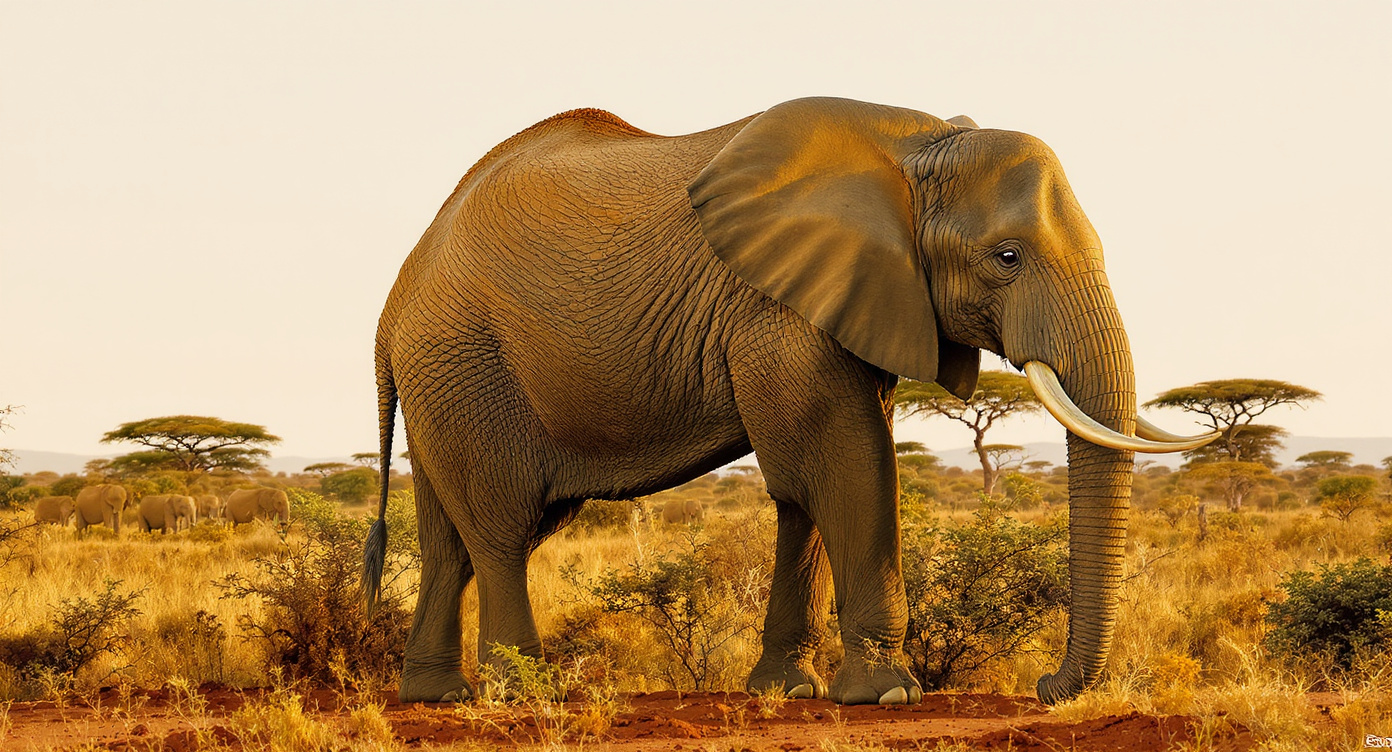
The unique structure of the elephant's trunk, covered with thousands of whiskers from base to tip, gives this animal exceptional tactile sensitivity and allows it to skillfully handle even the smallest and most delicate objects.
Sensory Systems in Animals
Throughout evolution, animals have developed various sensory systems that help them navigate their environment, move across terrain, find food, avoid predators, and orient themselves in the dark. Many mammals, such as cats and rats, use special sensitive hairs—vibrissae, or whiskers—as tactile organs.
Features of Elephant Whiskers
The elephant's trunk is also covered with about a thousand whiskers, each reaching a length of around five centimeters. Unlike the vibrissae of rodents, elephant whiskers lack specialized muscles that cause the characteristic vibration when in contact with objects. Moreover, if an elephant's whiskers are damaged, they do not regrow, unlike the whiskers of rats.
A study published in the journal Science by a team of engineers, materials scientists, and neurobiologists showed that elephant whiskers differ from rodent vibrissae not only in structure but also in other parameters. These differences give elephants an incredibly acute sense of touch, compensating for their thick skin and poor eyesight.
Structure and Functional Gradients
Using micro-computed tomography and electron microscopy, scientists discovered that each whisker on the Asian elephant's trunk has a thick, rigid, and porous base filled with pores. This base gradually transitions into a soft, dense, and elastic tip with an oval, conical shape reminiscent of rubber. This structure is markedly different from the uniformly stiff whiskers of rats and mice.
The transitions from rigid to soft, from porous to dense, and from round to oval are called functional gradients. Each of the three gradients—geometry, porosity, and stiffness—individually regulates the elephant's tactile perception.
The Impact of Gradients on Sensitivity
Computer modeling has shown that the conical oval shape of the whisker enhances its interaction with surfaces and textures, and also allows for preferred directions of bending. The transition from a porous base to a dense tip reduces the whisker's mass and lowers the risk of breakage. The smooth shift from stiffness to softness enables the whiskers to bend in different directions, allowing the elephant to precisely determine contact points with its environment along the entire length of the whisker. This ability helps the animal understand how close or far its trunk is from an object and to manipulate even very delicate items with great accuracy.
Technological Prospects
Inspired by the functional gradients found in elephant whiskers, the research team plans to develop new robotic sensory technologies that can replicate the unique tactile abilities of elephants.