

Amino acids on an asteroid: a new theory on the origin of life
An analysis of soil from the asteroid Bennu has shown that amino acids can form in extremely cold conditions, not just in hot interiors. This discovery broadens our understanding of the possible pathways for the emergence of life in the universe.
Cursus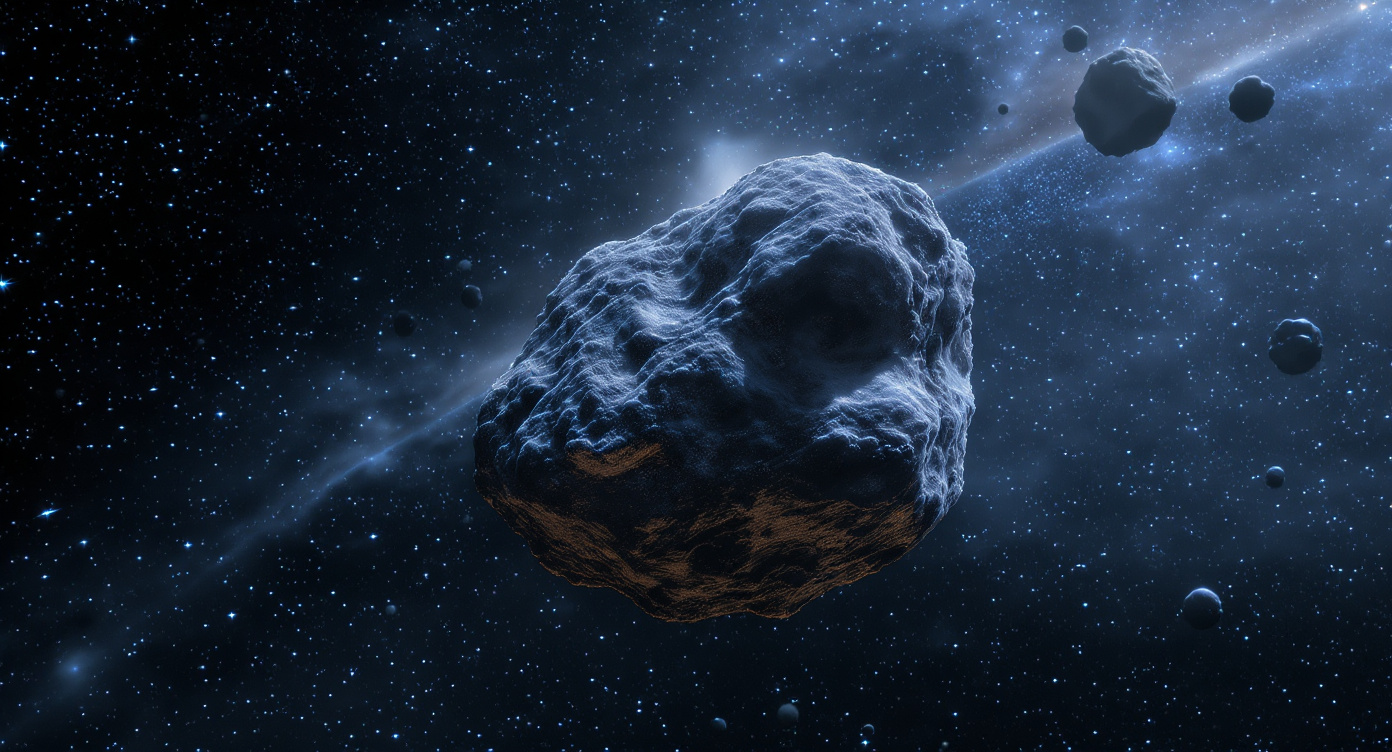
An analysis of soil delivered from the asteroid Bennu as part of NASA's OSIRIS-REx mission has revealed that amino acids can form in space not only within the hot interiors of celestial bodies, but also under conditions of extreme cold. By comparing samples from Bennu and the Murchison meteorite, scientists discovered that the simplest amino acid—glycine—has a different chemical history: while it was synthesized in warm liquid water in the meteorite, on Bennu it formed in primordial ice even before the Solar System took shape.
The Origin of Organic Compounds in Space
Asteroids and comets are rich in organic compounds, including amino acids. The main mystery is the mechanism of their formation. It is believed that organics are synthesized inside asteroids when ice melts and reacts with the surrounding rock. Today, a similar reaction (the Strecker synthesis) is used in industry to produce amino acids.
Previously, such hypotheses were tested on meteorites that fell to Earth, such as the Murchison meteorite (Australia, 1969). Over decades of storage, these samples could have been contaminated by Earth's atmosphere or bacteria. The samples from Bennu, delivered in a sealed capsule, allowed scientists for the first time to study the chemical processes of the early Solar System without terrestrial impurities.
Unique Isotopic Analysis
The authors of the study, published in the journal PNAS, conducted an ultra-precise isotopic analysis. Instead of simply weighing molecules, they used a method of intramolecular isotopy, literally breaking glycine molecules into parts and measuring the content of heavy carbon (^13C) separately in the "tail" (carboxyl group) and in the base of the molecule. The distribution of isotopes between different parts of a single molecule indicates the type of chemical reaction in which the substance was formed.
In the product of the Strecker reaction, an isotopic imbalance is observed: the "tail" of the molecule is enriched in ^13C, while the "head" contains little. In glycine from the Murchison meteorite, the isotope ratio between the two parts of the molecule is characteristic of synthesis in warm liquid water, as in the Strecker reaction. In samples from the asteroid Bennu, the carbon atoms within glycine were isotopically similar, indicating that the molecules formed through radical reactions in cosmic ice under the influence of radiation.
Additional nitrogen analysis confirmed this version: Bennu's amino acids are rich in heavy nitrogen (^15N), which is typical for objects formed in the cold outskirts of the Solar System or even in interstellar space.
Unexpected Discoveries and New Questions
Scientists encountered an unexpected puzzle: mirror-image forms of the same amino acid (L- and D-glutamic acid), which should be identical in non-living nature, had different isotopic compositions on Bennu. This discovery calls into question traditional methods of searching for life that are based on the chirality (symmetry) of molecules.
Significance for Understanding the Origin of Life
The study demonstrates that early Earth received organic molecules from two sources. Some organics arrived ready-made from hydrothermal sources on asteroids, while others came from the primordial cloud that gave birth to the Sun. This confirms that the chemistry necessary for the emergence of life is a standard process in the Universe, capable of occurring under a wide variety of conditions.