

Ancient technologies of East Asia turned out to be more complex than expected.
Recent archaeological discoveries in China challenge the notion of technological backwardness in East Asia during the Stone Age, revealing sophisticated tools dating back up to 160,000 years. These findings broaden our understanding of ancient technologies and the capabilities of the Denisovans.
Cursus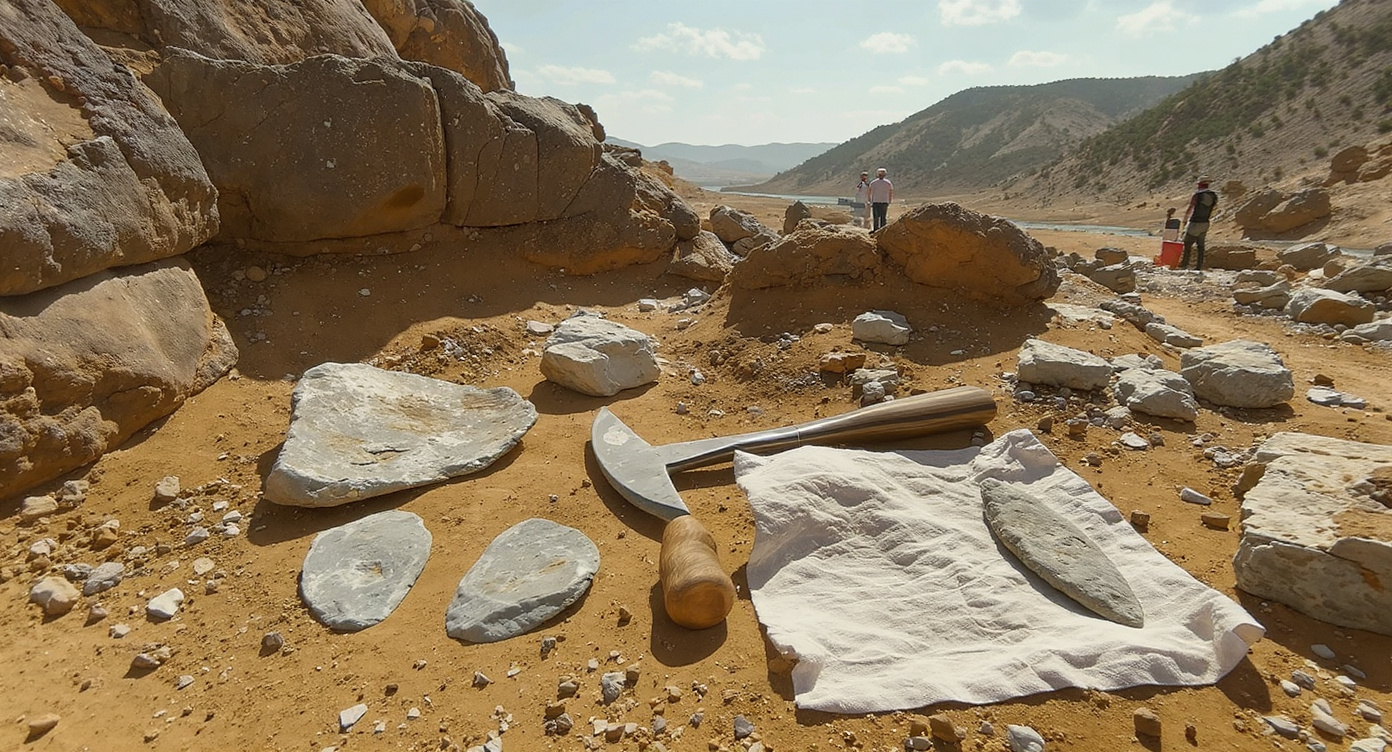
Until recently, it was believed that the technological advances of the Stone Age spread from Africa and Europe, while East Asia significantly lagged behind until about 40–50 thousand years ago. However, new archaeological discoveries from China challenge this view.
The Evolution of Stone Age Technologies
The modern form of Homo sapiens emerged around 300,000 years ago, but for a long time, their technological progress differed little from that of earlier human species. About 100,000 years ago, the ancestors of today’s Bushmen began making complex tools with microlithic tips, likely for arrows used with bows—possibly even with poisoned tips. This technological revolution enabled them to rapidly spread across Africa, and around 70,000 years ago, to venture beyond its borders. This was a significant achievement, especially considering that at least two previous waves of Homo sapiens who left Africa had become extinct.
Centers of Innovation and New Discoveries
The theory that Africa was the center of technological innovation logically explains how our species spread across the globe. However, archaeological evidence shows that certain innovations were also present among Neanderthals. Some researchers believe Neanderthals created cave art before humans in Europe or Africa. In Denisova Cave, a unique piece of jewelry about 50,000 years old was found, made using high-speed drilling techniques, indicating a high level of craftsmanship among the Denisovans.
Until now, complex Middle Paleolithic tools outside Africa and Western Europe were rarely found. Stone tools dated to 50–70 thousand years ago discovered in Asia did not appear to represent advanced technologies.
New Discoveries in China
A recent study published in Nature Communications revealed that complex tools did exist in East Asia—they simply had not been found before. Archaeologists reported discoveries in Xigou (a region near the Danzhuangkou Reservoir, Henan Province, Eastern China). Here, small stone fragments were found that had been attached to wooden shafts.
In total, 2,601 stone flakes were discovered, many showing traces of being mounted onto handles made from other materials. Previously, tools with handles in East Asia were only known from later layers. Most of the finds are less than 50 millimeters in size and made from quartz and quartzite. Across all layers of the site, which date from 160,000 to 72,000 years ago, the same technique was used—freehand percussion with a hard hammerstone.
A Long-Lasting Technological Tradition
The types of flakes repeat throughout this entire period, suggesting the existence of a single, continuous technological tradition in the region that lasted for an exceptionally long time. This is unusual for the Middle Stone Age and may indicate a stable local population, although the remains of the hominins who made these tools have not yet been found.
Features of the Tools and Their Use
Traces of attachment to handles were found on 22 items using traceological methods. Some of these have protrusions or narrowed bases, which made it easier to fix them into wooden handles. Two of these items are drills, which were also mounted on handles; they show traces of both drilling and microscopic impacts from use.
Who Made These Tools?
During the period from 160,000 to 72,000 years ago, there is no reliable evidence of anatomically modern humans in this region. Many scientists believe that only Denisovans lived in continental East Asia at that time. If so, these new discoveries significantly expand our understanding of the technological capabilities of this ancient human species, whose genes are still partially present in modern East Asians and Papuans.