

Birds in Los Angeles have changed their beaks due to the lockdown
During the lockdown in Los Angeles, city birds quickly changed the shape of their beaks due to reduced human activity and food availability. Once people returned, these changes disappeared. The study demonstrates how rapidly urban wildlife can respond to shifts in their environment.
Natura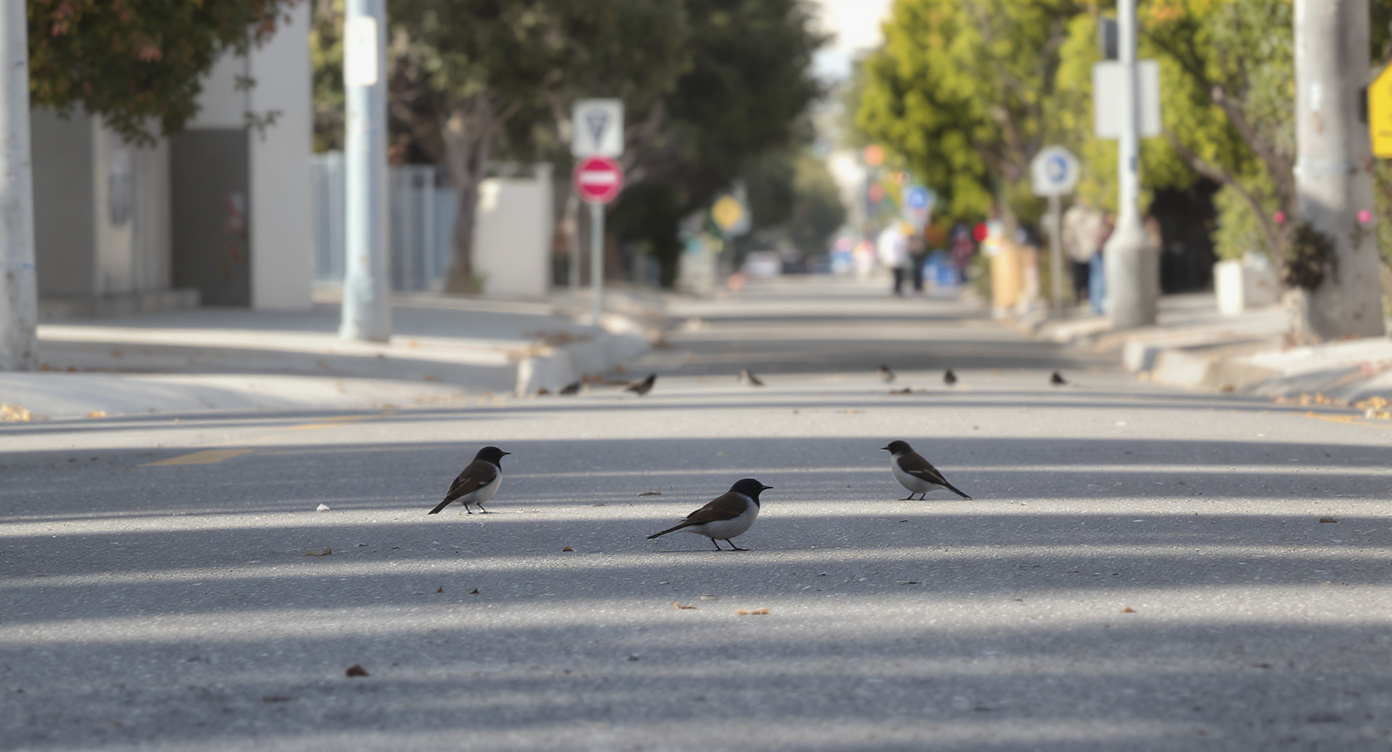
When the streets of cities emptied due to lockdowns caused by the COVID-19 pandemic, the urban environment changed almost overnight. A recent study found that city birds in Los Angeles also quickly adapted to these changes, showing noticeable alterations in beak shape during this period. These changes coincided with a reduction in human activity and food availability, offering a unique opportunity to observe how human behavior can rapidly influence the biological traits of urban wildlife.
How Urban Birds Changed During the Lockdown
Researchers from the University of California, Los Angeles (UCLA) observed dark-eyed juncos (Junco hyemalis) living on campus from 2018 to 2025. They discovered that birds hatched during the lockdown developed beaks more similar to those of wild populations, rather than the short, thick beaks typical of city juncos. When human activity and food waste returned to normal levels, these differences disappeared in subsequent generations.
Typically, urban juncos have shorter and thicker beaks, which are believed to help them consume food associated with humans—such as scraps and handouts. However, during the lockdown, city-born juncos—small gray sparrows—developed longer, thinner beaks, resembling those of birds from nearby natural habitats.
Causes and Speed of Change
Changes in beak shape were observed in birds hatched during and shortly after the decrease in human activity, but these changes faded in later generations once normal city life resumed. According to Professor Inmaculada Álvarez-Manseda Salsedo from the University of Granada, an unusual aspect of the study was not only the speed at which these changes occurred, but also their reversibility when human activity returned.
What makes these changes particularly significant is not just their rapid onset, but also the unique circumstances under which they happened. The restrictions related to COVID-19 created a rare, large-scale natural experiment by temporarily removing the human influence that usually shapes the urban environment. In cities, where ecological factors often overlap, such a clear "switch-off" is extremely rare. This allowed researchers to isolate human presence and related factors like food waste and disturbance as distinct ecological influences on urban populations.
The Role of Food Availability
Researchers suggest that food availability played a key role. Lockdowns led to the closure of cafeterias and a sharp reduction in organic waste, possibly depriving city juncos of their usual food sources. As a result, the birds may have shifted to more natural food sources and started using green spaces previously occupied by people.
Professor Graciela Gómez Nicola from Complutense University of Madrid, who reviewed the study's findings, notes: "This change was likely driven by a significant reduction in their main food source—organic waste available in the city. This forced the birds to alter their diet." She adds: "The beak is a crucial tool for feeding, so a change in diet could have influenced the development of a beak shape better suited to new types of food."
Caution in Conclusions and Alternative Hypotheses
The study's authors emphasize that changes in physical traits can arise for various reasons: genetic evolution, developmental plasticity, or selection among existing variants within the population. In this case, the rapid response supports the idea that selection favored certain beak shapes already present in the population, rather than the emergence of new mutations.
Another hypothesis is that birds from surrounding wild populations may have moved into the quieter city and interbred with urban juncos. Although researchers consider this unlikely given the timing and sequence of observed changes, further genetic and behavioral monitoring over several generations will be needed to fully rule out this possibility.
The Significance of the Study
Overall, the results highlight the close connection between urban wildlife and human behavior. When people temporarily disappeared from city spaces, the ecological landscape shifted, and birds responded to these changes on a scale that is rarely so clearly documented.
Rather than providing definitive proof of "evolution in action," the study demonstrates how quickly biological traits can respond to environmental changes, and how urban ecosystems can create conditions for evolutionary processes to unfold over longer periods.
The study was published in the journal Proceedings of the National Academy of Sciences.