

MIT breakthrough: injection replaces IV drip for antibodies
MIT engineers have developed a method to deliver highly concentrated antibody drugs with a single injection instead of lengthy IV infusions, making treatment simpler, faster, and more accessible for patients.
Salus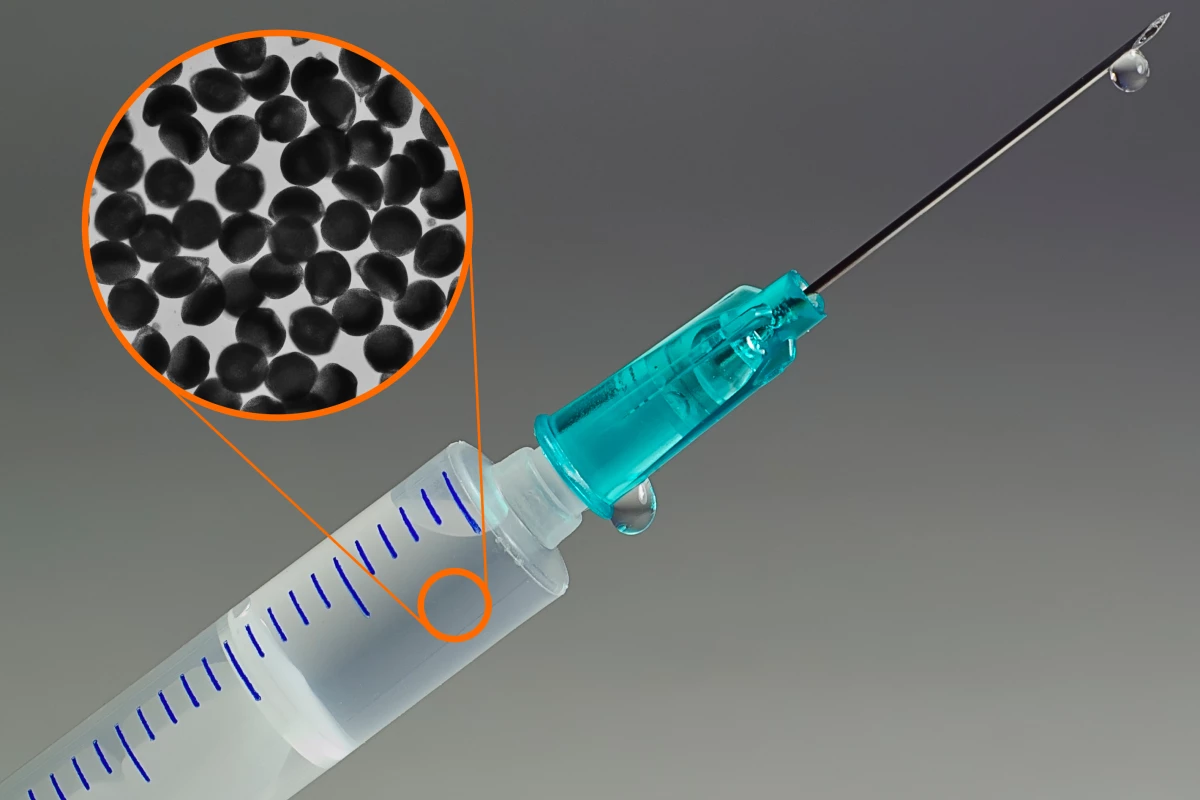
I have always preferred for my body to produce antibodies on its own. It’s much more convenient when your immune system fights off infections while you’re busy with work, teaching, family matters, or even playing games. I’m fortunate: unlike the 14 million Americans under 64 with weakened immunity and the 58 million seniors over 65 whose immune systems are not very effective, I am in an “immune-privileged” position.
This means I don’t have to make monthly trips to the hospital or clinic and spend hours there receiving intravenous antibody infusions for cancer or other diseases—sitting or lying under a drip with a needle in my arm, just to avoid suffering or dying.
However, MIT engineer Patrick Doyle, lead author of an article in Advanced Materials titled “Highly Concentrated Antibody Formulations via Solvent-Assisted Dehydration,” is proposing a significant breakthrough. Thanks to his work and the efforts of colleagues Lucas Atia and Janet Teng, a much faster and simpler procedure has emerged—one that doesn’t require IV drips or hours of injections, and makes treatment more accessible for those who find it difficult or even impossible to get to a hospital. Now, a single 2 ml injection of a solution containing solid nanoparticles with highly concentrated antibodies is enough.
Why can’t the traditional method be used?
Typically, therapeutic antibody drugs like rituximab are dissolved in water. But as Professor Doyle of chemical engineering explains, it’s impossible to concentrate existing formulas to such high levels. Usually, antibody solutions have a low concentration—10–30 mg per milliliter—so patients need about 100 ml for a single dose. For comparison, a standard cup of coffee is 250 ml, so imagine injecting almost half a cup. Why not just increase the concentration? Doyle notes that the solution then becomes too viscous, and the force required for injection exceeds safe limits.
A new approach to creating concentrated formulas
In 2023, Doyle’s team used hydrogel particles to pack more antibodies into a single injection. However, this method required a centrifuge, complicating mass production.
“Our first approach was rather crude,” Doyle says. “When we developed the new method, we decided it had to be simple if we wanted to make it better and scalable.”
In their latest breakthrough, the team created an emulsion by suspending droplets of antibodies in pentanol, an organic solvent. After dehydration, the emulsion leaves behind particles with a concentration of about 360 mg of antibodies per milliliter of solution, along with a small amount of stabilizing polymer—polyethylene glycol (PEG).
In the final step, the pentanol is replaced with a mixture of water, salts, and stabilizing polymer. Since the process only requires a microfluidic setup and doesn’t use a centrifuge, mass production becomes easier and cheaper, and the resulting formulas remain stable in the refrigerator for up to four months.
Advantages and prospects
By adjusting the flow rate of the solutions with droplets, the team can control the particle size—from 200 microns down to 60. Smaller particles require much less force for injection. Tests with 100-micron particle solutions showed that the mechanical force needed dropped to 20 newtons. As co-author Chen notes, “That’s less than half the maximum allowable force typically targeted, so the injection becomes very easy.”
This means a standard 2 ml syringe can deliver 700 mg of antibodies in a single injection. For patients whose hospital visits mean lost paid work hours and an hour for infusion, this method saves significant time and is much more convenient and comfortable.
And for people with limited mobility or those living far from hospitals and clinics, mobile healthcare workers could offer the MIT micro-particle emulsion as a simple solution—literally, an antibody solution in a single injection.