

A wireless neuroimplant promises to restore lost sensations
Scientists have developed a minimally invasive wireless neuroimplant capable of directly transmitting sensory signals to the brain. This technology opens up new possibilities for restoring lost senses and aiding rehabilitation after injuries and illnesses.
Ingenium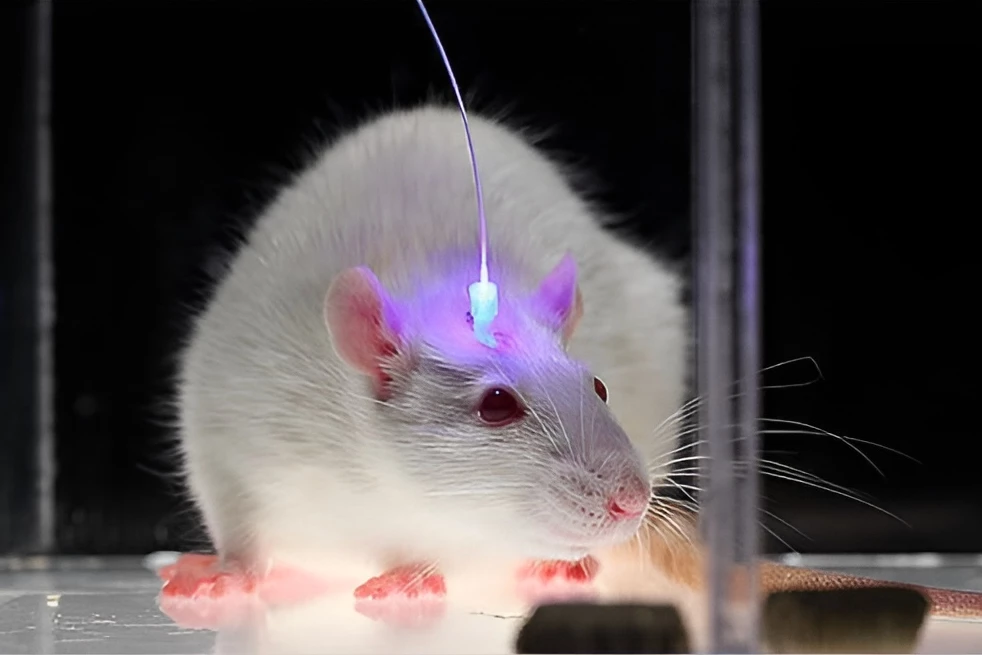
For most people, losing a sense like vision is a life-altering event—not only because of increased vulnerability, but also due to a significant decline in quality of life. While prosthetics can be functionally helpful, they cannot replace the sensory information—such as the feeling of texture, moisture, and density—that our skin effortlessly transmits to the brain.
This is why a unique optogenetic device developed at Northwestern University near Chicago is generating so much hope. The new wireless neuroimplant, about the size of a house key and thinner than a coin, allows for minimally invasive placement under the scalp, avoiding some of the surgeries that require cutting or drilling into the skull. Neuroscientists can position the soft, flexible “neuro-key” on the surface of the skull, where it directs neuron-activating light straight through the bone into the brain’s cortex, completely bypassing the natural sensory pathways.
Experiments and Results
In an upcoming publication in Nature Neuroscience, lead author Minjzen Wu and colleagues describe how, in experiments on mouse brain models, the neuro-key precisely activated groups of neurons that had been genetically modified with light-sensitive algae genes. Mice that could not see, hear, or feel quickly learned to interpret light signals to perform various tasks.
“Our brain constantly transforms electrical activity into sensations, and this technology allows us to directly intervene in that process,” notes experiment leader Evgenia Kozorovitskaya, professor of neurobiology at Northwestern’s Weinberg College of Arts and Sciences. “This platform lets us create entirely new signals and observe how the brain learns to use them. It brings us closer to restoring lost senses after injury or illness and opens a window into the fundamental principles of perception.”
Application Prospects
Because optogenetic implants require genetic modification of neurons, they are not yet approved for use in humans. However, for those who have lost the ability to see, hear, or feel, the neuro-key offers hope for dramatic improvements—potentially through devices that can transmit information to stimulate the same neurons that normally receive signals from the eyes, ears, and skin. Possible applications include rehabilitation, especially after neurological consequences of stroke, as well as cybernetic control of robotic limbs.
As a tool to address one of the most challenging problems—chronic pain—the neuro-key could offer pain modulation without the costs, side effects, or risk of addiction associated with opioids and systemic medications.
Technological Features
In their initial work, the team used only a single micro-LED, but the new version, with an array of 64 micro-LEDs, can generate virtually unlimited patterns that differ in frequency, intensity, and timing. Real-time control of each LED gives researchers the ability to deliver complex light patterns to the brain, simulating the distributed neural activity of sensory experience, rather than just localized activation.
“Developing this device required us to rethink how to deliver patterned stimulation to the brain in a way that is both minimally invasive and fully implantable,” says John A. Rogers, director of the Querrey Simpson Institute for Bioelectronics at Northwestern University. Rogers led the technological side of the project and is also a professor of materials science, biomedical engineering, and neurosurgery.
“By integrating a soft, flexible array of up to 64 micro-LEDs—each about the diameter of a human hair—with a wireless control module, we created a system that can be programmed in real time. It remains entirely under the skin and does not noticeably affect the animals’ natural behavior,” Rogers adds.
Advantages and Future Outlook
According to Rogers, these design features of the neuro-key represent a significant step forward in creating devices that can interact with the brain without the need for bulky wires or external equipment. This is important not only for neuroscience research, but also for improving human health.
Optogenetic technologies are not new: back in 2021, Kozorovitskaya and Rogers developed a programmable, wireless, battery-free implant for remotely controlling mouse behavior. However, many similar devices required fiber optic cables, which restricted animal movement, whereas the new neuro-key allows mice to move freely.
Because the implant is hidden under the skin and not exposed like the “brain electrode” of a mad scientist, future human users will be spared unwanted attention. This is a crucial aspect of medical technology, protecting privacy and dignity during functional restoration.