

Dragon's Well: Mysteries of Life in the Depths
The Dragon Hole in the South China Sea is a unique blue hole where, at great depths, there is almost no oxygen or typical marine life. In its isolated layers, scientists have discovered unusual communities of microbes and viruses, including previously unknown species, making this place a natural laboratory for studying extreme forms of life.
Cursus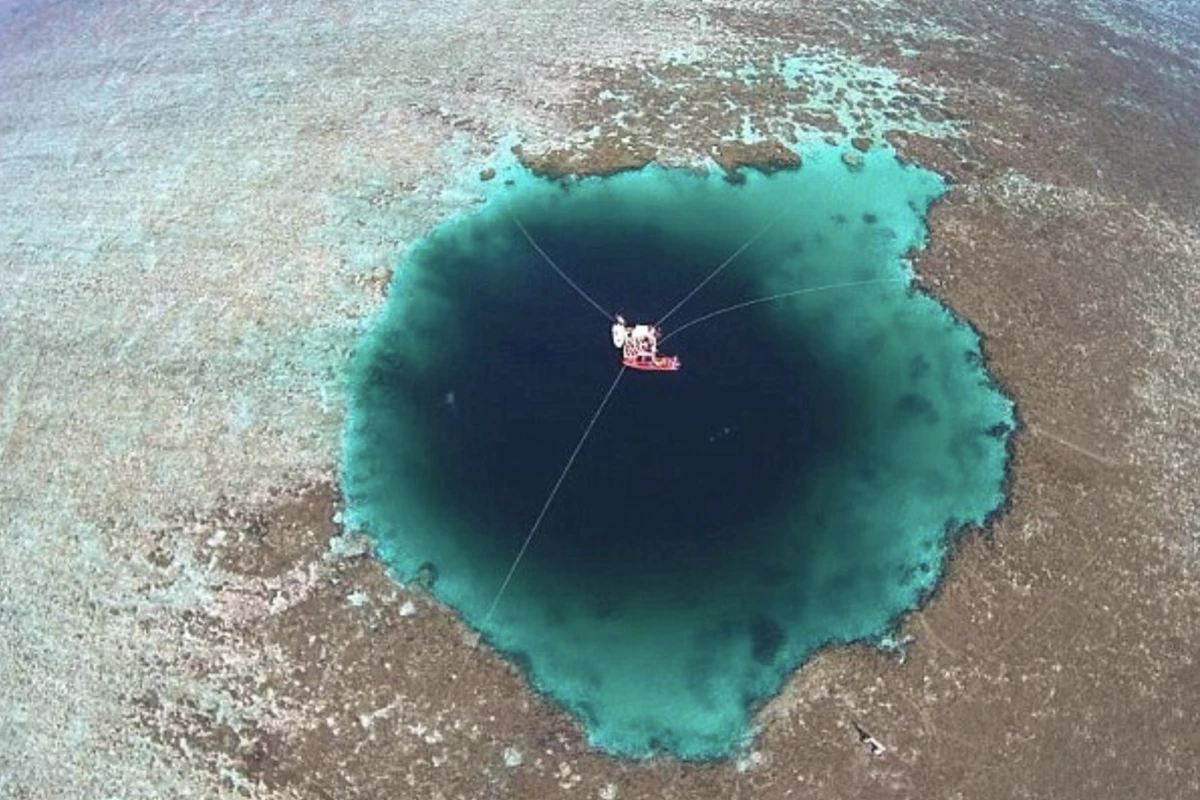
In the South China Sea, not far from the Paracel Islands, the turquoise waters of a vast reef platform suddenly plunge into an almost vertical abyss—a blue hole, nearly devoid of oxygen and the familiar forms of marine life.
Dragon Hole: The Mystery of the Depths
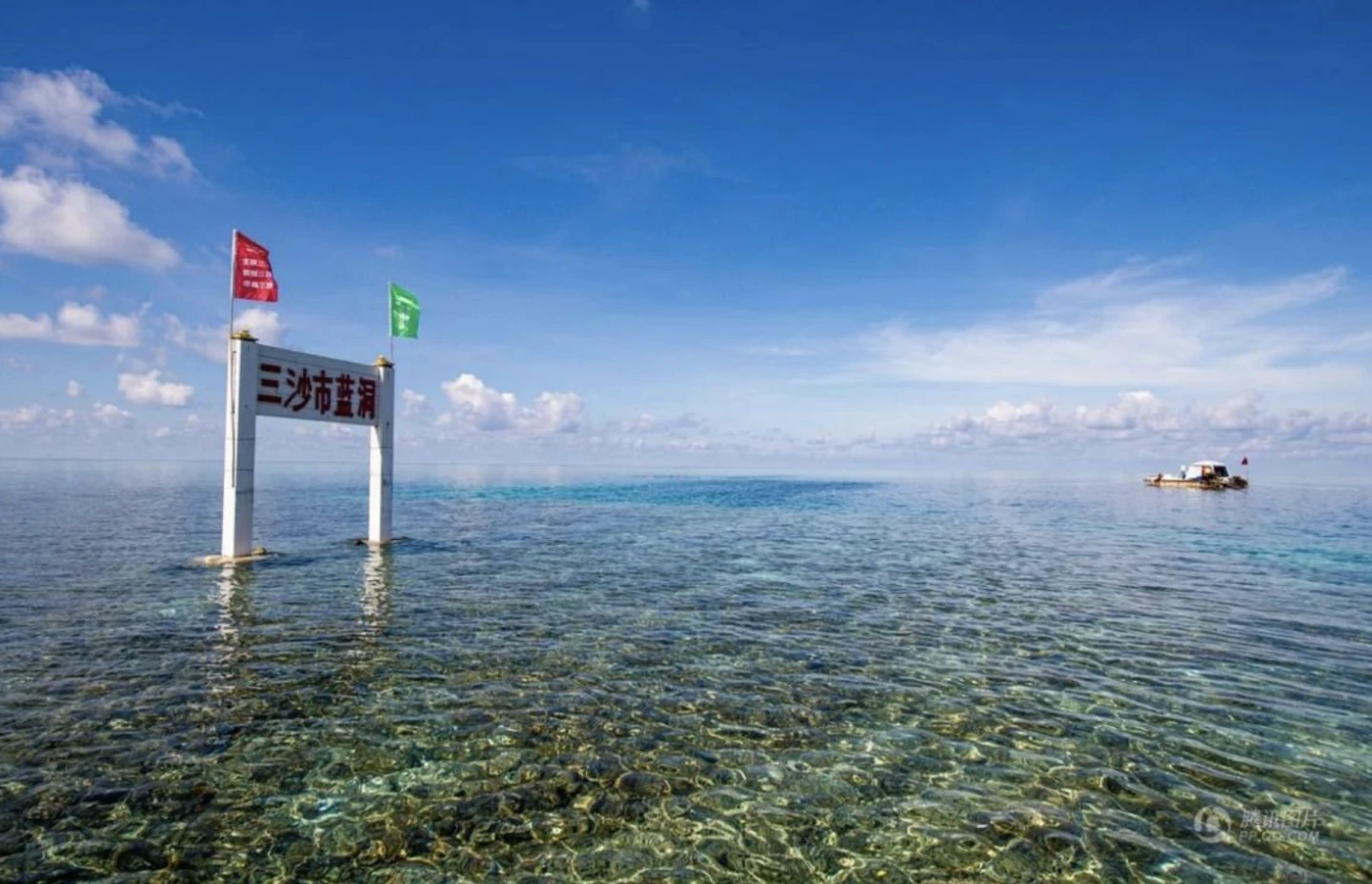
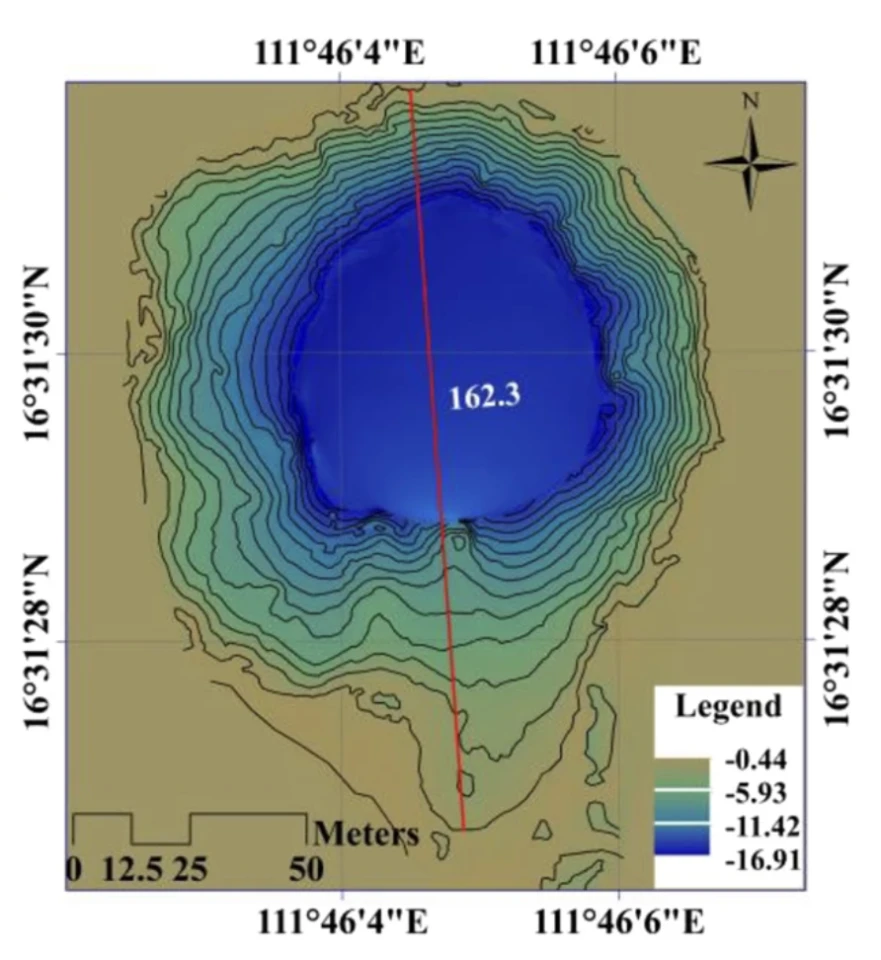
This place is known as the Dragon Hole, or officially the Yongle Blue Hole (YBH), located near the city of Sansha. It measures 162.3 meters across and plunges to a depth of 301 meters. Despite the rich biodiversity of the surrounding reef, very little is known about life inside the hole itself: neither algae, plants, nor fish can survive deeper than about 100 meters from the surface.
Historical Roots and Origins
The first measurements of this blue abyss were made by Chinese scientists only in 2016, though it has been known for centuries. In one of the most famous Chinese novels, "Journey to the West," there is a description of a place where the Monkey King Sun Wukong found his golden staff—right in this very hole. Scientists believe the karst sinkhole formed when sea levels were lower: rainwater dissolved limestone, creating vertical "steps" along the walls. Later, as sea levels rose, the depression flooded and became an underwater blue hole.
Blue Holes of the World: The Uniqueness of the Dragon Hole
When it was mapped in 2016, the Dragon Hole was considered the deepest blue hole on the planet, surpassing the famous blue holes in the Bahamas, Egypt, Belize, and Malta. Today, preliminary data suggest that the title belongs to Taam-Ha off the coast of Yucatán, Mexico (depth—420 m), but little is known about life inside that sinkhole as well.
An Isolated Ecosystem
The Dragon Hole stands out from most underwater caves and sinkholes because it is located on an offshore coral platform, far from land. Its uniqueness lies not only in its depth but also in what happens inside. Below the surface layer, where some specially adapted marine organisms live, the water becomes stagnant, lacking both oxygen and light.
In most oceans, winds, waves, and currents mix surface waters, delivering oxygen to the depths. However, the steep walls and narrow opening of the Dragon Hole prevent such mixing, so the water inside is divided into distinct layers that barely interact with the surrounding sea.
A Microcosm Without Oxygen
Measurements by Chinese marine scientists showed that oxygen concentration drops rapidly with depth, reaching zero well before the midpoint of the hole. Below this threshold, the water is permanently anoxic—unable to support fish, plants, or algae. Nevertheless, a variety of microscopic organisms have been found here, capable of obtaining energy without sunlight.
Researchers have identified microbial communities living in the anoxic depths that use not sunlight, but chemical energy. These microbes rely on chemosynthesis—a process in which organisms derive energy from chemical reactions with sulfur compounds, rather than through photosynthesis, much like microorganisms in sulfur caves.
Stratified Life: Layers and Their Inhabitants
In 2023, scientists expanded our understanding of low-oxygen marine environments by studying the Dragon Hole. They discovered an intriguing mix of species, separated by vertical layers. Life disappears as oxygen vanishes: below the surface (the oxic zone) and transitional levels (the suboxic zone) at depths of 100–140 meters, a third layer begins—the anoxic zone I, almost entirely populated by sulfur-oxidizing bacteria. In the deepest part of this layer, they make up about 90% of all microbes. Instead of oxygen or sunlight, these organisms use sulfur compounds as an energy source through chemosynthesis. Here, colorless sulfur bacteria and purple non-sulfur bacteria dominate, especially those of the genera Thiomicrorhabdus and Sulfurimonas, specially adapted to oxygen-free, chemically aggressive conditions.
Below 140 meters, the environment shifts to anoxic zone II—a deeper and chemically stable layer that extends to the very bottom. Here, nitrates disappear completely, and hydrogen sulfide accumulates, indicating a fundamental change in energy pathways. Sulfur oxidation is replaced by sulfate reduction, and microbes become more diverse and strictly anaerobic. Desulfatiglan becomes dominant, along with sulfate-reducing bacteria such as Desulfobacter, Desulfovibrio, and Desulfobulbus, which actively produce hydrogen sulfide during metabolism. This zone also hosts a wide range of anaerobic specialists, including green sulfur bacteria Prosthecochloris, as well as groups like Chloroflexi and Parcubacteria. Although metabolism here is slower than in the upper layer, biodiversity is higher, and a closed sulfur cycle forms, independent of the oxygenated surface waters.
Extreme Life Forms and New Discoveries
Together, these anoxic layers turn the Dragon Hole into more than just a vertical sea cave: stratified microbial ecosystems form here, each governed by its own chemistry and energy needs.
To better understand this ecosystem, researchers collected samples and attempted to grow microbes in the laboratory. They managed to isolate 294 different bacterial strains under various cultivation conditions. Remarkably, among the anaerobic (oxygen-free) bacteria, 22.2% turned out to be previously unknown to science, suggesting the possibility of entirely new forms of life in the Dragon Hole. They also found a clear distinction between free-floating bacteria and those attached to particles, indicating a variety of survival strategies in this extreme environment.
The Viral World of the Hole
In September, scientists learned even more about life in the hole by studying its "viriome" (the viral community) across all four layers. They identified 1,730 viral taxonomic units (vOTUs), more than 70% of which belonged to the classes of tailed phages Caudoviricetes and Megaviricetes. Representatives of the families Kyanoviridae, Phycodnaviridae, and Mimiviridae were also found. However, in the lower anoxic layers, previously unknown viruses predominated, warranting further research.
An Isolated Laboratory of Nature
Today, this is the extent of our knowledge about the Dragon Hole. Its uniqueness lies in its depth, isolation, and stability. Most blue holes experience some water exchange with the surrounding ocean, but here, such exchange is almost nonexistent. This is why the site attracts such great scientific interest—it has remained virtually isolated from external biological influences since it filled with water, and is unlikely to change in the near future, regardless of human intervention.