

The outer layer of the root determines its shape.
A new study has shown that the outer layer of a root determines its shape and mechanical properties, opening up new possibilities for improving the resilience of crops to challenging soil conditions.
Cursus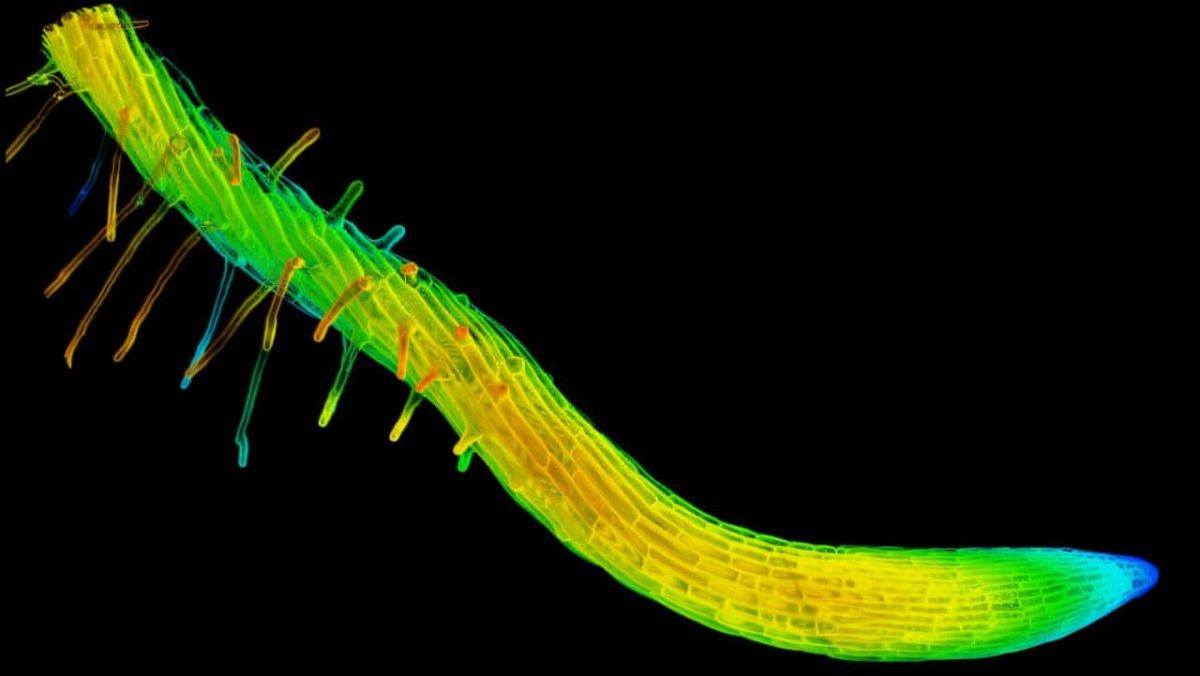
The discovery that it is the outer layer of the root that determines its shape and mechanical properties opens up new possibilities for adapting crops to challenging soil conditions.
How Plants Adapt to Their Environment
The twisting of stems and roots is a common survival strategy among plants. For example, grapevines wrap around supports, cucumber tendrils cling to objects, and the roots of some plants spiral to penetrate the soil and bypass obstacles like stones.
Genetic Basis of Twisting
Scientists have long established that spiral growth is linked to mutations in genes affecting the microtubules of plant cells. Often, so-called "null mutations"—where the absence of a specific protein leads to various issues—are responsible. However, twisted growth remains a widespread evolutionary adaptation.
New Research: The Role of the Epidermis
American biologists closely studied the twisting process in plants and found that a complete null mutation throughout the plant is not necessary for this effect—altering gene expression only in the epidermis, the outer root layer, is sufficient. These findings were published in the journal Nature Communications.
Plant cells are tightly connected and surrounded by a rigid cell wall. The root layers, from the inside out, are arranged as follows: stele, endodermis, cortex, and epidermis. Previously, it was believed that twisting was associated with the inner cortical layer, where mutations make cells short and wide instead of long and thin.
Experiments with Model Plants
Researchers attempted to restore straight root growth by expressing the normal gene in different root layers of Arabidopsis thaliana, a plant with a fully sequenced genome. Surprisingly, gene expression in the inner layers did not straighten the root—it remained twisted, just like in the null mutant. However, when the normal gene was active only in the epidermis, the roots straightened. This demonstrated that the outer layer dictates the root’s shape.
Mechanobiological Analysis
Mechanobiologists joined the study, measuring the orientation of cellulose microfibrils in normal and mutant roots, identifying differences in cellulose deposition, and creating a computer model of these processes in the plant.
As explained by one of the authors, Guy Genin, when there are concentric layers of cells, like tree rings, it is the outer layer that has the greatest influence on the entire structure. The model showed that if only the epidermal cells have an altered shape, this can account for up to a third of the plant’s overall twisting, and straightening the epidermal cells straightens the entire root. Thus, the outer layer plays a decisive role.
Practical Significance of the Discovery
The model confirmed the experimental data: expressing the normal gene only in the epidermis affects even the inner mutant cells, making them longer and thinner, almost as in normal conditions. The epidermis turned out to be not just a passive shell, but an active mechanical coordinator of the organ’s growth. The outer root layer dominates its twisting due to the same physical laws that allow hollow tubes to be nearly as strong as solid rods.
Now that scientists understand how plants twist their roots, this knowledge can be used to address agricultural challenges. Understanding how roots move through soil will help adapt plants to changing climates and develop agriculture in regions with dense and rocky soils.