

Male bonobos determine the fertility of females by picking up on subtle cues.
Male bonobos are able to identify periods of peak fertility in females by observing the age of their offspring and changes in external features, even when the signals are ambiguous. This ability allows them to choose the optimal time for mating.
Cursus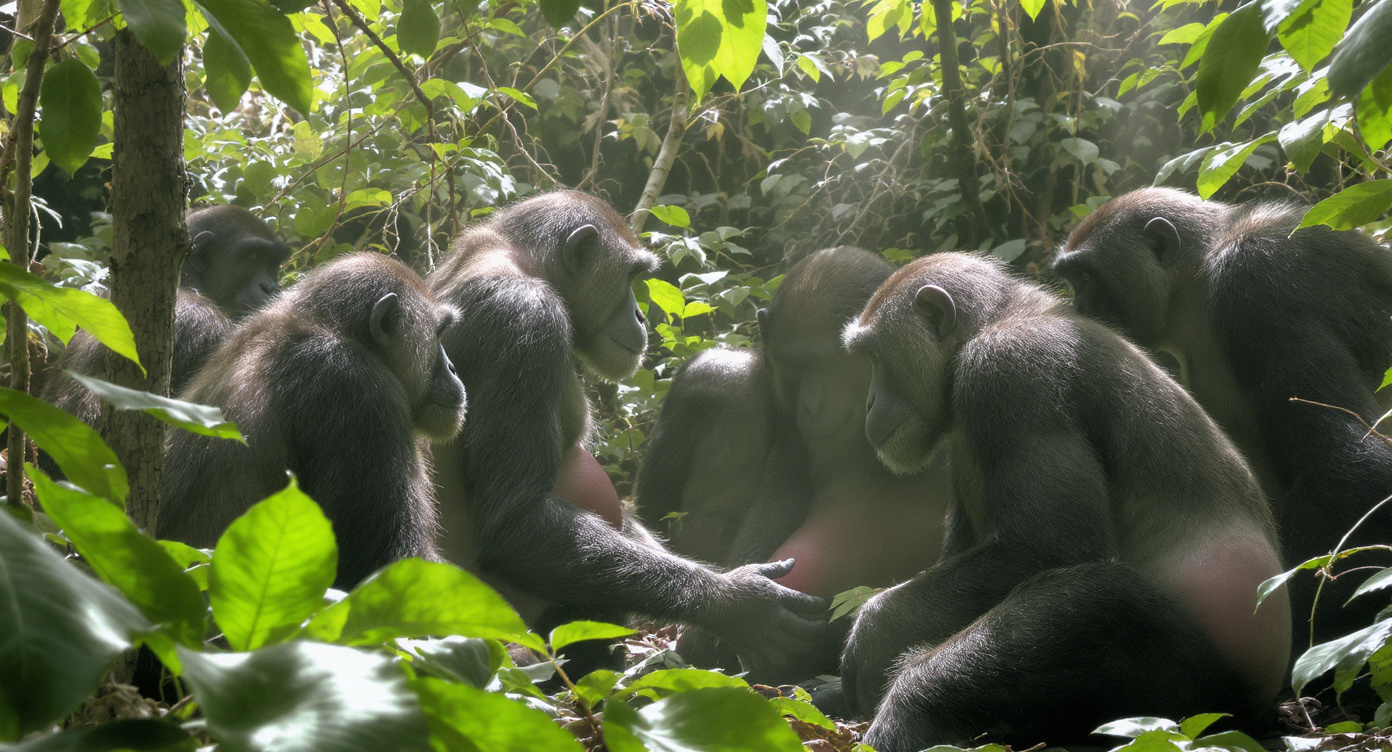
Bonobos have learned to identify periods of peak female fertility, even when external signs are ambiguous. Males take into account the age of offspring and changes in the females’ genitals to focus their mating efforts when the chances of success are highest.
Reproductive Features in Mammals and Bonobos
In most mammals, females accept mates only during ovulation, allowing males to accurately time mating and increasing the likelihood of conception. However, in some primates like bonobos, the situation is more complex: females signal reproductive readiness through a noticeable pink swelling in the genital area.
The challenge is that this swelling persists for a long time, making it difficult for males to pinpoint the exact moment of ovulation based on this prolonged external signal. Previously, biologists considered this uncertainty an evolutionary mechanism to reduce aggression within the group or to obscure paternity. It remained unclear how animals navigate these conditions and whether they can determine the optimal time for mating at all.
Studying Bonobo Behavior
To investigate this question, a team of biologists observed a group of wild bonobos in the Democratic Republic of the Congo. The results of their study were published in the journal PLOS Biology.
The researchers recorded the primates’ sexual behavior daily and visually assessed the state of genital swelling in females. At the same time, they collected urine samples from the animals to measure estrogen and progesterone levels, which allowed them to accurately determine the timing of ovulation.
How Males Detect Fertility
The study found that the probability of egg release peaked between eight and 27 days after the onset of maximum swelling. Such a wide range made it extremely difficult to predict ovulation based solely on external appearance.
Nevertheless, the males’ courtship behavior closely matched the actual ovulation periods. The animals did not rely on chance but used a flexible analytical strategy, paying attention to two key sources of information:
- Motherhood history: Males showed increased interest in females whose offspring were older than three years.
- Timing of swelling onset: Males focused on partners whose maximum swelling had started earlier.
As a result, males effectively assessed female fertility and ignored “noise” in the signals. High-ranking males were more likely to intervene in mating when the probability of conception was high. The apes tracked the beginning of swelling reduction, which indicated the end of the fertile period, and stopped courting accordingly. By combining visual observations of swelling with assessments of offspring age, males could reliably identify the best days for reproduction.
Evolutionary Balance Between Signals and Analysis
In bonobos, evolution has sacrificed signal clarity for behavioral flexibility. By shifting the main time and energy costs to males, nature has forced them to solve a complex biological puzzle. For females, it is advantageous to remain mysterious, since males are intelligent and motivated enough to figure out the puzzle on their own.
Thus, reproductive success depends not only on strength but also on the observational skills of a partner capable of piecing together scattered clues. In bonobo populations, there is a delicate balance between the subtle external signs of females and the analytical abilities of males.