

Earthquakes fuel the life of microbes underground
The study found that even minor earthquakes can temporarily increase the resources available to underground microbes by altering the chemical composition of aquifers. This discovery offers new insights into how life can survive deep within the Earth and potentially on other planets.
Cursus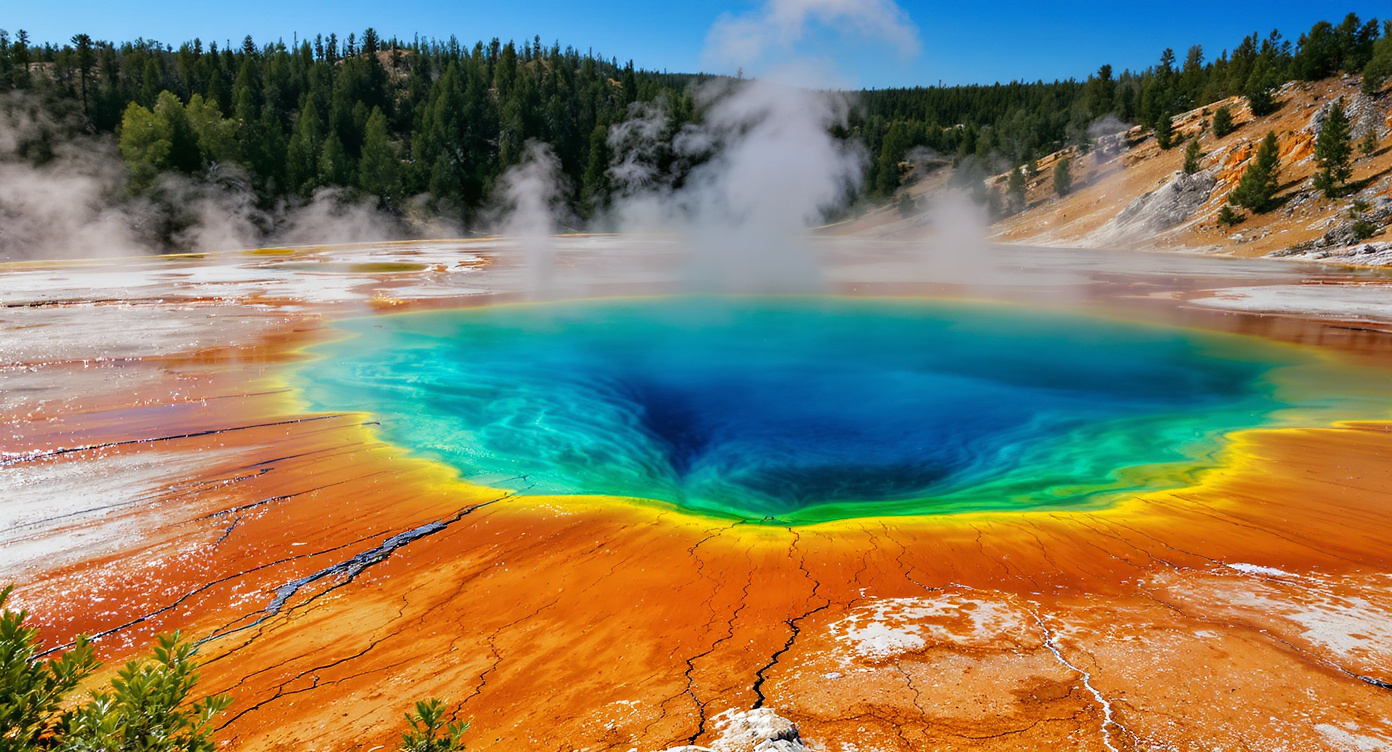
The Grand Prismatic hot spring is the visible part of a vast underground aquifer system located in Yellowstone National Park.
A research team led by Eric Boyd studied how a series of minor earthquakes in 2021 affected the microbial communities living deep beneath the Yellowstone Plateau. These microorganisms inhabit rocks and water systems where sunlight never reaches. Instead of photosynthesis, they derive energy from chemical reactions that occur as water moves through cracks in the rock. This chemical activity provides energy for many forms of subterranean life.
Earthquakes can alter this environment in several ways: they can expose new rock surfaces, displace previously isolated fluids, and redirect water flows underground. Each of these processes creates new chemical reactions, which in turn change the types of energy available to microbial communities. Researchers refer to this phenomenon as a shift in the chemical "menu" from which microorganisms can select the resources they need.
To understand how seismic activity influenced this hidden ecosystem, scientists collected water samples from a nearly 100-meter-deep well on the western shore of Yellowstone Lake. Samples were taken five times throughout 2021, allowing the team to track how conditions changed immediately after the earthquakes and in the following months.
The analysis revealed a significant increase in the levels of hydrogen, sulfide, and dissolved organic carbon after the earthquakes. These compounds are important energy sources for many underground organisms. As the water’s chemical composition changed, the team also observed a rise in the number of planktonic cells, indicating an increase in microbial abundance in the water column. This combination of chemical and biological changes suggests that the series of earthquakes temporarily boosted the resources available to deep microbial life.
In addition to the increase in cell numbers, Boyd and his colleagues noticed that the composition of microbial communities also changed over time. This is particularly interesting because microbial communities in continental aquifers are typically considered relatively stable. In contrast, the Yellowstone system responded quickly and noticeably to seismic impulses.
According to the authors, the kinetic energy associated with earthquakes can influence both the chemistry and the biological makeup of aquifer fluids. Their findings suggest that even minor seismic events can trigger significant ecological changes underground.
The processes observed in the Yellowstone well are likely not unique. In many regions around the world, earthquakes occur regularly and may similarly alter underground energy resources. If this mechanism is widespread, it could help explain how microbial life persists in deep and isolated environments.
The researchers also note that similar processes could occur on other rocky, water-bearing planets. If earthquakes or comparable geological movements can renew chemical resources below the surface, this could expand the potential habitats for microbes on worlds like Mars.