

The largest iceberg in a decade has broken off in the Arctic
A large iceberg with an area of 76 km² has broken off from the Petermann Glacier in Greenland—the largest since 2012. Scientists continue to monitor the glacier and the possibility of new calving events using Sentinel-1 satellites.
Natura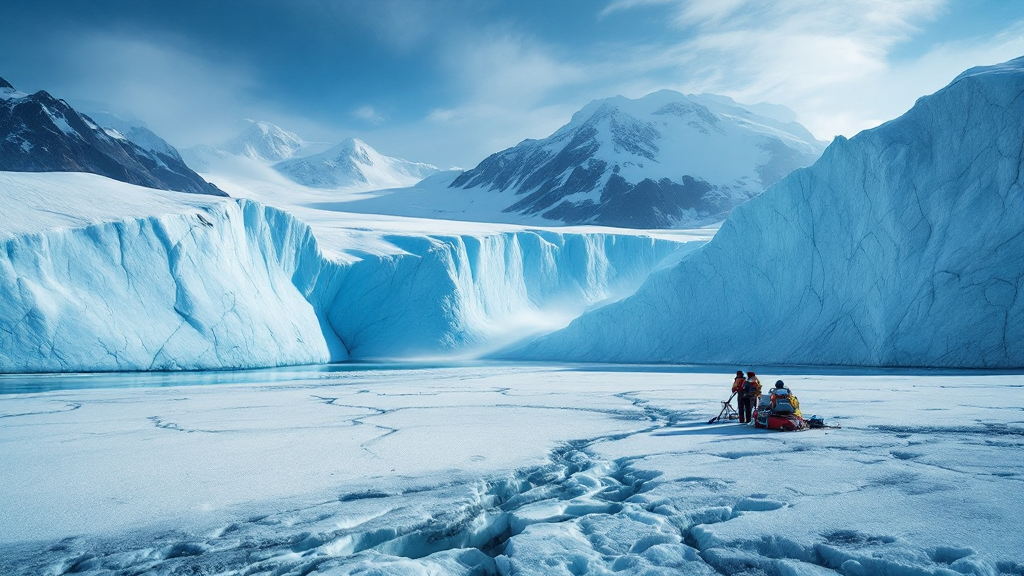
The European Copernicus Sentinel-1 satellite mission has recorded significant changes on the Petermann Glacier, located in northwest Greenland. On August 4, 2026, a large section of the glacier’s floating ice tongue, covering 76 square kilometers, broke away.
This calving event marks the largest loss of floating ice from the Petermann Glacier since 2012 and is the most significant iceberg event in the Arctic since 2020. The new tabular iceberg, also known as an ice island, is comparable in size to Manhattan and may reach up to 150 meters in thickness.
Observations and Monitoring
Sentinel-1 radar images taken on August 3 revealed a marked deterioration in the central part of the ice tongue. The very next day, a massive ice island separated from the glacier’s eastern section. Sentinel-1 is used to monitor remote glaciers thanks to its ability to collect data around the clock and in all weather conditions.
An international team of researchers has been observing the Petermann Glacier since 2019 using Sentinel-1 imagery. Their work is partially funded by the ESA FutureEO ARCTEX project. The study involves experts from universities in Canada and the UK, as well as the Canadian Ice Service. In recent years, the team has tracked expanding cracks and signs of instability in the floating ice tongue.
Interferometric observations conducted in April detected deformations and cracks within the ice tongue, allowing scientists to study in detail the changes that occurred in the months leading up to the calving event.
History of Glacier Changes
The Petermann Glacier has previously experienced major calving events in 2008, 2010, and 2012, resulting in the formation of large ice islands. Since 2012, the floating ice tongue had remained relatively stable, with only a few smaller calving incidents.
The latest calving may not be the only major change in the near future. Two more ice islands, measuring approximately 97 and 87 square kilometers, could break off as existing fractures continue to spread.
Observation Technologies
Detailed Sentinel-1 interferograms, showing the formation and spread of cracks, were obtained thanks to daily repeat observations using Sentinel-1’s synthetic aperture radar during the launch of the new Sentinel-1D satellite. These data enabled scientists to precisely measure the extent of cracks across the ice shelf and the ice tongue’s response to tidal forces before the iceberg finally broke away.
Significance for Science and Practice
Satellite missions like Sentinel-1 provide systematic, long-term observations essential for tracking glacier changes and their impact on the polar environment and the global Earth system. The ARCTEX project supports this research and contributes to a deeper understanding of the rapidly changing Arctic.
Scientists continue to monitor the Petermann Glacier and the new iceberg using satellite imagery, aerial photography, and tracking data. Observing the movement and gradual breakup of the ice island will provide further insights into the behavior of large Arctic icebergs and the factors influencing the glacier’s future evolution.
This calving event also has practical implications for navigation and activities in the Arctic. Canada’s Ministry of Environment and Climate Change is tracking the iceberg’s path and assessing potential threats to shipping routes and infrastructure. Ice masses of this size can remain in the ocean for years, gradually breaking into smaller fragments that become increasingly difficult to detect and monitor.