

Scientists have discovered a unique immune mechanism in sea anemones.
A new study has revealed that sea anemones possess a unique antiviral defense mechanism that differs from the immune systems of vertebrates. This discovery broadens our understanding of immune system evolution and could aid in the search for new medicines.
Cursus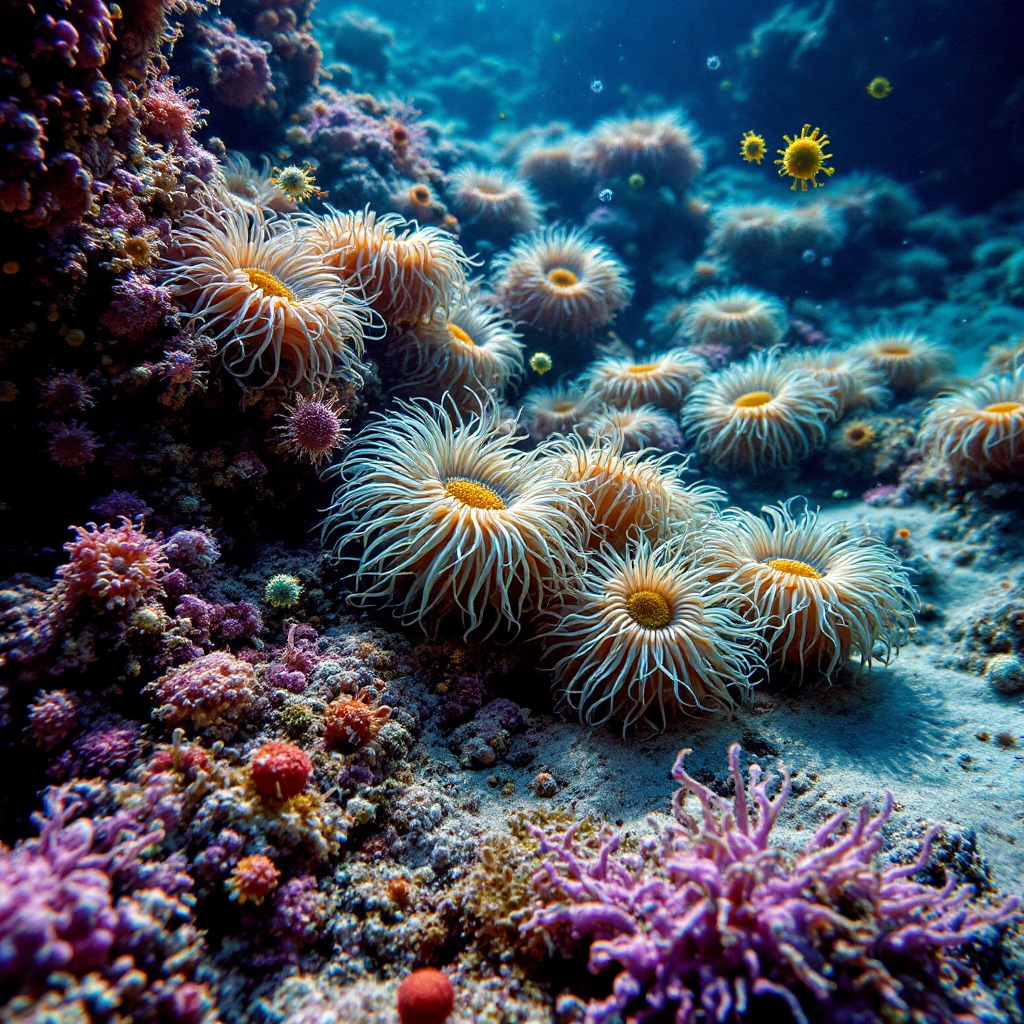
New data indicate that at least two independent mechanisms of antiviral defense evolved over time. This discovery significantly changes our understanding of immune system development and opens new possibilities for drug discovery.
Research on Sea Anemones
Sea anemones, also known as actinias, are predatory invertebrates without skeletons that lead a mostly sedentary lifestyle on the ocean floor. Outwardly, they resemble flowers and are closely related to jellyfish and corals. Biologists chose anemones for study because these organisms branched off from the evolutionary line shared with humans more than 600 million years ago.
In humans and other vertebrates, the MAVS protein plays a key role in triggering the immune response when encountering viruses. Researchers set out to determine how ancient this mechanism is and discovered a similar protein in anemones, which they named CARDIB. Initially, it was assumed that CARDIB performed a similar protective function, but further experiments revealed otherwise.
The Role of the CARDIB Protein
During the study, it was found that under normal conditions, the CARDIB protein does not activate immunity; on the contrary, it suppresses it. To test this function, scientists used CRISPR technology to remove the CARDIB gene in some anemones. As a result, without this protein, the organisms' ability to resist infections dropped sharply, and viruses began to multiply much faster. This indicates that CARDIB is essential for proper regulation and controlled activation of the immune response, without which the defense system cannot function effectively.
Experiment in a Natural Environment
To confirm the findings, the modified anemones were transferred from aquariums to open seawater reservoirs in South Carolina, where they were exposed to a variety of wild viruses and microorganisms. Within a few days, the anemones lacking the CARDIB protein accumulated significantly more viral particles compared to their wild counterparts.
The Significance of the Discovery
The experiment confirmed that the discovered biochemical pathway is critically important for animal survival in natural conditions and demonstrates the diversity of evolutionary solutions in the fight against viruses.