

The Greenland ice sheet melted just 7,000 years ago.
A new study has revealed that the Prudhoe Dome ice cap in Greenland completely melted about 7,000 years ago due to a slight warming. This data helps scientists make more accurate predictions about the risks of ice melt and future sea level rise.
Cursus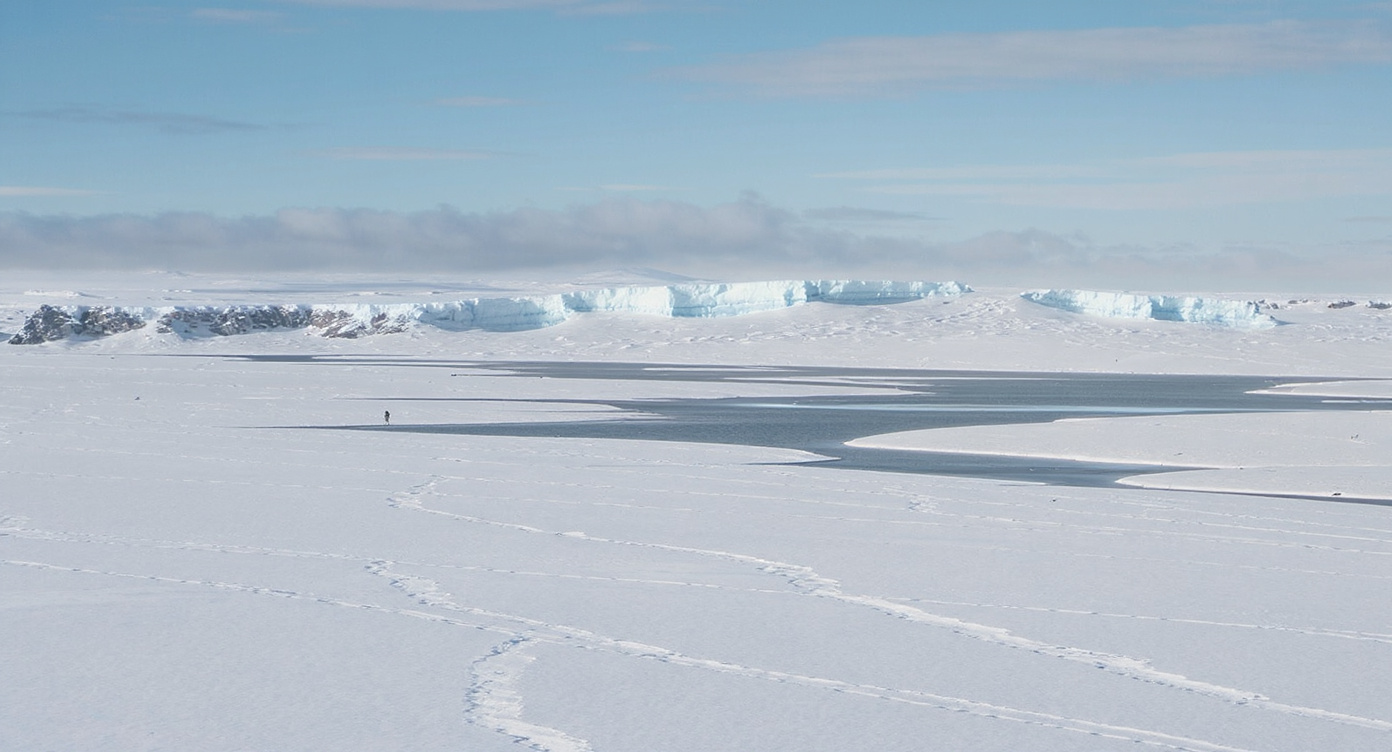
A new study conducted as part of the GreenDrill project, which includes participation from the University at Buffalo, has revealed that the Prudhoe Dome ice cap in Greenland completely melted about 7,000 years ago. This finding suggests that the disappearance of the ice cover occurred more recently than previously believed.
Main Findings of the Study
Data published in the journal Nature Geoscience show that the northwestern part of Greenland’s ice sheet is highly sensitive even to minor temperature changes. The disappearance of the Prudhoe Dome took place during the Holocene—a climatically stable period that began around 11,000 years ago and continues to the present day. Analysis indicates that only a slight warming was needed for the ice dome to melt in the past, and similar conditions could lead to renewed ice retreat in the foreseeable future due to ongoing climate change.
About the GreenDrill Project
GreenDrill is a research initiative funded by the U.S. National Science Foundation, focused on drilling through Greenland’s ice sheet and collecting ancient rocks and sediments from beneath the ice. The number of rock and soil samples retrieved from beneath Greenland is significantly smaller than those from the Moon, yet these materials hold crucial information about the ice sheet’s history. Chemical analysis allows scientists to determine when the surface was last exposed to sunlight, helping to identify periods when the ice cover disappeared.
Methods and Results
During the 2023 expedition, researchers studied cores extracted from a depth of 509 meters at the summit of Prudhoe Dome. To determine when the sediment was last exposed, they used luminescence dating, which measures the energy accumulated in mineral grains. The results showed that the sediment was exposed between 6,000 and 8,200 years ago, indicating that the ice dome melted at the beginning of the Holocene, when temperatures were 3–5°C higher than today. Projections suggest that such temperatures could be reached in the Prudhoe Dome area as early as 2100.
Significance for Sea Level Assessment
The data obtained are important for predicting future sea level rise. By identifying the most vulnerable areas along the edges of the ice sheet, researchers can more accurately forecast where melting will begin and which coastal regions will be most at risk.
Project Organization and Future Plans
Within the project, two drilling sites were established on Prudhoe Dome: one at the summit and another closer to the edge, where the ice is thinner. These sites were located near the former Camp Century base, where drilling had previously been conducted. During the expedition, the team lived in a tent camp and collected ice fragments and cleaned the area while drilling specialists worked at depth. The drilling was completed thanks to a switch to equipment typically used for rock drilling, which enabled the team to obtain the necessary samples before the equipment was removed.
This research was made possible through collaboration among experts from various universities and scientific centers. The project involved researchers, drillers, and support staff.
Outlook
Further studies are planned using samples taken closer to the edge of Prudhoe Dome to identify the most vulnerable parts of the ice cover. The cores may contain traces of ancient plants, providing new insights into Greenland’s past. The team intends to continue drilling and inspire similar projects. GreenDrill is the first project to deliberately select drilling locations to obtain subglacial samples, changing the approach to predicting ice melt.
Modern numerical models allow scientists to forecast the rate of melting, but accurate assessments require real observational data that confirm the link between past warming and the disappearance of specific volumes of ice.