

Snow flies reveal the secret to surviving in the cold
Scientists have decoded the genome of the snow fly Chionea alexandriana and discovered how this insect remains active at subzero temperatures. The fly combines internal heating, the production of antifreeze proteins, and reduced sensitivity to oxidative stress, which allows it to survive and move across snow even at –7°C.
Cursus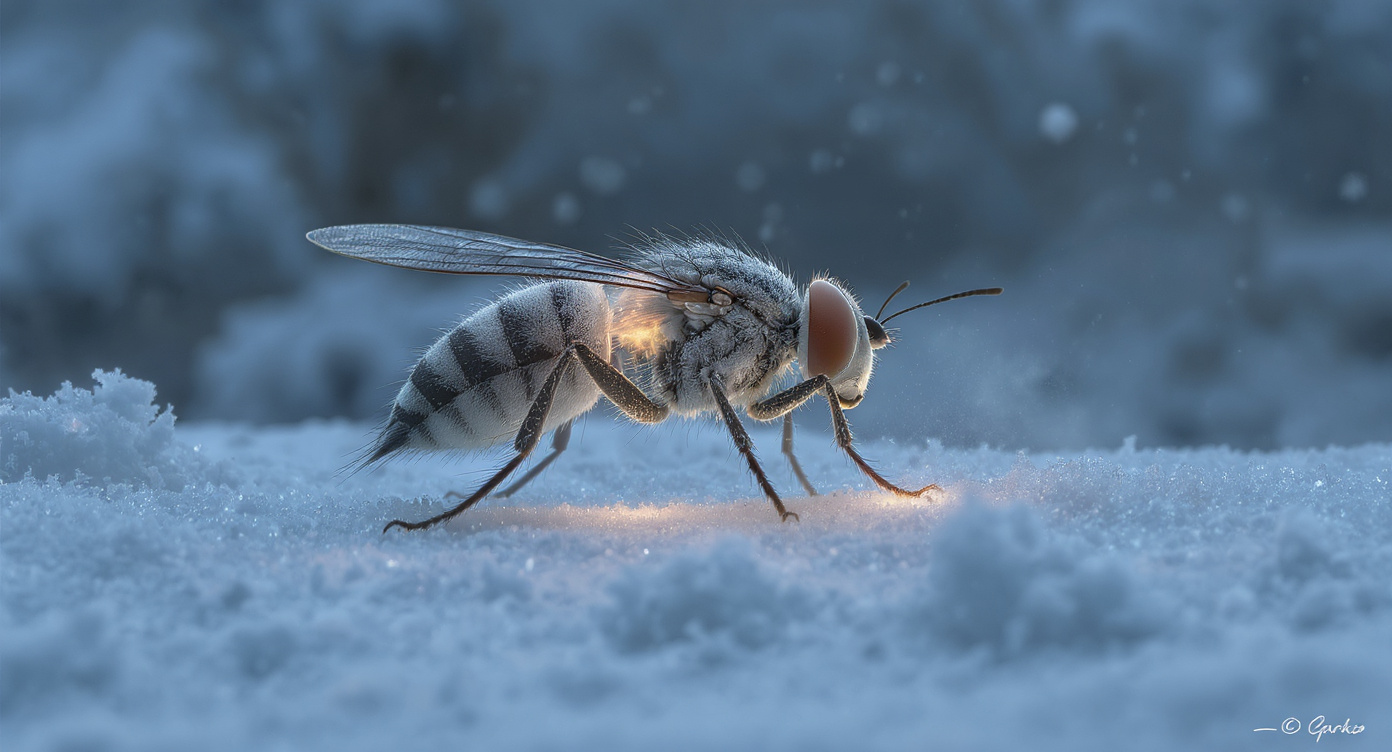
Biologists from the USA and Sweden have decoded the genome of the wingless snow fly Chionea alexandriana, which remains active even at subzero temperatures. Their research revealed that this insect can protect itself from the cold through internal heat generation, the synthesis of antifreeze proteins, and a reduced sensitivity of its nervous system to oxidative stress. Thanks to these adaptations, the fly is able to move across snow at temperatures as low as minus seven degrees Celsius.
Features of Insect Winter Adaptation
Poikilothermic (cold-blooded) insects typically depend on the temperature of their environment. To survive the winter, they usually employ passive strategies: burrowing into the soil and entering dormancy, or accumulating cryoprotectants and freezing, which halts their biochemical processes.
However, snow flies like Chionea alexandriana break this rule. In winter, they emerge onto the snow’s surface and remain active even at temperatures below zero. Until recently, the molecular mechanisms that allow these tiny creatures to stay mobile and prevent the crystallization of their internal fluids were unknown.
Genomic Analysis and Physiological Experiments
During the study, the complete genome of Chionea alexandriana was sequenced and compared with the DNA of other insects, including the Antarctic midge Belgica antarctica and the common fruit fly. The researchers also tested the flies’ ability to generate heat independently. To do this, the insects were fixed onto a Peltier plate, microthermocouples were inserted into their thorax, and the surface was rapidly cooled to minus eight degrees. As a control, dead flies and crickets of similar size were used.
In parallel, the function of snow fly genes was tested in model organisms. One of the identified genes, encoding the antifreeze protein CaAFP-1, was inserted into fruit fly DNA. The resulting larvae were then frozen at minus 10 degrees for three minutes. In another experiment, a cell culture with the TRPA1 receptor—responsible in insects for sensing chemical irritants and pain—was grown, and its response to hydrogen peroxide, a major byproduct of cellular stress in the cold, was measured.
Molecular and Physiological Mechanisms of Cold Resistance
Genomic analysis revealed an expansion of gene families responsible for fat breakdown in mitochondria and peroxisomes. Physiological experiments confirmed that, when rapidly cooled, living flies briefly raise their internal body temperature by about one degree and maintain it for several minutes. Crickets lack this ability and cool down along with the plate.
The researchers concluded that the flies warm themselves through “idling” mitochondrial activity, which burns fat reserves. Even a slight increase in temperature helps the insect avoid internal freezing and gives it time to hide under the snow during sudden weather changes.
The fly is protected from ice crystallization by four types of its own antifreeze proteins. Introducing the CaAFP-1 gene into fruit flies increased larval survival at subzero temperatures from 12.3% to 55.9%.
Protection Against Oxidative Stress
Chionea alexandriana has also adapted to the dangerous side effects of cold. Intense mitochondrial activity leads to the formation of large amounts of free radicals (hydrogen peroxide). In ordinary insects, these molecules activate the TRPA1 receptor and cause pain sensations. Measurements showed that the pain receptor in the snow fly is 35 times less sensitive to peroxide than in fruit flies.
Comprehensive Organismal Reorganization
Surviving extreme cold requires coordinated changes at the molecular level. Snow flies demonstrate that microscopic insects do not always rely on passive overwintering. They actively resist freezing by combining metabolic heating, chemical protection against ice, and a profound restructuring of their sensory systems.